
Notes
Chapters
- A Fanatic Heart
- 27. Against the Grain
- 28. The Zemganno Brothers
- 29. Catch and Release
- 30. A Mercenary Frenzy
- 31. Le Paradou
- 32. The Sunflower and the Oleander
- 33. The Poet's Garden
- 34. Imaginary Savage
- 35. La Lutte
- 36. The Stranger
- 37. Two Roads
- 38. The Real South
- 39. Starry Night
- 40. The Isolated One
- 41. A Degenerate Child
- 42. The Garden and the Wheatfield
- 43. Illusions Fade, the Sublime Remains
- Ici Repose
The Early Years
The Dutch Years
The French Years
Chapters

Context:
BVG 363, 3/26/1884: "If I did not feel more strongly every day that I must earn some money, I should keep my studies quietly for myself, as Rappard does. But, as you say, we are not in Rappard's position -- but for all that I am getting more and more cramped."
JLB 438, 3/15/1884 - 3/19/1884: "Were it not the case that I feel more strongly by the day that I need something more, I would keep my studies quietly to myself. As Rappard does. But you say yourself that we're not in Rappard's position -- and with all that I'm becoming more and more hard pressed."
Context:
BVG 133, 7/1/1880: "Then there is the other kind of ne'er-do-well, the ne'er-do-well despite himself, who is inwardly consumed by a great longing for action who does nothing because his hands are tied, because he is, so to speak, imprisoned somewhere …"
JLB 155, 6/22/1880 - 6/24/1880: "Then there's the other idler, the idler truly despite himself, who is gnawed inwardly by a great desire for action, who does nothing because he finds it impossible to do anything since he's imprisoned in something …"
Context:
JLB 155, 6/22/1880-6/24/1880: "In the springtime a bird in a cage knows very well that there's something he'd be good for; he feels very clearly that there's something to be done but he can't do it; what it is he can't clearly remember, and he has vague ideas and says to himself, 'the others are building their nests and making their little ones and raising the brood', and he bangs his head against the bars of his cage. And then the cage stays there and the bird is mad with suffering. 'Look, there's an idler', says another passing bird -- that fellow's a sort of man of leisure. And yet the prisoner lives and doesn't die; nothing of what's going on within shows outside, he's in good health, he's rather cheerful in the sunshine. But then comes the season of migration. A bout of melancholy -- but, say the children who look after him, he's got everything that he needs in his cage, after all -- but he looks at the sky outside, heavy with storm clouds, and within himself feels a rebellion against fate. I'm in a cage, I'm in a cage, and so I lack for nothing, you fools! Me, I have everything I need! Ah, for pity's sake, freedom, to be a bird like other birds!"
Context:
JLB 155, 6/22/1880-6/24/1880: "A reputation ruined rightly or wrongly, poverty, inevitability of circumstances, misfortune; that creates prisoners. You may not always be able to say what it is that confines, that immures, that seems to bury, and yet you feel I know not what bars, I know not what gates -- walls."
Context:
BVG 173, 1/26/1882: "But I am so angry with myself now because I cannot do what I should like to do, and at such a moment one feels as if one were lying bound hand and foot a the bottom of a deep, dark well, utterly helpless."
JLB 203, 1/26/1882: "But then I loathe myself so much for not being able to do what I'd like, and at such moments one feels as though one is bound hand and foot, lying in a deep, dark pit, powerless to do anything."
Context:
BVG 71, 7/8/1876: " I am bound in different ways, some even humiliating, and these will become still worse in time; but the words engraved above the image of Christus Consolator, 'He has come to proclaim liberty to the captives' are true to this day."
JLB 86, 7/8/1876: " I have my bonds of various kinds, humiliating bonds some of them, and this will only get worse with time; but the words inscribed above Christus Consolator, 'He is come to preach deliverance to the captives', are still true today" (emphasis in original).
Context:
JLB 286, 11/24/1882: "I've finished the book by Zola, Pot-bouille. I thought the most powerful passage was the kitchen maid Adele (scruffy Breton) giving birth in the dark attic room."
Context:
JLB 318, 2/20/1883 or 2/21/1883: "A week or so ago I was reading Fritz Reuter's 'Uit mijn gevangenistijd', in which he describes very amusingly how Fritz R. and others serving fortress sentences made life as agreeable as possible and secured various privileges from their 'field officer'. That book gave me the idea of tackling my landlord with a view to certain improvements that would make my work easier."
According to JLB 409, on or about 12/6/1883: "Van Gogh's journey from Drenthe to Nuenen began with a walk across the heath 'on a stormy afternoon with rain, with snow.' On the basis of the weather reports, this day can be identified as Tuesday, 4 December (KNMI). He could not have caught the train to Nuenen after his six-hour walk from Nieuw-Amsterdam to Hoogeveen since there were only two possibilities, at 8.15 or 11.39, whereas he writes of 'my long trudge across the heath on that stormy evening.' If he left by the early train on 5 December, he had a choice of two connections: one, via Utrecht, would have got him to Nuenen at 17.10; the other, via Nijmegen, at 15.50. (See Dijk and Van der Sluis 2001, pp. 183-184 and Tjeu Hermans and Jack van Hoek, 'Wanneer arriveerde Vincent van Gogh in Nuenen? Een reis van Veenoord naar Nuenen in December 1883', De Drijehornickels. Heemkundekring Nuenen 7-1 (1998), p. 69.) Vincent writes that he had 'just' received Theo's letter of 1 December in Nuenen. This letter from Paris, via Drenthe, could not reasonably have arrived before 5 or 6 December. We have consequently dated the letter on or about Thursday, 6 December 1883."
Context:
BVG 347, 12/18/1883: "In short, my dear fellow, neither Father nor Tersteeg has given other than a spurious tranquillity to my conscience, and they have not given me freedom, not have they ever approved of my desire for freedom and plain truth and of my feeling of ignorance and darkness."
JLB 403, 11/5/1883: "Anyway, old chap, neither Pa nor Tersteeg has given me anything but false peace for my conscience, and they haven't made me free, nor even respected my desire for freedom and naked truth, and my feeling of ignorance and darkness."
Context:
JLB 228, 5/16/1882: "True, they had the whip hand, they thwarted me in Amsterdam."
Context:
JLB 228, 5/16/1882: "I'm no blackguard, I do not deserve to be treated so dreadfully."
As Vincent himself acknowledges, this defensiveness about his art masks a much deeper and broader despair about his parents' approval, and, no doubt, their love: "They'll find it difficult to understand my state of mind, and not know what drives me when they see me do things that seem strange and peculiar to them -- will blame them on dissatisfaction, indifference or nonchalance, while the cause lies elsewhere" (ibid.). Vincent's worst fears seemed to be confirmed in February 1883 when he sent a gift of a drawing for his father's birthday and, even though Vincent tried to make it in a way that would please him, Dorus made no comment on it. "I sent Pa a drawing that I did after he made some comments about the first old man in the lithograph. Not because I entirely agreed with Pa, but I thought, now that I know how you would like it to be, I'll try and make it for you. Yet I fear I haven't succeeded. One doesn't always manage to please people when one does one's best. Pa didn't write that he didn't like it, but that was what came across anyway. It may indeed be that it's no good." (JLB 306, 2/3/1883.)
Context:
BVG 335, 10/22/1883: "For oneself one must not doubt that it is the way of nature, and that one works against nature only by not changing. There is an old saying, They have ears but they hear not, they have eyes but they see not, they have a heart but feel not; their heart is hardened, and they have closed their ears and eyes because they do not want to hear and do not want to see."
JLB 398, 10/22/1883: "For oneself, one must have no doubt, it's only natural, and it's only by not changing that one goes against nature. There's an old saying -- they have ears but they hear not, they have eyes but they see not, they have a heart but they understand not; their heart is waxed gross and they have closed their eyes and ears because they DO not WANT to hear and DO not WANT to see." (Emphasis in original.)
Context:
JLB 375, 8/18/1883: "But I sincerely wish that people would forgive me such failings rather than talk about them."
Context:
JLB 408, 12/1/1883: "I think you'll find the future hostile in Paris. Again, if I'm wrong you can all laugh at me and I'll laugh about it myself. If it's just my nerves deluding me, well then, it's my nerves -- but I fear you all too effectively have a fatality against you." (Emphasis in original.)
Context:
BVG 343, 12/1/1883: "Once again, if I am wrong, you can laugh at me, all of you -- and I myself shall join in this laughter. If it is only my nerves that are deluding me, well then, it is my nerves -- but I am afraid fatality is too effectively against you."
JLB 408, 12/1/1883: "Again, if I'm wrong you can all laugh at me and I'll laugh about it myself. If it's just my nerves deluding me, well then, it's my nerves -- but I fear you all too effectively have a fatality against you." (Emphasis in original.)
Context:
BVG 212, 7/6/1882: "However, it is my greatest longing to keep peace, and to convince Father and Mother that they would do well not to oppose me, thinking me a person who is always dreaming and incapable of action."
JLB 244, 7/6/1882: "Nonetheless, it is my ardent desire to keep the peace and to convince Pa and Ma that it wouldn't be right if they were to turn against me, in the belief that I was someone who only dreamed and didn't know how to act."
Context:
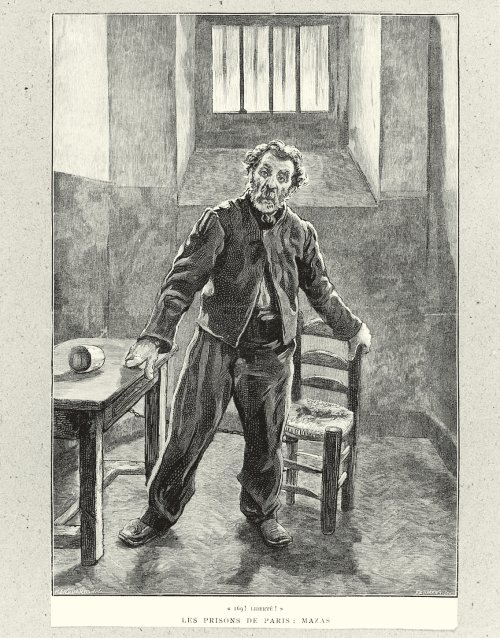
JLB 418, 12/28/1883: "As to me, I'm bound to misfortune and failure, it's damned hard sometimes, but there it is. I still don't envy the so-called fortunate and eternally successful ones, since I see too much behind it. Take the Prisonnier by Gérôme -- the man lying shackled is in a bad way to be sure, but in my view it's better to be him than that other fellow who's lording it over him and tormenting him. I say this to point out to you the extremes of circumstances. In no way do I, for example, confuse my own fate with more aggravated misery like that of the prisoner. Nevertheless, in our society one also sees a je ne sais quoi of what I refer to." (Emphasis in original.)
Context:
BVG 350a, 12/15/1883-12/31/1883: "As for me, I am chained to misfortune and failure; it is damned hard at times, but never mind, for all that I do not envy the so-called fortunates and the ever successful, as I can see through it too much."
JLB 418, 12/28/1883: "As to me, I'm bound to misfortune and failure, it's damned hard sometimes, but there it is. I still don't envy the so-called fortunate and eternally successful ones, since I see too much behind it."
Context:
BVG 350a, 12/15/1883-12/31/1883: "Take 'The Prisoner' by Gérôme -- the man lying fettered is most certainly in an unpleasant situation, but to my way of thinking he is in a better condition than the fellow who has the upper hand and is harassing him."
JLB 418, 12/28/1883: "Take the Prisonnier by Gérôme -- the man lying shackled is in a bad way to be sure, but in my view it's better to be him than that other fellow who's lording it over him and tormenting him" (emphasis in original).
Context:
BVG 350a, 12/15/1883-12/31/1883: "There are moments in life when it is better that the blow is dealt, even if it be a hard blow, rather than that one is forced into the position of one who is spared by the world, I think."
JLB 418, 12/28/1883: "It seems to me that there are those moments in life when it's better that the blow should fall, albeit it hard, than that one should be liable to be spared by the world" (emphasis in original).
Context:
JLB 410, 12/7/1883: "Which was that we were going along in the very best of ways until the moment when Pa banned me from the house -- not just in a passion but also 'because he was tired of it.'"
Context:
JLB 410, 12/7/1883: "Their friendly reception desolates me -- to me, the way they make the best of it, without recognizing the mistake, is even worse, if possible, than the mistake itself" (emphasis in original).
Context:
JLB 418, 12/28/1883: "So you have power over me -- you, above all, in conjunction with many others, none of whom are able to agree with me. And yet you will not get me to renounce her -- with all your financial power. And because I won't give in on the issue of the woman and want to say that clearly, make it audible to even the deafest of ears …" (Emphasis in original.)
Context:
JLB 410, 12/7/1883: "It should have been understood then that this was something so important to my succeeding or not succeeding that it was made ten times more difficult for me because of it -- almost intolerable" (emphasis in original).
Context:
JLB 411, 12/8/1883: "Yes, but I can't take back anything I did then, I've always done everything for your own good, and I've always acted on my sincere opinion."
Context:
JLB 410, 12/7/1883: "I'm heartbroken about the fact that when I come back now, after an absence of two years, the reception at home was as friendly and kind as could be, yet at bottom nothing, nothing, nothing has changed in what I have to call blindness and stupidity to the point of desperation when it comes to understanding the situation."
Context:
BVG 345a, 12/7/1883-12/8/1883: "Enough, so I was standing before a barrier of implacability indeed -- although Father tried to divert my reasoning and to confuse the issue, and to prevent my pursuing the subject. But I did not allow myself to be diverted, and I said, 'Pa, here I am faced by your self-righteousness, which was and is fatal, for you as well as for me.'"
JLB 411, 12/8/1883: "Enough, so I was faced with an iron barrier of irreconcilability indeed, although Pa tried to mask it, tried to lead me around it and to divert me from pursuing it. But I didn't allow myself to be put off by this, and said -- Pa, this is about your self-righteousness, which was and is fatal for you and for me."
Context:
BVG 345a, 12/7/1883-12/8/1883: "But I did not allow myself to be diverted, and I said, 'Pa, here I am faced by your self-righteousness, which was and is fatal, for you as well as for me.'"
JLB 411, 12/8/1883: "But I didn't allow myself to be put off by this, and said -- Pa, this is about your self-righteousness, which was and is fatal for you and for me."
Context:
BVG 345a, 12/7/1883-12/8/1883: "Then Father said, ' Do you expect me to kneel before you?'"
JLB 411, 12/8/1883: "Then Pa said, ' did you think I would go down on my knees to you?'"
Context:
BVG 345a, 12/7/1883-12/8/1883: "And then I said that I took this very ill of Father, and that I thought it coarse of Father only to look at it that way, and that I should not waste my breath on the subject any longer."
JLB 411, 12/8/1883: "I said I took it very ill of Pa, thought it extremely crude, that Pa saw only that in it, and that I wouldn't waste my breath on it any longer" (emphasis in original).
To assuage his brother (and avoid blame for the current flare-up), Vincent tries vainly to distinguish between blame for the fight that led to his expulsion and blame for the dispute that precipitated the fight: i.e., Kee Vos. Vincent lays the first entirely on his father and conveniently never mentions the second, which clearly belongs to him. Indeed, he insists that the second is not relevant. "I haven't said a word to Pa and Ma about the real question of two years ago," he writes, referring to Kee (ibid.; emphasis in original). "I did touch on it indirectly, though; I told Pa that in my view it was a great mistake that at a certain point (two years ago) I was forced to leave the house" (ibid.). According to Vincent, this only constitutes "touch[ing] on the past" and therefore does not open up the question of the substance of their previous disagreement (ibid.). But this is patently disingenuous, as Vincent immediately and indiscriminately pins all the blame for their problems in Etten on his father: "Pa eternally descends into petty-mindedness instead of being more open, more liberal, broader, more humane. It was minister's vanity that drove things to extremes then, and it's still the same minister's vanity that will still cause more mischief in the present and the future." (ibid.)
Two weeks later, Vincent reveals more clearly the true plenary nature of his initial demand for vindication: "You can see how Pa is from what he followed up with, for instance, after saying that he can't take back anything of what he did before" (JLB 415, 12/18/1883; emphasis added). This demand to "take back" a previous offense is far more typical of Vincent than the limited agreement he claims to have requested: i.e., that quarreling, regardless of the merits of the case, had been a mistake.
Context:
BVG 345a, 12/7/1883-12/8/1883: "Look, brother, in my opinion Father is forever lapsing into narrow-mindedness, instead of being bigger, more liberal, broader and more humane."
JLB 411, 12/8/1883: "So brother, in my view Pa eternally descends into petty-mindedness instead of being more open, more liberal, broader, more humane" (emphasis in original).
Context:
BVG 345a, 12/7/1883-12/8/1883: "It was clergyman's vanity that carried things to extremes at the time; and it is still that same clergyman's vanity that will cause more disasters now and in the future."
JLB 411, 12/8/1883: "It was minister's vanity that drove things to extremes then, and it's still the same minister's vanity that will still cause more mischief in the present and the future."
Context:
BVG 345a, 12/7/1883-12/8/1883: "It was clergyman's vanity that carried things to extremes at the time; and it is still that same clergyman's vanity that will cause more disasters now and in the future."
JLB 411, 12/8/1883: "It was minister's vanity that drove things to extremes then, and it's still the same minister's vanity that will still cause more mischief in the present and the future."
Context:
BVG 345a, 12/7/1883-12/8/1883: "It was clergyman's vanity that carried things to extremes at the time; and it is still that same clergyman's vanity that will cause more disasters now and in the future."
JLB 411, 12/8/1883: "It was minister's vanity that drove things to extremes then, and it's still the same minister's vanity that will still cause more mischief in the present and the future."
Context:
BVG 345, 12/6/1883-12/7/1883: "I am sick at heart about the fact that, coming back after two years' absence, the welcome home was kind and cordial in every respect, but basically there has been no change whatever, not the slightest, in what I must call the most extreme blindness and ignorance as to the insight into our mutual position."
JLB 410, 12/7/1883: "I'm heartbroken about the fact that when I come back now, after an absence of two years, the reception at home was as friendly and kind as could be, yet at bottom nothing, nothing, nothing has changed in what I have to call blindness and stupidity to the point of desperation when it comes to understanding the situation."
Context:
JLB 410, 12/7/1883: "There wasn't then, nor is there now any trace, any hint of a shadow of a doubt in Pa as to whether he did the right thing then."
Context:
JLB 410, 12/7/1883: "I lay awake half the night, Theo, after I'd written to you yesterday evening."
Context:
JLB 410, 12/7/1883: "They think that THEY DIDN'T DO ANYTHING then, and for me that's going too far" (emphasis in original).
Context:
BVG 345, 12/6/1883-12/7/1883: "If I had not had the same feeling at the time which I now have again, namely that notwithstanding all good intentions, notwithstanding all the kindness of the reception, notwithstanding anything you like, there is a certain hardness in Father, like iron, an icy coldness -- something that gives the impression of dry sand or glass or tinplate -- for all his outward gentleness -- if, as I said, I had not had this feeling already, I should not have resented it so much."
JLB 410, 12/7/1883: "If I hadn't felt the same then as I feel again now, that despite all the good intentions, despite all the friendliness of the reception, despite whatever you will, there's a certain steely hardness and icy coldness, something in Pa that grates like dry sand, glass or tin -- despite all his outward mildness -- if I hadn't already, I say, felt it then as I do now, I wouldn't have taken it so badly then."
Context:
BVG 345, 12/6/1883-12/7/1883: "If I had not had the same feeling at the time which I now have again, namely that notwithstanding all good intentions, notwithstanding all the kindness of the reception, notwithstanding anything you like, there is a certain hardness in Father, like iron, an icy coldness -- something that gives the impression of dry sand or glass or tinplate -- for all his outward gentleness -- if, as I said, I had not had this feeling already, I should not have resented it so much."
JLB 410, 12/7/1883: "If I hadn't felt the same then as I feel again now, that despite all the good intentions, despite all the friendliness of the reception, despite whatever you will, there's a certain steely hardness and icy coldness, something in Pa that grates like dry sand, glass or tin -- despite all his outward mildness -- if I hadn't already, I say, felt it then as I do now, I wouldn't have taken it so badly then."
Context:
BVG 345, 12/6/1883-12/7/1883: "If I had not had the same feeling at the time which I now have again, namely that notwithstanding all good intentions, notwithstanding all the kindness of the reception, notwithstanding anything you like, there is a certain hardness in Father, like iron, an icy coldness -- something that gives the impression of dry sand or glass or tinplate -- for all his outward gentleness -- if, as I said, I had not had this feeling already, I should not have resented it so much."
JLB 410, 12/7/1883: "If I hadn't felt the same then as I feel again now, that despite all the good intentions, despite all the friendliness of the reception, despite whatever you will, there's a certain steely hardness and icy coldness, something in Pa that grates like dry sand, glass or tin -- despite all his outward mildness -- if I hadn't already, I say, felt it then as I do now, I wouldn't have taken it so badly then."
Context:
JLB 410, 12/7/1883: "Pa doesn't know remorse as you and I and everyone who is human does."
Context:
BVG 345, 12/6/1883-12/7/1883: "I am sick at heart about the fact that, coming back after two years' absence, the welcome home was kind and cordial in every respect, but basically there has been no change whatever, not the slightest, in what I must call the most extreme blindness and ignorance as to the insight into our mutual position. And I again feel almost unbearably disturbed and perplexed."
JLB 410, 12/7/1883: "I'm heartbroken about the fact that when I come back now, after an absence of two years, the reception at home was as friendly and kind as could be, yet at bottom nothing, nothing, nothing has changed in what I have to call blindness and stupidity to the point of desperation when it comes to understanding the situation."
Context:
JLB 410, 12/7/1883: "Now I'm once again in almost unbearable indecision and inner conflict."
Context:
BVG 345, 12/6/1883-12/7/1883: "Instead of a ready understanding and a certain eager contribution to my, and indirectly their own, well-being I feel in everything a hesitation and delay which paralyze my own ardor and energy like a leaden atmosphere."
JLB 410, 12/7/1883: " I sense a procrastination and hesitancy in everything, which paralyzes my own passion and energy like a leaden atmosphere."
Context:
BVG 345, 12/6/1883-12/7/1883: "I have decided to go and see Rappard, and tell him that I myself should be agreeable to staying at home, but that notwithstanding all the advantages this would have, there is a je ne sais quoi in Father which I am beginning to look upon as incurable and which makes me listless and powerless."
JLB 410, 12/7/1883: "I've decided to go to Rappard and tell him that I would like it too if I could be at home, but that against all the advantages that this would have there's a je ne sais quoi with Pa that I'm afraid I'm beginning to think is incurable, and that makes me apathetic and powerless" (emphasis in original).
Context:
BVG 345, 12/6/1883-12/7/1883: "My masculine intellect tells me that I must consider it an irrevocable, fatal fact that in the depth of our souls Father and I are irreconcilable."
JLB 410, 12/7/1883: "My intellect as a man tells me that I have to regard it as an unalterable fact of fate that Pa and I are irreconcilable down to the deepest depths."
Context:
BVG 344, 12/5/1883: "I thought that perhaps my going back home might give me a clearer insight into questions of how to act."
JLB 409, 12/6/1883: "I thought that being at home again might give me a more accurate insight into the question of what I should do."
Context:
BVG 345, 12/6/1883-12/7/1883: " Good intentions, opinions, in reality all this is less than nothing."
JLB 410, 12/7/1883: " Good intentions, opinions, in fact that's less than nothing" (emphasis in original).
Context:
BVG 345, 12/6/1883-12/7/1883: "Two years, every day of which was a day of distress to me; for them -- everyday life, as if nothing had happened, as if nothing could happen -- the burden did not weigh on them."
JLB 410, 12/7/1883: "Two years, every day a day of worry for me, for them -- normal life -- as if nothing had happened or nothing would happen."
Context:
BVG 345, 12/6/1883-12/7/1883: "Two years, every day of which was a day of distress to me; for them -- everyday life, as if nothing had happened, as if nothing could happen -- the burden did not weigh on them."
JLB 410, 12/7/1883: "Two years, every day a day of worry for me, for them -- normal life -- as if nothing had happened or nothing would happen."
Context:
BVG 345, 12/6/1883-12/7/1883: "I see now what I saw then -- then I spoke flatly against Father -- now I speak, and in all respects I speak, however it may turn out flatly against Father again, because he is unwilling, because he makes it impossible."
JLB 410, 12/7/1883: "I see now what I saw then, I spoke out four-square AGAINST Pa then, I speak now in any event, whatever may come of it, AGAINST PA again, as being UNwilling, as making it IMPOSSIBLE" (emphasis in original).
Context:
JLB 411, 12/8/1883: "I pointed out how, if Pa hadn't been so steely and obstinate and in short unintelligent then, your help would have been effective, whereas now your help wasn't effective and we've only half succeeded."
Context:
BVG 345, 12/6/1883-12/7/1883: "If I had now noticed some eagerness to do as the Rappards did, with the best results, and as we began here with good results too -- if I had noticed that Father had also realized that he ought not to have shut his house to me, then I should have felt some confidence in the future. Nothing, nothing of all that. In Father's mind there was not then, there is not now, the faintest shadow of a doubt that what he did was the right thing."
JLB 410, 12/7/1883: "If I had now seen that there was any WILLINGNESS to do as the Rappards did with the best results and as we began here, also with good results, if I had now seen that Pa had also realized that he should not have barred the house to me, I would have been reassured about the future. Nothing, nothing of all that. There wasn't then, nor is there now any trace, any hint of a shadow of a doubt in Pa as to whether he did the right thing then." (Emphasis in original.)
Context:
BVG 345a, 12/7/1883-12/8/1883: "In character I am rather different from the various members of the family, and essentially I am not a 'Van Gogh.'"
JLB 411, 12/8/1883: "In character I'm quite different from the various members of the family, and I'm actually not a 'Van Gogh.'"
Context:
JLB 415, 12/18/1883: "In short, that is Pa -- that is 'a minister'. Inexpressibly desperate for me to talk to him." (Emphasis in original.)
Context:
JLB 413, 12/15/1883: "I'm going from here to Rappard's. And from Rappard's perhaps to Mauve's. My plan, then, is to try to do everything in calmness, in order."
Context:
JLB 410, 12/7/1883: "I've decided to go to Rappard and tell him that I would like it too if I could be at home, but that against all the advantages that this would have there's a je ne sais quoi with Pa that I'm afraid I'm beginning to think is incurable, and that makes me apathetic and powerless" (emphasis in original).
Context:
JLB 410, 12/7/1883: "If I had now seen that there was any WILLINGNESS to do as the Rappards did with the best results and as we began here, also with good results, if I had now seen that Pa had also realized that he should not have barred the house to me, I would have been reassured about the future. Nothing, nothing of all that. There wasn't then, nor is there now any trace, any hint of a shadow of a doubt in Pa as to whether he did the right thing then." (Emphasis in original.)
Context:
JLB 409, 12/6/1883: "Drenthe is superb, but staying there depends on many things -- depends on whether one has the money for it, depends on whether one can endure the loneliness. Pa would consider that question settled, I believe, with a conclusion that one would reach in a conversation, but for my part I'm in no hurry to make a decision about it, and I'll have to see what I think about it, for instance, when I've been here for a week or so. However, for the time being I'm in the dark as to what I should do in this respect."
Context:
BVG 345a, 12/7/1883-12/8/1883: "Well, old fellow, try to help me get away from here if you can."
JLB 411, 12/8/1883: "Well old chap -- if you can, see to it that I can get away from here -- regards and believe me."
Context:
BVG 348, 12/21/1883: "Vivre tout haut is simply one's duty -- one should not act like the Jesuits and their kind."
JLB 415, 12/18/1883: "Live life to the full is simply a duty -- one mustn't behave like the Jesuits and their kind."
Context:
BVG 345a, 12/7/1883-12/8/1883: "I told Father that in the Bible itself maxims can be found by which we may test our 'convictions,' to see whether they are reasonable and just. And that Father was too much in the habit of omitting to do so, and of flying into a violent passion, in my opinion very unjustly and very arbitrarily -- very reprehensibly -- not as regards his 'conviction' but as regards his conscience."
JLB 411, 12/8/1883: "I told Pa that terms may be found in the Bible itself to judge whether our 'opinions' are fair and just. And that Pa was all too much in the habit of failing to do this and going on hot-headedly -- in my view very unjustly, very arbitrarily, very reprehensibly -- according to his 'opinion' -- not -- according to his conscience." (Emphasis in original.)
Context:
JLB 403, 11/5/1883: "I come to the following conclusion. What Pa and Tersteeg held up to me as Duty was a Spectre of duty. They essentially said (not in so many words) 'earn money and your life will become straight'. Millet says to me: put your life straight (at least try to do that first, and to wrestle with the naked truth) and EVEN earning money will sort itself out, and in that, too, you won't be dishonest." (Emphasis in original.)
Context:
BVG 350a, 12/15/1883-12/31/1883: "I tell you without reserve that you have this much in common with Father, who often acts in the same way, that you are cruel in your worldly wisdom."
JLB 418, 12/28/1883: "I'll tell you straight out what I think about that -- that in common with Pa, who often acts thus, you are cruel in your worldly wisdom" (emphasis in original).
It was not until mid-1885 that Vincent finally confessed (to Van Rappard) the overwhelming anxiety he felt about his parents' reaction to his art when he returned to Nuenen in December 1883: "I've had the same sort of unpleasantness [i.e., no confidence in his art] for a whole series of years with a whole series of people. When I sometimes protested that I didn't deserve it, it just got worse and worse, and people didn't want to hear a word about it -- my parents and the whole family [emphasis added] ... went so far in their condemnation of everything I did that in the last few years, instead of wasting more time trying to persuade them, in my turn I, who have no time to waste, simply turned my back on them as well. And let people say, think, do anything they like without taking any notice of it at all." (JLB 517, 7/16/1885; emphasis in original.)
Context:
JLB 395, 10/12/1883-10/13/1883: "If it's a question of our having to earn, I can see a chance in this way -- if there's patience at home, a realization of the necessities, if above all, when it comes to models for me, even the family cooperates. As to the question of models, they'd definitely have to do what I wanted, have to trust that I had my reasons for it. If I were to say to Ma or to Wil or Lies, pose for me, it would have to happen. I wouldn't make any unreasonable demands, of course."
The thrust of this passage is that Van Rappard's parents pay all of his expenses even though he, like Vincent, doesn't earn any money from his art. The theme is an old one: how Vincent is being cheated of his family entitlement. He goes on to use Van Rappard in other ways: To support his desire (and right) to stay at home. ("Rappard ... points out that he thought it a great misfortune for me that I couldn't be at home" [JLB 413, 12/15/1883]. "I agree with Rappard when he tells me -- 'stay at home for a long time' -- he insists on it" [JLB 415, 12/18/1883; emphasis in original]. "Rappard writes to me, 'I regarded it as your greatest misfortune that you couldn't be at home'" [ibid.; emphasis in original]). And, somewhat contrarily, in his attacks on his parents for not being supportive enough ("Rappard says to me, 'a human being isn't a lump of peat, in so far as a human being can't bear to be thrown up in the loft like a lump of peat and be forgotten there'" [JLB 413, 12/15/1883]). In militating for a studio at home, Vincent reports that "it worked very well for Rappard" (JLB 415, 12/18/1883).
Eventually, Theo responded to this stream of damning comparisons to the Rappards with a scolding letter pointing out the obvious: that the Rappards were rich (JLB 413, 12/15/1883). (Vincent recalls this lesson a few months later: "Were it not the case that I feel more strongly by the day that I need something more, I would keep my studies quietly to myself. As Rappard does. But you say yourself that we're not in Rappard's position." [JLB 438, 3/15/1884-3/19/1884.]) Of course, as Vincent must have argued, he had two uncles who were, indeed, rich.
Context:
BVG 345a, 12/7/1883-12/8/1883: "I pointed out that at times Van Rappard also has a difference of opinion with his father about this or that, but that they always avoid extremes, not only for the world's benefit but also for their own sakes, and that Rappard, though he does not earn a cent from his work (which for all that is very sound and even very beautiful), can always face the world in a dignified manner, also as regards his outfit and studio and such things."
JLB 411, 12/8/1883: "I pointed out how Rappard also has differences with his father about this or that, but that they always avoid extremes not only for the world but also for themselves and, although he doesn't earn a penny from his work (which is nonetheless very sound, very fine even), Rappard can still always face the world with dignity, also in so far as equipment and studio &c. are concerned."
Context:
BVG 347, 12/18/1883: "In what respect am I wrong for wanting this to be brought about thoroughly and conclusively and for not being content with a sham or a too half-hearted reconciliation? Reconciliation with mental reservations, conditions, etc., bah! It just won't do."
JLB 413, 12/15/1883: "In what respect am I wrong when I want it to be through and through and conclusive and am not content with a sham or too feeble a reconciliation? Reconciliation with reservations, conditions etc., bah! -- I refuse to accept it." (Emphasis in original.)
Context:
BVG 347, 12/18/1883: "Father says, 'We have always been good to you,' etc., and I say, 'Oh, really, you may be satisfied, I am not.'"
JLB 413, 12/15/1883: "Pa says 'we've always been good after all' &c. I say -- really? -- are you satisfied? I'm not."
Context:
JLB 403, 11/5/1883: "But brother, my very sorrow about so much proves to me that I've finished dealing with those systems" (emphasis in original).
Context:
BVG 371, 6/1/1884-6/15/1884: "In the same way that people nowadays no longer believe in fantastic miracles, no longer believe in a God who capriciously and despotically flies from one thing to another, but begin to feel more respect and admiration for and faith in nature -- in the same way, and for the same reasons, I think that in art, the old-fashioned idea of innate genius, inspiration, etc., I do not say must be put aside, but thoroughly reconsidered, verified -- and greatly modified."
JLB 450, June 1884: "The laws of colour are inexpressibly splendid precisely because they are not coincidences. Just as people nowadays no longer believe in random miracles, in a God who jumps capriciously and despotically from one thing to another, but are beginning to gain more respect and admiration for and belief in nature, just so and for the same reasons I believe that people should -- I don't say ignore -- but thoroughly scrutinize, verify and -- very substantially alter the old-fashioned ideas of innate genius, inspiration &c. in art." (Emphasis in original.)
Context:
BVG 378, 10/1/1884: "Oh, I am no friend of present-day Christianity, though its Founder was sublime -- I have seen through present-day Christianity only too well. That icy coldness hypnotized even me, in my youth -- but I have taken my revenge since then."
JLB 464, 10/2/1884: "Oh -- I'm no friend of present-day Christianity, even though the founder was sublime -- I've seen through present-day Christianity only too well. It mesmerized me, that icy coldness in my youth -- but I've had my revenge since then." (Emphasis in original.)
Context:
BVG 358, 3/1/1884: "Now everything is getting grimmer and colder and more dreary around me."
JLB 432, 3/2/1884: "Now it's all becoming bleaker and colder and duller around me."
Context:
BVG 358, 3/1/1884: "Now everything is getting grimmer and colder and more dreary around me."
JLB 432, 3/2/1884: "Now it's all becoming bleaker and colder and duller around me."
Context:
BVG 378, 10/1/1884: "I am afraid that the old religion will once again benumb her and freeze her with that damnable icy coldness that broke her once before, many years ago, to the point of death."
JLB 464, 10/2/1884: "I fear for her that the old religion will numb and freeze her again with that damned icy coldness that has already shattered her once in the distant past to the point of death, long years ago" (emphasis in original).
Context:
BVG 326, 9/21/1883: "As to people who honestly seek the best, I think what Hugo says so true: Il y a le rayon noir et il y a le rayon blanc [There is a black ray and there is a white ray]. In my opinion, Father has more the rayon noir and Corot has more the rayon blanc, but both have a rayon d'en haut."
JLB 388, 9/21/1883: "In respect of people who genuinely seek good, I think what Hugo says is true, 'there is theBLACK ray and there is the WHITE ray'. In my view Pa has more the black ray and Corot has more the white ray, but both of them have a ray from on high." (Emphasis in original.)
Context:
BVG 345, 12/6/1883-12/7/1883: "Because the good within them is wrongly applied, so that it acts like evil because the light within them is black and spreads darkness, obscurity around them."
JLB 410, 12/7/1883: "Because they use even the good in them wrongly so that it works as evil -- because the light that's in them is black -- spreads darkness, gloom around them" (emphasis in original).
Context:
JLB 403, 11/5/1883: "Pa does not know, did not know nor ever will know what the soul of modern civilization is. What is it? The eternal, the very greatest simplicity and truth -- Dupré, Daubigny, Corot, Millet, Israëls, Herkomer -- not to mention Michelet, Hugo, Zola, Balzac, a host more from the more distant and more recent past." (Emphasis in original.)
Context:
JLB 403, 11/5/1883: "Pa does not know, did not know nor ever will know what the soul of modern civilization is. What is it? The eternal, the very greatest simplicity and truth -- Dupré, Daubigny, Corot, Millet, Israëls, Herkomer -- not to mention Michelet, Hugo, Zola, Balzac, a host more from the more distant and more recent past." (Emphasis in original.)
Context:
JLB 403, 11/5/1883: "Pa does not know, did not know nor ever will know what the soul of modern civilization is. What is it? The eternal, the very greatest simplicity and truth -- Dupré, Daubigny, Corot, Millet, Israëls, Herkomer -- not to mention Michelet, Hugo, Zola, Balzac, a host more from the more distant and more recent past." (Emphasis in original.)
Context:
BVG 326, 9/21/1883: "In my opinion, Father has more the rayon noir and Corot has more the rayon blanc, but both have a rayon d'en haut."
JLB 388, 9/21/1883: "In my view Pa has more the black ray and Corot has more the white ray, but both of them have a ray from on high."
Context:
JLB 400, 10/28/1883: "Zola says -- I, an artist, I want to live life to the full -- want to live without ulterior motive -- naive as a child, no not as a child, as an artist -- with good will, just as life unfolds, so I'll find something in it, so I'll do my best in it" (emphasis in original).
Context:
JLB 432, 3/2/1884: "Read something by Daudet about pious women, 'Those two faces looked at each other -- they exchanged a spiteful, cold, closed look -- what's the matter with him/her? Always the same thing.'"
Sund recognizes (as Vincent did) many of the parallels between Eliot's protagonist and Vincent (Sund, p. 25). But she leaves one out. Holt was very close to his widowed mother and, indeed, supported her with a "manual trade" (in Holt's case, watchmaking; Vincent often characterized art-making as a manual trade). At the time he reread this book, Vincent, too, felt especially close to his mother. After she broke her hip in January 1884, he tended her sickbed and enjoyed several months of unaccustomed usefulness and appreciation in his parents' house.
Context:
JLB 332, 3/21/1883: "I recently re-read Eliot's Felix Holt, The radical. This book has been very well translated into Dutch. I hope you know it -- if you don't know it, see if you can't get hold of it somewhere. There are certain ideas about life in it that I find outstanding -- profound things said in a plain way -- it's a book written with great spirit, and various scenes are described exactly as Frank Holl or someone like him would draw them. It's a similar conception and outlook. There aren't many writers who are as thoroughly sincere and good as Eliot."
Vincent also addresses the subject of Socrates about this time, quoting a passage from Michelet. "Socrates was born a real satyr, but through devotion, work, renunciation of frivolous things, he changed himself so completely that on his last day, before his judges and facing death, there was in him something of a god, a ray from on high, with which the Parthenon was illuminated" (JLB 368, 7/27/1883; for the original French, see Ch. 21, n. 106).
The parallel between Socrates and Christ (a common trope among European intellectuals in the nineteenth century beginning with the publication of Socrates and Jesus Compared by Joseph Priestley in 1803) is the subject of discussion in On Liberty. After describing Socrates's trial as a "memorable collision" between individuality and public opinion, Mill compares it to "the event which took place on Calvary rather more than eighteen hundred years ago" (Mill, On Liberty, p. 30). In the same passage, Mill refers to Christ as a man of "moral grandeur," a term that Vincent uses also (JLB 293, 12/11/1882). Mill writes of both Socrates and Christ that "men did not merely mistake their benefactor, they mistook him for the exact contrary of what he was and treated him as that prodigy of impiety which they themselves are now held to be for their treatment of him. ... These were, to all appearance, not bad men -- not worse than men commonly are, but rather the contrary; men who possessed in a full, or somewhat more than a full measure, the religious, moral, and patriotic feelings of their time and people" (Mill, On Liberty, pp. 30-31).
When Vincent writes that "I'm allowed to do anything that doesn't harm anyone else" (JLB 418, 12/28/1883; emphasis in original), he seems to have in mind such Mill formulations as, "The liberty of the individual must be thus far limited; he must not make himself a nuisance to other people" (Mill, On Liberty, p. 68), and "The only purpose for which power can be rightfully exercised over any member of a civilized community, against his will, is to prevent harm to others" (ibid., p. 13). The same appears to be true of Vincent's statement, "I who don't coerce also don't want to be coerced" (JLB 418, 12/28/1883), and Mill's, "If [a man] refrains from molesting others in what concerns them, and merely acts according to his own inclination and judgment in things which concern himself, the same reasons which show that opinion should be free prove also that he should be allowed, without molestation, to carry his opinions into practice" (Mill, On Liberty, p. 68).
Also, Vincent refers at this time to his father with terms like "despotism" (JLB 450, June 1884), a vocabulary used nowhere else in the letters, but often in On Liberty (e.g., "Whatever crushes individuality is despotism" [Mill, On Liberty, p. 77]). Indeed, many of Vincent's critiques of his father in December 1883 ("Just as weathercocks have no effect on the direction of the wind, so opinions have no effect on certain standard truths" [JLB 419, 1/4/1884]) echo Mill's calls to respect dissent, recognize fallibility, and question certainty ("We can never be sure that the opinion we are endeavoring to stifle is a false opinion; and if we were sure, stifling it would be an evil still" [Mill, On Liberty, p. 21). Vincent's exasperated protest -- "that's simply the way I am" (JLB 418, 12/28/1883) -- certainly sounds the same bell of individualism as Mill's equally clarion, "Liberty consists in doing what one desires" (Mill, On Liberty, p. 117). Vincent, of course, could have read selections from Mill's work, or an article in a periodical that summarized his ideas. Whatever the case, Vincent's state of mind at this time is brilliantly summed up in Mill's description of his era: "destitute of faith, but terrified at skepticism" (ibid., p. 27).
Context:
BVG 193a, 12/15/1883-12/31/1883: "In short, rest assured that I believe I am entitled to do anything which does not hurt anyone else and it is my duty to live up to the liberty which not only I myself but every human being has an unlimited and natural right to -- this liberty, I say, being the only station in life one should live up to."
JLB 418, 12/28/1883: "Know, in short, that I believe I'm allowed to do anything that doesn't harm anyone else, and that freedom, to which not just I but, in my view, every human being has the full, self-evident right -- that freedom, I say, I have a duty to uphold as being the only position that I have to uphold" (emphasis in original).
Vincent's desperate search for a substitute for the religion of his earlier years (his father's religion) fills the period of social and emotional alienation in The Hague. Some of its themes are familiar. The effort to blend the love of nature and the love of art and literature into a unified spirituality -- "it" -- can be heard in passages like this: "Sometimes there's something indescribable in those effects -- it's as if the whole of nature is speaking -- and when one goes home one has the same feeling as when one has just finished a book by Victor Hugo, for example. For my part I can't understand that not everyone sees and feels it -- after all, nature or God does it for everyone who has eyes and ears and a heart to perceive." (JLB 288, 11/26/1882-11/27/1882.)
Vincent coins a new motto -- "quelque chose là-Haut" (something on high) (JLB 333, 3/29/1883 and 4/1/1883) -- for this latest attempt at combining the atheistic naturalism of the cultural zeitgeist with old transcendental longings he cannot shake off. "Leaving aside whether or not one agrees with the form, it’s something one respects if it’s sincere, and for my part I can fully share in it and even feel a need for it, at least in the sense that, just as much as an old man of that kind, I have a feeling of belief in something on high even if I don’t know exactly who or what will be there. I like what Victor Hugo said: religions pass, but God remains. And [Paul] Gavarni also said a fine thing: the point is to grasp what does not pass in what passes." (JLB 294, 12/13/1882-12/18/1882; emphasis in original.)
Elsewhere, Vincent quotes Michelet (in Carlylean mode) equating Christ with Socrates, and does it in a way that unmistakably equates both with himself: "Socrates was born a real satyr, but through devotion, work, renunciation of frivolous things, he changed himself so completely that on his last day, before his judges and facing death, there was in him something of a god, a ray from on high, with which the Parthenon was illuminated" (JLB 368, 7/27/1883).
Context:
BVG 346, 12/17/1883: "They feel the same dread of taking me in the house as they would about taking in a big, rough dog. He would run into the room with wet paws -- and he is so rough. He will be in everybody's way. And he barks so loud. In short, he is a foul beast."
JLB 413, 12/15/1883: "There's a similar reluctance about taking me into the house as there would be about having a large, shaggy dog in the house. He'll come into the room with wet paws -- and then, he's so shaggy. He'll get in everyone's way. And he barks so loudly. In short -- it's a dirty animal." (Emphasis in original.)
Context:
BVG 346, 12/17/1883: In short, he is a filthy beast. Very well, but the beast has a human history, and although he is a dog he has a human soul, and what is more one so sensitive that he can feel what people think about him, which an ordinary dog cannot do. And I, admitting that I am a sort of dog, accept them for what they are. This house is also too good for me, and Father and Mother and the family are so exceedingly refined (though not sensitive underneath), and -- and -- there are clergymen, lots of clergymen. The dog appreciates that if they do keep him, they are only putting up with him, only just tolerating his presence 'in this house,' so he will try to track down a kennel elsewhere. In fact this dog used to be Father's son once upon a time, and it was Father who left him out in the streets a little too long, so he was bound to become rougher, but seeing that Father forgot this many years ago and has never thought deeply about what the bond between father and son means, we had best say nothing about it. And then -- the dog could easily bite -- he could easily become rabid -- and the village policeman would have to come round and shoot him. Oh yes, all that is perfectly true, no doubt about it. On the other hand, dogs can also be guard dogs. But there's no need for that, they say, it's peaceful here, there's no question of any danger. So I shall say no more about it. The only thing the dog regrets is that he came back, because it wasn't as lonely on the heath as it is in this house -- despite all that kindness."
JLB 413, 12/15/1883: "In short -- it's a dirty animal. Very well -- but the animal has a human history and, although it's a dog, a human soul, and one with finer feelings at that, able to feel what people think about him, which an ordinary dog can't do. And I, admitting that I am a sort of dog, accept them as they are. This home is also too good for me, and Pa and Ma and the family are so unduly fine (no feelings, though) and -- and -- they are ministers -- many ministers. So the dog recognizes that if they were to keep him it would be too much a question of putting up with him, of tolerating him 'IN THIS HOUSE', so he'll see about finding himself a kennel somewhere else. The dog may actually have been Pa's son at one time, and Pa himself really left him out in the street rather too much, where he inevitably became rougher, but since Pa himself forgot that years ago and actually never thought profoundly about what a bond between father and son meant, there's nothing to be said. Then -- the dog might perhaps bite -- if he were to go mad -- and the village constable would have to come round and shoot him dead. Very well -- yes, all that, most certainly, it is true. On the other hand, dogs are guards. But there's no need for that, it's peace, and there's no danger, there are no problems, they say. So then I keep silent. The dog is just sorry that he didn't stay away, because it wasn't as lonely on the heath as it is in this house -- despite all the friendliness." (Emphasis in original.)
Context:
JLB 413, 12/15/1883: "I have found myself -- I am that dog" (emphasis in original).
Context:
JLB 413, 12/15/1883: "Since I've had no expenses in the time I've been here, and because I received money from you twice here, I paid for the journey myself and also paid myself for the clothes that Pa bought because mine weren't good enough, yet at the same time I've repaid the 25 guilders from friend Rappard."
Context:
JLB 415, 12/18/1883: "Well, but what to do? If it were possible it would be a very good thing if I got a studio at home. It worked very well for Rappard, and Rappard writes to me, 'I regarded it as your greatest misfortune that you couldn't be at home.'" (Emphasis in original.)
Context:
JLB 413, 12/15/1883: "It has now ended up that the little room at home where the mangle is now will be at my disposal as a storeroom for my bits and pieces, as a studio too, should circumstances make this desirable. And that they've now started emptying the room, which wasn't the case at first, when the case was still pending then."
Context:
BVG 346, 12/17/1883: "As I have had no expenses since I have been here, and as I have twice received money from you, I have paid the journey myself, and also paid for the clothes Father bought because mine were not good enough, and at the same time I returned the 25 guilders to friend Rappard."
JLB 413, 12/15/1883: "Since I've had no expenses in the time I've been here, and because I received money from you twice here, I paid for the journey myself and also paid myself for the clothes that Pa bought because mine weren't good enough, yet at the same time I've repaid the 25 guilders from friend Rappard."
Context:
JLB 415, 12/18/1883: "You can see how Pa is from what he followed up with, for instance, after saying that he can't take back anything of what he did before, etc., which was enough, in other words, to create a fundamental irreconcilability. He immediately followed that up with, 'but we don't lack conciliation.'" (Emphasis in original.)
Context:
JLB 410, 12/7/1883: "Their friendly reception desolates me -- to me, the way they make the best of it, without recognizing the mistake, is even worse, if possible, than the mistake itself" (emphasis in original).
Context:
BVG 363a, 4/1/1884-4/15/1884: "The reason why I have to know this is that, if I can definitely count on it, I shall get a more spacious apology of a studio somewhere, a studio I need in order to work from the model."
JLB 442, 3/24/1884: "Why I have to know this is because, if I can count on it, I would take a slightly roomier studio somewhere, which I need in order to be able to work with a model."
Context:
BVG 348, 12/21/1883: "If I do not do this, I should seem to be of one mind with a person whose principles I do not even respect, and I cannot stand the least appearance of being in agreement with him, for I am dead against him, absolutely in opposition to him."
JLB 415, 12/18/1883: "If I don't do that, then I have the semblance of agreeing with someone whose principles I don't even respect, and I don't want to have even the semblance of going along with him because I am utterly against him, absolutely against."
Context:
JLB 415, 12/18/1883: "I wrote you my last letter in a moment's desperation, of which the real purport was, 'I cannot do it after all.' And I thought a decisive separation from Father, irrevocable and with éclat, the only thing I could do. 'If I do not do this, I should seem to be of one mind with a person whose principles I do not even respect, and I cannot stand the least appearance of being in agreement with him, for I am dead against him, absolutely in opposition to him.'"
Context:
BVG 346, 12/17/1883: "Let me go on my own way -- it is a disappointment to me that there has not been a thorough reconciliation now; I wish it could happen still, but you people do not understand me, and I am afraid you never will."
JLB 413, 12/15/1883: "So let me get on with it -- only I'm disappointed that a thoroughgoing reconciliation hasn't come about now -- and I'd wish that it still could, only you people don't understand me and I fear that perhaps you never will" (emphasis in original).
Context:
JLB 413, 12/15/1883: "I must try to work something out so that I don't 'make it difficult' for you or for Pa any more" (emphasis in original).
Context:
BVG 346, 12/17/1883: " Let me go on my own way -- it is a disappointment to me that there has not been a thorough reconciliation now; I wish it could happen still, but you people do not understand me, and I am afraid you never will."
JLB 413, 12/15/1883: " So let me get on with it -- only I'm disappointed that a thoroughgoing reconciliation hasn't come about now -- and I'd wish that it still could, only you people don't understand me and I fear that perhaps you never will" (emphasis in original).
Context:
BVG 347, 12/18/1883: "I do not love Father at the moment, when a certain petty-minded pride stands in the way of the generous and satisfactory accomplishment of a complete, permanent and most desirable reconciliation."
JLB 413, 12/15/1883: "I do not love Pa at a moment when a certain petty-minded pride stands in the way of the generous and conclusive achievement of a complete, definitive and so desirable reconciliation" (emphasis in original).
Context:
JLB 416, 12/21/1883: "My address is / Kosthuis No 1 / Assendelftstraat 16. But of course I won't be here long."
Context:
JLB 419, 1/4/1884: "I told Pa that in my present state of mind and position I sometimes think about going back to the woman I lived with -- yes, that I could go so far as to marry her."
In his letters to Theo, and probably in his report to his parents, Vincent continues to cast Sien in the most favorable light: "Given the circumstances, she has behaved bravely since then, a reason for me to forget the problems I had with her from time to time" (JLB 416, 12/21/1883). In explaining their final separation to Theo, Vincent strains to portray the decision as entirely mutual and ultimately ennobling: "It's our decision, even more definitely, that she will stay by herself and I by myself in any event, so that the world can't reasonably find fault. ... We regret that we didn't choose a middle way instead, and even now there remains a mutual attachment that has roots or grounds that go too deep to be transitory. ... If we could still find it [a middle course] even now -- although it will be difficult to find now -- it would still be humane and less cruel." (JLB 417, 12/26/1883.) In fact, as far as is known, Vincent never visited or wrote to Sien again, which suggests that their final visit was not as fond or ennobling as Vincent describes it.
Context:
BVG 350, 12/25/1883-12/28/1883: "Then I must tell you that I have seen the woman, and that we have decided more definitely than ever to live apart, at least so that the world cannot justifiably find fault with it."
JLB 417, 12/26/1883: "Know also that I spoke to the woman and that it's our decision, even more definitely, that she will stay by herself and I by myself in any event, so that the world can't reasonably find fault."
Context:
JLB 419, 1/4/1884: "I mentioned it [marrying Sien] to Pa in order to return to the question of the 'paternal right' to prevent something of that nature, a question raised by Pa."
Context:
JLB 419, 1/4/1884: "That should people ever stand in my way in such a case, I, for my part, would defend myself very calmly and collectedly, and would stand up for my rights and not give in."
Lies wrote Theo: "Pa told you that he declined the offer to go to Nuenen. I believe that it is better this way. As far as I am concerned, his decision was good." (b2328 V/1982, "Gogh, Elisabeth van" to "Gogh, Theo van", 3/21/1875.) De Brouwer fills out the details of this episode. Effective January 1, 1875, Nuenen's pastor for forty-six years, Rev. Willem Lodewijk Begemann, retired from his post (De Brouwer, p. 13). An invitation was issued to Dorus van Gogh, then the pastor in Helvoirt. He and his wife visited Nuenen on March 10. Because Dorus accepted a call to Etten later that same year, his refusal of the earlier invitation appears based, at least in part, on a negative assessment of Nuenen (ibid.).
In contrast, there is copious evidence that people in Nuenen knew about Theo, the pastor's successful son in Paris, who sent his family extravagant Christmas presents. In a letter after St. Nicholas Day 1884, Dorus wrote Theo: "How you surprised us with your package ... It arrived in the afternoon of the 5th and so was quite in time and how happy you made us with your presents for everyone, thought out with so much care" (b2263 V/1982, "Gogh, Theodorus van" to "Gogh, Theo van", 12/9/1884). In her letter of the same day, sister Lies provided more enthusiastic details: "What a nice package you sent us and what lovely presents you included for each one of us. What we also liked were the wrappings. It is really amazing that the samples [of cloth], which are so useful, are available in such large numbers at Goupil's. It almost seems as if this was the case only to enable the bosses and employees of the gallery to do their sisters and mothers a favor. The umbrella is stunningly beautiful and will get a special place in my room. But I will only set it up in the summer, for it would suffer from the light of the oven or the dust. I also really appreciate the words beneath the wonderful pictures, for I know how truly they are meant." (b2249 V/1982, "Gogh, Elisabeth van en Gogh, Cor van" to "Gogh, Theo van", 12/9/1883.) Brother Cor also wrote his older brother "a word to express my gratitude for those nice presents that you sent ... it is all so very beautiful and cheered up because of your love" (b2248 V/1982, "Gogh, Theodorus van" to "Gogh, Theo van", 12/8/1883).
The community also knew of the parson's sixteen-year-old Cor, of course, who attended an HBS school in nearby Helmond (see Meyers, p. 61). Van Crimpen proposes that the proximity of this modern high school (like the ones that both Vincent and Theo attended) was the motive for Dorus's accepting the undesirable position in Nuenen, which he had previously refused: "The most likely motive would seem to be that the youngest son, Cor, could quite easily take the train from Nuenen to the secondary modern school in Helmond" (Van Crimpen, p. 85). While this was clearly a factor that favored Nuenen, as Anna's letter of 1875 makes clear, the controversy over the Society for Prosperity was undoubtedly the primary factor in Dorus's leaving his comfortable berth in Etten and undertaking the new assignment in Nuenen. Duty, not convenience, ever ruled the pastor's decisions.
Context:
BVG 386a, 12/9/1884: "For -- against my person, my manners, clothes, words, you, like so many others, seem to think it necessary to raise so many objections -- weighty enough and at the same time obviously without redress -- that they have caused our personal, brotherly intercourse to wither and die off gradually in the course of the years. To this must be added my past, and that at Goupil & Co.'s you are quite the plush gentleman, and I am a black sheep and an ill-natured fellow."
JLB 474, 12/10/1884: "For -- you, like so many others, have things to say about my person, manners, clothes, words, important enough and evidently without redress -- that have gradually caused personal, brotherly relations to die and weaken over the years. Added to that is my past, and the fact that you feel quite the little gentleman at G&Cie, and I'm insufferable and an awkward customer."
Context:
JLB 421, 1/6/1884-1/18/1884: "It pleases me so much that you are still keen to paint, and I believe that provided you persevere you can go a very long way. Especially because you will always have to be outdoors a great deal in your job. Things are going quite well for me here in Brabant, anyway I find the countryside here very stimulating."
Context:
JLB 474, 12/10/1884: "Know moreover -- that I haven't been aggressive in my actions towards Pa, nor should want to become aggressive towards you, my brother. I've often restrained myself -- whereas I would have fought very differently and more fiercely with strangers."
Context:
JLB 400, 10/28/1883: "Oh -- I said we should by all means take Tom, Dick and Harry as they are -- by all means -- let's do that, but apart from taking one thing and another as it is, isn't there something absurd about these forms and conventions, aren't they truly bad?" (emphasis in original).
Context:
BVG 336, 10/28/1883: "Oh, I said I should give Tom, Dick and Harry their due -- by all means -- let's do; but having done justice to those things, aren't they absurd, those formalities and conventions -- in fact, aren't they really bad?"
JLB 400, 10/28/1883: "Oh -- I said we should by all means take Tom, Dick and Harry as they are -- by all means -- let's do that, but apart from taking one thing and another as it is, isn't there something absurd about these forms and conventions, aren't they truly bad?" (emphasis in original).
Context:
BVG 348, 12/21/1883: "Bah, I think it's utterly disgusting."
JLB 415, 12/18/1883: "Bah -- I think that's really appalling."
Context:
BVG 336, 10/28/1883: "I come to the conclusion that I do not know anything, but at the same time that this life is such a mystery that the system of 'conventionality' is certainly too narrow."
JLB 400, 10/28/1883: "I come to the conclusion that I don't know anything, but at the same time that the life we are in is such a mystery that the system of 'Respectability' is certainly too narrow -- so, for me, that has lost its credit."
Context:
BVG 359, 3/9/1884: "If only one is wary of becoming a prim, self-righteous prig -- as Uncle Vincent calls it -- one may be even as good as one likes."
JLB 434, 3/5/1884 - 3/9/1884: "Well, provided one takes care, as Uncle Vincent says -- that one doesn't grow up into a stiff, self-righteous stick -- one may even be as good as one wishes" (emphasis in original).
Context:
BVG 348, 12/21/1883: "Father sees sacrilege in observations that are not reproaches at all, observations unavoidable when discussing things. Observations that one should never avoid if they refer to things about which an understanding must be arrived at before one engages in an enterprise."
JLB 415, 12/18/1883: "But Pa sees sacrilege in observations that aren't even reproaches, unavoidable observations when one talks about things. Which one may not avoid in things where one has to understand one another before one embarks on an undertaking" (emphasis in original).
Context:
JLB 490, 4/6/1885: "But I'm convinced that it's to their advantage for me to leave, particularly in view of Ma's intention to take in a lodger this summer, if possible, who wanted to be in the country for his health -- or should this not come about, then they're still freer with regard to guests &c."
Context:
JLB 474, 12/10/1884: "You understand, Theo -- that I've often thought at length about it on long walks."
While the details of the story are unconvincing (i.e., superimposing Vincent's later colorful palette on his odd dressing habits), it would hardly be out-of-character or unprecedented for Vincent to use his clothes as a weapon in the war against his parents' conventionality. More credible evidence on the same point comes from Slagter, who reports a story from Dimmen Gestel, a printer in Eindhovenand student of Vincent's in 1884, via his nephew, the painter Leo Gestel: "[Dimmen] told me years ago that Vincent was so absorbed by his work that sometimes he forgot to change his winter clothes when summer approached" (Slagter, n.p.). Another acquaintance of Vincent's in Nuenen, Driek Dekkers, reported in 1949 that Vincent "wore blue linen trousers and a smock" (Van Gogh, p. 442).
Vincent appears to give first-hand confirmation of Van der Heijden's characterization of the Nuenen peasants in a letter from early 1885. Comparing the weavers of Nuenen to the miners of the Borinage, he writes: "It's a different mood from that of the miners I lived with in a year of strikes and many accidents. That was even worse -- but all the same, it's often heart-rending here too -- the people are quiet, and literally nowhere have I heard anything resembling inflammatory arguments. ... They look as little cheerful as the cab-horses or the sheep that are transported by steamer to England." (JLB 479, 1/23/1885; emphasis in original.) Yet, in the same letter, he registers "something harried and restless in these people" (ibid.).
Context:
BVG 433, 11/10/1885-11/20/1885: "The general nickname I have in this neighborhood is '' schildermenneke' [the little painter fellow], and it is not without a certain dose of malice that I go abroad."
JLB 541, 11/14/1885: "The nickname I have around here is generally 'the little painter fellow', and it's not entirely without a measure of malice that I'm going there."
Context:
BVG 388, 12/7/1884: " I cannot bother about what people think of me, what I have to think of is getting on. So I go my own way with a certain obstinacy, believing in some things and not believing in others."
JLB 473, 12/6/1884: " I can't worry about what people think of me -- I must move forward, that's what I have to think about. And so I go my way with a certain obstinacy, believing in some things and not in others." (Emphasis in original.)
Context:
JLB 445, 4/30/1884: "I've seen them weaving by lamplight in the evening, which creates very Rembrandtesque effects. Nowadays they have a sort of hanging lamp -- but I've just got a little lamp from a weaver like the one in The evening by Millet, for instance. This is what they used to work by." (Emphasis in original.)
Context:
JLB 428, 2/3/1884: "I've tackled that affair just as it is in reality, the loom with the little weaver, the small window and that high chair in the wretched little room with the clay floor."
Context:
BVG 136, 9/24/1880: "I saw something else during the trip -- the weaver's villages."
JLB 158, 9/24/1880: "Another thing that I saw during that excursion was the weavers' villages."
Context:
JLB 158, 9/24/1880: "The miners and the weavers are something of a race apart from other workmen and tradesmen, and I have a great fellow-feeling for them and would count myself happy if I could draw them one day, so that these types, as yet unpublished or almost unpublished, could be brought to notice. The man from the bottom of the abyss, 'de profundis', that's the miner; the other one, with a dreamy, almost pensive, almost a sleep-walker's air, is the weaver."
The first of these three comparisons is valid, if facile. In the second, Vincent recruits the metaphor to his argument with Theo. In the third, he again uses the metaphor to bolster the argument and even to make a threat (i.e., "If you don't send me more money, I won't be able to work which will lead to melancholy and hopelessness"), but this usage manages to transcend manipulativeness and approach the truly poetic, in much the same way Vincent's best art rises above its exhortatory program (there is almost always a program) and achieves a beauty that is its own truth. We do not believe, however, that these passages directly reveal Vincent's artistic persona, any more than his earlier metaphors about miners directly reveal his religious persona. In this regard, our reading differs from that of some scholars, in particular Silverman (pp. 139-143), who argue from these passages and others that Vincent's "fellow-feeling" with the weavers developed into such a strong identification that it should be seen as a Rosetta stone for understanding his entire artistic enterprise ("an abiding mental system that interacted with van Gogh's early definition and practice of art as a craft" [Silverman, p. 463]). While it is true that metaphors meant more to Vincent than to most people, and that his powers of analogy and identification were extraordinarily strong; one should not follow him down the road of confusing described reality with experienced reality.
Context:
JLB 158, 9/24/1880: "Another thing that I saw during that excursion was the weavers' villages. The miners and the weavers are something of a race apart from other workmen and tradesmen, and I have a great fellow-feeling for them and would count myself happy if I could draw them one day, so that these types, as yet unpublished or almost unpublished, could be brought to notice."
Zemel and others perform considerable feats of scholarship in relating Vincent's nostalgia for a simpler past to the indignation of writers like Carlyle and Eliot at "the rupturing force of industrialization and loss of the past" (Zemel, in Van Uitert, ed., p. 49). But it cannot be avoided that Vincent's nostalgic laments are never political, either overtly or covertly, and rarely stray beyond the vague and poetic. Only once in all the letters does he appear to engage in a larger dialogue about the depredations of capitalism, and even then he retreats from the issue in a cloud of Victorian truisms about physiognomy and "types" (JLB 479, 1/23/1885). When he tries to frame his nostalgia in larger notions, those notions are invariably eschatological, not social or economic. There is no reason to believe that he read Carlyle's "Sign of the Times" or Eliot's Felix Holt any differently than he read everything else: that is, autobiographically. (After all, it was Vincent who set off on a brief, convulsive career as an evangelical preacher immediately after reading Felix Holt, Eliot's indictment of fanatical religion.) Vincent's pining for a previous era -- whether in art, artisanal labor, or architecture -- had everything to do with alienation from his family and the lost Eden of the Zundert parsonage, and virtually nothing to do with indignation at the "fetishized commodification that masked human labor and skill" (Zemel, Van Gogh's Progress, pp. 79-80). If, by some magic, Vincent could have felt re-embraced by his family, the plight of the victims of industrialization would have remained at the margins of his consciousness, as it did for most of the bourgeoisie of Vincent's age and background. (Both Zemel [ibid., p. 80] and Pollock ["Van Gogh and the Poor Slaves: Images of Rural Labour as Modern Art," pp. 423-425, and "Van Gogh and Dutch Art: A Study in Van Gogh's Notion of the Modern"] acknowledge – correctly, we believe – that, on the evidence of his letters, Vincent kept himself at a great "social distance" from the weavers and peasants -- even without the family reconciliation he craved.)
Context:
JLB 256, 8/13/1882: "I imagine it as being like North Brabant when I was young, about 20 years ago. I remember as a boy seeing the heath and the small farmhouses, the looms and the spinning wheels exactly as I see them now in drawings by Mauve and [Frans] Ter Meulen." (Emphasis in original.)
Context:
BVG 136, 9/24/1880: "The man from the depths, from the abyss, de profundis, that is the miner. The other, with the faraway look, almost daydreaming, almost a sleepwalker, that is the weaver."
JLB 158, 9/24/1880: "The man from the bottom of the abyss, 'de profundis', that's the miner; the other one, with a dreamy, almost pensive, almost a sleep-walker's air, is the weaver."
Context:
BVG 274, 3/11/1883: "A weaver who has to direct and to interweave a great many little threads has no time to philosophize about it, rather, he is so absorbed in his work that he doesn't think, he acts: and it's nothing he can explain, he just feels how things should go."
JLB 327, 3/11/1883: "A weaver who must control and interweave many threads has no time to philosophize about how they fit together, but rather he's so absorbed in his work that he doesn't think but acts, and feels how it can and must work out rather than being able to explain it."
Uniquely, Vincent's enthusiasm for the weavers does not appear to have been greatly abetted by prints in his collection. As late as January 1884, he confesses that he has not seen many images of weavers. ("Do you know many drawings of weavers? I only very few." [JLB 419, 1/4/1884.]) One of these was apparently "Les industries qui disparaissent, un tisserand" by Ryckebusch (or Ryckebus) (L'Illustration, September 10, 1881); another may have been "The Jute industry: Mat weaving in England" by William Bazett Murray (The Illustrated London News, May 28, 1881). It is not known when Vincent acquired either of these prints. He mentions Murray only once, in October 1882, in a long catalogue of illustrators whose work he admired in magazines (JLB 273, 10/22/1882); and Ryckebusch not at all. Vincent acquired "At work in a woollen factory," by Alfred Edward Emslie (The Illustrated London News, August 25, 1883) sometime in the winter of 1883-84 (JLB 431, 2/26/1884).
Later in 1884, Vincent asked Theo to send him a print by Charles Paul Renouard that had appeared in I'Illustration, "La crise industrielle à Lyon -- Sans travail" (JLB 480, 1/26/1885). When Theo was unable to locate a copy of the print (JLB 482, 2/2/1885) (Vincent had incorrectly described it as a 'grève' [strike] and given the wrong date for the issue of L'Illustration in which it appeared [the correct date was October 25, 1884]), Vincent found another weaver print by Renouard, "La crise industrielle à Lyon -- Un canut à son métier" (L'Illustration, October 18, 1884). Even if Vincent acquired the first two of these prints before the winter he came to Nuenen, they would have been the only weaving-related prints in his collection.
JLB 356, 6/22/1883: “Do you know what I sometimes long for? A trip to Brabant. I would so like to do the old churchyard at Nuenen. And the weavers. To do Brabant studies again for a month, say, and to come back with a batch of them for a large drawing of a country funeral, for example.”
Van Rappard had by then already done a series of paintings and drawings of Utrecht craftsmen, the best known of which was The Tilepainters (1882). Vincent saw the studies for this work (JLB 344, 5/21/1883). In 1883, Van Rappard also did studies of a silversmith workshop. Vincent appears to have been impressed with drawings like these, whether or not there were weavers among them. In March 1884, he writes from Nuenen: "I like to see your drawings of machines very much" (JLB 437, 3/13/1884). We agree with Pollock that "Van Gogh's interest in drawing machines resulted from his half-competitive and half-deferential relation with Van Rappard" (Pollock, "Labour -- Modern and Rural," p. 41). We would add to this only a qualifying "in part."
The effort to make Vincent into a champion of the downtrodden has produced an overemphasis on his weaver images as icons of the cruelties of nineteenth-century capitalism. The only real basis in the record for these claims is one letter that Vincent wrote in which he detailed the economic plight of the weavers: "A weaver who works hard makes a piece of 60 ells, say, in a week. While he weaves, a woman has to spool for him; that is winding yarn on to the bobbins -- so there are two who are working and have to live on it. On that piece he makes a net profit of, say, 4.50 guilders in that week -- and nowadays when he takes it to the manufacturer he's often told that he can only bring a new piece in a week or a fortnight's time. So not only wages low, but work fairly scarce." (JLB 479, 1/23/1885.) But this letter was written in January 1885, more than a year after Vincent arrived in Nuenen and at least five months after the weavers were no longer a primary subject for his art. It's detailed accounting -- completely lacking in indignation -- was almost certainly calculated to make Theo feel guilty about a job offer he had recently received paying 1,000 francs a month (see Chapter 22), not to draw attention to the plight of the weavers. Vincent's intimate knowledge may have been the result of his close association at the time with the peasant family of Gordina (Dien, Sien) de Groot (1855-1927; Vincent's lover in Nuenen) (see Chapter 21).
Context:
JLB 437, 3/13/1884: "I drew the figure in after all -- but I don't want to say anything with it except: 'when that black monster of begrimed oak with all its slats somehow shows up like this against the greyness in which it stands, then there, in the centre of it, sits a black ape or goblin or apparition, and clatters with those slats from early till late'" (emphasis in original).
Context:
JLB 437, 3/13/1884: "And -- putting my study next to a drawing by a mechanical engineer -- who had drawn a design for a loom -- mine would more clearly express that the thing's made of oak begrimed by sweaty hands, and would every now and then, when you looked at it (even if I absolutely did not draw him in, or even if I drew him out of proportion), every now and then you couldn't help thinking of the workman, whereas absolutely no ideas of this kind would occur to you looking at the design for a loom by a mechanical engineer. A sort of sigh or lament must sometimes come out of all that clutter of the slats." (Emphasis in original.)
Context:
JLB 479, 1/23/1885: "On that piece he makes a net profit of, say, 4.50 guilders in that week -- and nowadays when [a weaver] takes [his cloth] to the manufacturer he's often told that he can only bring a new piece in a week or a fortnight's time. So not only wages low, but work fairly scarce."
Context:
JLB 479, 1/23/1885: "A weaver who works hard makes a piece of 60 ells, say, in a week. While he weaves, a woman has to spool for him; that is winding yarn on to the bobbins -- so there are two who are working and have to live on it. On that piece he makes a net profit of, say, 4.50 guilders in that week -- and nowadays when he takes it to the manufacturer he's often told that he can only bring a new piece in a week or a fortnight's time. So not only wages low, but work fairly scarce."
Context:
JLB 479, 1/23/1885: "A weaver who works hard makes a piece of 60 ells, say, in a week. While he weaves, a woman has to spool for him; that is winding yarn on to the bobbins -- so there are two who are working and have to live on it. On that piece he makes a net profit of, say, 4.50 guilders in that week -- and nowadays when he takes it to the manufacturer he's often told that he can only bring a new piece in a week or a fortnight's time. So not only wages low, but work fairly scarce."
Context:
JLB 479, 1/23/1885: "This, I see it in passing, and it's quite in harmony with the interiors, very gloomy in these dark winter days."
Vincent argues elaborately that he intended to create an insubstantial, spectral image: "I don't want to say anything with it except: 'when that black monster of begrimed oak with all its slats somehow shows up like this against the greyness in which it stands, then there, in the centre of it, sits a black ape or goblin or apparition, and clatters with those slats from early till late'. And indicated the spot by setting down a sort of a shape of a weaver with a few scratches and blotches at the place where I saw him. Consequently, I didn't give the slightest thought to the proportions of arms or legs at the time." (ibid.; emphasis in original.)
Context:
JLB 437, 3/13/1884: "I drew the figure in after all -- but I don't want to say anything with it except: 'when that black monster of begrimed oak with all its slats somehow shows up like this against the greyness in which it stands, then there, in the centre of it, sits a black ape or goblin or apparition, and clatters with those slats from early till late'. And indicated the spot by setting down a sort of a shape of a weaver with a few scratches and blotches at the place where I saw him. Consequently, I didn't give the slightest thought to the proportions of arms or legs at the time. When my machine drawing had been finished fairly carefully, I found it so unbearable that I couldn't hear it clatter that I let the apparition appear in it after all." (Emphasis in original.)
Context:
BVG R44, 3/10/1884-3/20/1884: "I did include the figure in the drawing after all. But what I wanted to express by it was just this: 'When that monstrous black thing of grimed oak with all those sticks is seen in such sharp contrast to the greyish atmosphere in which it stands, then there in the centre of it sits a black ape or goblin or spook that clatters with those sticks from early morning till late at night.' And I indicated that spot by putting in some sort of apparition of a weaver, by means of a few scratches and blots, where I had seen it sitting."
JLB 437, 3/13/1884: "I drew the figure in after all -- but I don't want to say anything with it except: 'when that black monster of begrimed oak with all its slats somehow shows up like this against the greyness in which it stands, then there, in the centre of it, sits a black ape or goblin or apparition, and clatters with those slats from early till late'. And indicated the spot by setting down a sort of a shape of a weaver with a few scratches and blotches at the place where I saw him." (Emphasis in original.)
Context:
JLB 437, 3/13/1884: "And -- putting my study next to a drawing by a mechanical engineer -- who had drawn a design for a loom -- mine would more clearly express that the thing's made of oak begrimed by sweaty hands, and would every now and then, when you looked at it (even if I absolutely did not draw him in, or even if I drew him out of proportion), every now and then you couldn't help thinking of the workman, whereas absolutely no ideas of this kind would occur to you looking at the design for a loom by a mechanical engineer" (emphasis in original).
Context:
JLB 419, 1/2/1884: "These folk are difficult to draw because in the small rooms one can't get far enough away to draw the loom. I think this is why attempts to do it usually fail."
There are a few images (Weaver Facing Left [F 1124 JH 456] and Weaver, Seen from the Front [F 30 JH 479]) in which the figure of the weaver is cast in silhouette by light reflecting off a wall, which could be intended to suggest nighttime. There are also images in which Vincent uses the light, either direct or reflected, to etch the weaver's face in outline only: Weaver Facing Right (F 1108 JH 451), Weaver Near an Open Window (F 24 JH 500), and Weaver, Interior with Three Small Windows (F 37 JH 501).
Context:
JLB 445, 4/30/1884: "I recently also saw coloured pieces woven in the evening -- where I'll take you sometime should you come here. When I saw it, they were also just arranging the threads, so dark, bowed figures against the light, which stood out against the colour of the piece. Great shadows cast on the white walls by the laths and beams of the loom."
Context:
BVG 355, 1/24/1884: "I have painted that thing exactly as it was in reality, the loom with the little weaver, the little window and the baby chair in the miserable little room with the loam floor."
JLB 428, 2/3/1884: "I've tackled that affair just as it is in reality, the loom with the little weaver, the small window and that high chair in the wretched little room with the clay floor."
Context:
BVG R44, 3/10/1884-3/20/1884: "When I had finished drawing the apparatus pretty carefully, I thought it was so disgusting that I couldn't hear it rattle that I let the spook appear in it."
JLB 437, 3/13/1884: "When my machine drawing had been finished fairly carefully, I found it so unbearable that I couldn't hear it clatter that I let the apparition appear in it after all."
Context:
BVG 351, 1/2/1884: "In Drenthe, Rappard painted a study of it which I like very much. It is very gloomy -- they are but poor creatures, those weavers."
JLB 419, 1/4/1884: "Rappard painted a study of it in Drenthe, which I found beautiful. Very gloomy -- for these weavers are very poor people."
Context:
BVG 358, 3/1/1884: " I consider myself absolutely free to consort with the so-called lower orders if the opportunity should arise."
JLB 432, 3/2/1884: " I consider myself completely at liberty to consort with the so-called lower orders if the opportunity arises."
Context:
JLB 423, 1/17/1884: "Something has happened to Ma. Ma hurt her leg getting out of the train. Pa says the doctor said it was definitely a fracture. And close to the pelvis, in the head of the femur. I was there when it was set, which went relatively well, so that I almost dare think that it's more probably a dislocation."
Context:
JLB 426, 1/20/1884: "My mother had just gone from Nuenen to Helmond by train one morning to do some shopping. She seems to have lost her footing when she got out of the train at the station in Helmond."
Context:
JLB 424, 1/17/1884: "Ma hurt her leg getting out of the train. I was painting at a peasant's, and was sent for."
Context:
JLB 423, 1/17/1884: "Pa says the doctor said it was definitely a fracture. And close to the pelvis, in the head of the femur. I was there when it was set, which went relatively well, so that I almost dare think that it's more probably a dislocation."
Context:
JLB 426, 1/20/1884: "She then had to be brought back here in a carriage. It's fortunate that things are now not much worse than they are, given the form of transport, and that the setting went so well (although it's bad enough in itself)."
Context:
JLB 427, 1/21/1884-1/24/1884: "So far things are still going relatively well with Ma, in so far as the leg is staying in position as it was set. But otherwise these are gloomy days. And I'm afraid that in the long run lying will become very much more difficult for Ma herself. ... At each of his visits the doctor has said that it was going as well as it could, and I believe that once we've got through the first week without the leg coming out of position, this will be a big gain in itself."
Context:
JLB 424, 1/17/1884: "Something has happened to Ma. Ma hurt her leg getting out of the train. Pa says the doctor said it was definitely a fracture. And close to the pelvis, in the head of the femur. I was there when it was set, which went relatively well, so that I almost dare think that it's more probably a dislocation."
Context:
JLB 428, 2/3/1884: "How lying still all the time will affect Ma's constitution is difficult to tell in advance. All the precautions we can take to prevent bedsores are important, of course. We've made a sort of stretcher in order to be able to change Ma's bedclothes when needed -- although the less this happens the better for the time being. Lying quietly is number 1."
Context:
BVG R39, 1/18/1884-1/20/1884: " My mother will require a lot of nursing -- the doctor assures us that she can recover completely -- but under the most favourable circumstances it will take at least half a year before she can walk again and even then that leg will be shorter than the other one."
JLB 426, 1/20/1884: " There's still a lot to deal with regarding my mother -- the doctor assures us that it can mend -- but at best she won't be able to walk again for six months, and even then one leg will always be shorter than the other" (emphasis in original).
Context:
BVG R39, 1/18/1884-1/20/1884: "I am going to start more elaborate watercolours after them, for I have to stay at home most of the time these days."
JLB 426, 1/20/1884: "I'll make a start on some watercolours after them, because I have to stay in the house most of the time now."
Context:
JLB 427, 1/21/1884-1/24/1884: "I can't keep my mind on writing and I have little time for it, because when I'm not with Ma I'm at a weaver's nearby, where I'm working on 2 painted studies."
Context:
BVG R39, 1/18/1884-1/20/1884: "I am still working on the weavers, but I'm afraid I'll be able to work only half time for a while on account of the unfortunate event, which has resulted in a lot of other things to do."
JLB 426, 1/20/1884: "I'm still working on the weavers, but I'm afraid I'll only be able to work half-time for a long while because of what has happened, which means that a great many other things have to be done" (emphasis in original).
Context:
JLB 441, 3/21/1884 - 3/28/1884: "My mother is now so much better that she sits in an easy chair in the living room -- goes out in a bath chair, is starting to walk &c. &c."
Context:
JLB 433, 3/2/1884: "My mother continues to do well -- the fracture has set and the plaster is off. All the same, she'll still have to keep the leg horizontal for another 6 weeks or so. Yesterday, though, we carried her into the living room on a sort of stretcher, and later on she can be taken out into the open air now and again in the same way."
Context:
JLB 428, 2/3/1884: "Fortunately Ma's mood is very equable and content, considering her difficult situation. And she amuses herself with trifles. I recently painted the little church with the hedge and the trees for her, something like this."
What did Vincent do for his mother that required so much of his time? As even he admits that his sister Wil took on the primary burden of actually caring for the patient, including the difficult task of personal hygiene: "What Wil does is exemplary, exemplary, I shan't easily forget that. Almost everything has fallen on her shoulders from the outset, ... the chores she has to do aren't always pleasant." (JLB 432, 3/2/1884; emphasis in original.) In his letters to Theo, Dorus acknowledges that the doctor "gave a compliment to Vincent and Willemien because they are so good and careful" (b2252 V/1982, "Gogh, Theodorus van" to "Gogh, Theo van", 2/10/1884) and even adds his own commendation: "Vincent remains exemplary in caring for Moe" (ibid.); but he saves his real praise for his daughter: "Willemien is just like a lady at the Red Cross, nothing is too much for her, and she is so clever and quick, and while helping she talks so nicely, and then her eyes keep track of the household with a tact and firmness and order that is admirable" (b2251 V/1982, "Gogh, Theodorus van" to "Gogh, Theo van", 2/1/1884).
In her subsequent letters, Anna only mentions Wil's help in her recovery, not Vincent's (b2254 V/1982, "Gogh-Carbentus, Anna C. van" to "Gogh, Theo van", 7/17/1884). In the instant passage, Vincent appears to acknowledge that, except when his mother needed to be moved, or when he read to her, there was not much in the way of nursing for him to do. If his artistic work effort did fall off, as he reports, then he must have spent most of his time simply waiting around the house for the opportunity to help -- and, no doubt, enjoying the unfamiliar sensation of feeling useful, accepted, and even, if only occasionally, needed.
Context:
BVG 355, 1/24/1884: "As a matter of course I shall be able to lend a helping hand, especially later on when Mother will have to be moved more often, etc."
JLB 428, 2/3/1884: "To some extent it's in the nature of things, after all, that it's precisely at a later stage, when Ma will have to be moved more &c., that I'll be able to lend a hand."
Context:
BVG 355, 1/24/1884: "Under the circumstances I was glad to be at home, and as the present accident has pushed some questions (in which I differ from Father and Mother) entirely into the background, we get on pretty well; and the result may be that I shall stay more and longer at Nuenen than I thought possible at first."
JLB 428, 2/3/1884: "I was glad to be at home in the circumstances, and the fact of the accident naturally having pushed some questions (on which I have a considerable difference of opinion with Pa and Ma) entirely into the background -- it's all going pretty well between us, and it may mean that I'll stay more and longer in Nuenen than I originally imagined could be the case."
Context:
BVG 355, 1/24/1884: "Under the circumstances I was glad to be at home, and as the present accident has pushed some questions (in which I differ from Father and Mother) entirely into the background, we get on pretty well; and the result may be that I shall stay more and longer at Nuenen than I thought possible at first."
JLB 428, 2/3/1884: "I was glad to be at home in the circumstances, and the fact of the accident naturally having pushed some questions (on which I have a considerable difference of opinion with Pa and Ma) entirely into the background -- it's all going pretty well between us, and it may mean that I'll stay more and longer in Nuenen than I originally imagined could be the case."
Context:
BVG 368, 5/15/1884: "Recently I have been getting on better with people here than I did at first, which is of great importance to me, for one decidedly needs some distraction, and if one feels too lonely, the work always suffers from it; however, perhaps one must be prepared for it not to last."
JLB 446, 5/12/1884-5/15/1884: "I've recently been getting on better with the people here than at the outset, which is worth a great deal to me, for one has a definite need to be able to give oneself a little distraction, and when one feels too lonely the work always suffers in consequence. One must, however, perhaps prepare oneself that these things won't last for ever."
Context:
BVG 355, 1/24/1884: "But, brother, the poor sisters -- without capital at a time in our society when the inclination to marry a penniless girl is not great -- for them life might remain dark and dreary -- and their normal development frustrated."
JLB 428, 2/3/1884: "But brother, the poor sisters -- without capital, at a time when there's no great inclination in society to marry girls without money -- for them life could well remain drab and sad, and their normal development thwarted."
Context:
JLB 425, 1/18/1884-1/19/1884: "You know that I was just on the point of paying off one thing and another with that money you sent. Obviously I've now said that since there will be all sorts of extra expenditure for Pa -- Pa must go ahead and use it, and the other things will just have to be deferred (and it was by chance that I hadn't sent it off yet). It will certainly be a long time before Ma's better."
Context:
JLB 428, 2/3/1884: "Before the accident happened, my arrangement with Pa was that I would live here free of charge for a while, so as to get breathing space to settle some bills at the beginning of the year. And the money that you sent at New Year and about the middle of January was ready for that. Because I gave that to Pa when the accident happened, this time it's those paint bills that are waiting their turn. The more so since Pa has just had a windfall of 100 guilders from Uncle Stricker, which I think very kind of Uncle S." (Emphasis in original.)
Context:
JLB 425, 1/18/1884-1/19/1884: "You know that I was just on the point of paying off one thing and another with that money you sent. Obviously I've now said that since there will be all sorts of extra expenditure for Pa -- Pa must go ahead and use it, and the other things will just have to be deferred (and it was by chance that I hadn't sent it off yet). It will certainly be a long time before Ma's better."
Context:
BVG 355, 1/24/1884: "After about a year Father will feel more keenly the financial difficulties which Mother's accident cannot fail to bring in its train."
JLB 428, 2/3/1884: "In a year or so the financial difficulties that Ma's accident can't fail to bring in its train will be more noticeable to Pa than now, I think" (emphasis in original).
Context:
BVG 353, 1/18/1884-1/19/1884: "If it were only possible for me to pay my working expenses myself, so that you could give Mother what you would otherwise give me."
JLB 425, 1/18/1884-1/19/1884: "If only so that I myself can pay for the outgoings involved in the work, and you can use for Ma what you would otherwise give me."
Because of Anna's accident, the financial situation of his parents is much on Vincent's mind at this time ("After all, Pa and Ma personally are secure for their lives, Pa's pension being equivalent to his current income" [JLB 428, 2/3/1884; emphasis in original]), and he reckons that his sisters' marital prospects are the greatest financial uncertainty in the family's future. He writes Theo with uncharacteristic concern for their "THE POOR SISTERS -- without capital, at a time when there's no great inclination in society to marry girls without money -- for them life could well remain drab and sad, and their normal development thwarted" (ibid.; emphasis in original). When Van Rappard does not promptly seize this bait, Vincent appears to abandon the idea (JLB 431, 2/26/1884). However, when Van Rappard subsequently criticizes Vincent's drawings of weavers, Vincent responds with uncharacteristic restraint -- mountains of defensive rhetoric (JLB 437, 3/13/1884), but not the usual angry, defiant rebuttal. Such restraint may signify that Vincent continued to hope for a match and did not want to risk alienating his friend before his visit to Nuenen in late May. If so, this artificially low-key exchange over the weaver drawings may have lulled Van Rappard into overestimating Vincent's openness to criticism -- a miscalculation that would have catastrophic consequences the following year when he harshly criticized the lithograph of The Potato Eaters (F 1661 JH 737, April, 1885, lithograph, 10.4 x 12.6 in., 26.5 x 32 cm., Amsterdam, Van Gogh Museum) (see Chapter 23).
Context:
BVG 355, 1/24/1884: "Taking her difficult situation into consideration, I am glad to say Mother's spirits are very even and bright. And she is amused by trifles."
JLB 428, 2/3/1884: " Fortunately Ma's mood is very equable and content, considering her difficult situation. And she amuses herself with trifles."
The tower can be seen in the following works from between December 1882 and April 1884: Melancholy (F 1127 JH 426), Parsonage Garden in the Snow with Three Figures (F 1131 JH 427), Snowy Landscape with the Old Tower (F 1687 JH 428), Funeral in the Snow near the Old Tower (F 1686 JH 431), The Old Tower at Nuenen with a Ploughman (F 34 JH 459), Parsonage Garden (F 1130 JH 465), Parsonage with Flowering Trees (F 366 JH 476), The Parsonage Garden at Nuenen (F 185 JH 484), and Parsonage Garden (F 1133 JH 485). In addition, it is sometimes visible in the far distance through the windows in interior scenes (e.g., Weaver, with a Baby in a Highchair [F 1118 JH 452]), and the base of it can be seen in Vincent's drawings of the cemetery that adjoined it (Churchyard in Winter [F 1236r JH 432] and Churchyard in Winter [F 1237 JH 433]).
Exactly when Vincent reworked the image is an open question. In our opinion, the suggestion in the literature that the fall foliage points to a fall reworking takes Vincent's imagery much too literally. Hulsker argues that Vincent made the changes around the time he gave the painting to his mother, i.e., January or February 1884, and that is our conclusion also (Hulsker, The New Complete Van Gogh, p. 93). First, we know that Vincent was attempting to paint group scenes around the same time, as evidenced by The Lumber Sale (F 1113 JH 438). Also, given the trajectory of his relationship with his parents over the course of 1884, it is much more likely that he would have altered the painting in the reverse way (by painting over the congregation and replacing it with a lone laborer) if he had waited until after the good feelings generated in the wake of his mother's accident wore off. Alas, whatever clues that still lie undetected in the painting itself may be forever lost, as the painting was stolen from the Van Gogh Museum in 2002 and has yet to be recovered.
Par instants se répète un cri grêle de grive,
Et lancé brusquement des herbes de la rive,
Etincelle un joyau dans l'air subtil et bleu;
Un chant aigu prolonge une note stridente;
C'est le martin pêcheur qui fuit d'une aile ardente
Dans un furtif rayon d'éméraude et de feu.
Now and then the sharp cry of the thrush echoes,
Piercing the grassy riverbank,
Like a hard jewel in the clear blue air;
A shrill song trills a strident note,
It is a kingfisher, aloft on blazing wings,
In a stealthy streak of emerald and fire.
The latter reference is to the kingfisher's distinctive coloring: a bright blue-green on the back and chestnut on its underparts. We think the connection between Vincent’s monochromatic winter drawing, with its intensely graphic character, and Breton's autumn poem with its emphasis on color and sound, is tenuous at best. Vincent sent Van Rappard more than just this one Breton poem in March 1884, and never explicitly made the connection between the poem and the drawing. Van Heugten's suggestion that the former is almost a program for the latter strikes underestimates Vincent’s history of similar imagery, most notably in Marsh with Water Lillies (F 845 JH 07).
In fact, a more likely "inspiration" for The Kingfisher, in our opinion, is the memory of this 1881 drawing of a marsh that Vincent did in Van Rappard's company, during the latter's visit to the parsonage in Etten that summer. Given Vincent’s renewed campaign for solidarity with his only friend, it cannot be a coincidence that several of the drawings he did at this time, including The Kingfisher and Pollard Birches are closely related in both subject matter and style to the drawings that he described doing with Van Rappard three years before. (See Chapter 13.) The Breton poetry that Vincent sent at the same time was, no doubt, another element in the same campaign. So perhaps it is most accurate to say that the drawing and the poem are both expressions of a common sentiment.
Context:
JLB 788, 7/8/1889-7/12/1889: "Then here one also never sees the mossy peasant roofs on the barns or cottages like at home, and no oak coppices and no spurry and no beech hedges with their red-brown leaves and whitish tangled old stems. Also no proper heathland and no birches, which were so beautiful in Nuenen."
Context:
BVG 152, 10/12/1881-10/15/1881: "If one draws a pollard willow as if it were a living being, which after all is what it really is, then the surroundings follow almost by themselves, provided only that one has focused all one's attention on that particular tree and not rested until there was some life in it."
JLB 175, 10/12/1881-10/15/1881: "If one draws a pollard willow as though it were a living being, which it actually is, then the surroundings follow more or less naturally, if only one has focused all one's attention on that one tree and hasn't rested until there was some life in it."
Context:
JLB 292, 12/10/1882: "A row of pollard willows sometimes resembles a procession of orphan men."
Context:
BVG 344, 12/5/1883: "I thought, I am disillusioned. I thought, I have believed in many things which I now know are really sorry fallacies -- I thought, Those eyes of mine, here on this gloomy evening, wide awake in this deserted region -- if they have been full of tears at times, why shouldn't these have been wrung from me by a sorrow that disenchants -- yes -- and disturbs illusions -- but at the same time -- makes one wide awake."
JLB 409, 12/6/1883: "I thought, I am disillusioned, that is -- I thought -- I have believed in many things that I now know are in a sorry state at bottom -- I thought, these eyes of mine, here on this gloomy evening, awake here in the solitude, if there have been tears in them from time to time, why should they not have been wrung from me by such sorrow that it disenchants" (emphasis in original).
Context:
BVG 344, 12/5/1883: "Those eyes of mine, here on this gloomy evening, wide awake in this deserted region -- if they have been full of tears at times, why shouldn't these have been wrung from me by a sorrow that disenchants -- yes -- and disturbs illusions -- but at the same time -- makes one wide awake."
JLB 409, 12/6/1883: "I thought, these eyes of mine, here on this gloomy evening, awake here in the solitude, if there have been tears in them from time to time, why should they not have been wrung from me by such sorrow that it disenchants -- yes -- and banishes illusions -- but at the same time -- awakens one?" (emphasis in original).
Context:
BVG 361, 3/11/1884: "Last year, the year '83, was a hard, sad year for me, and the end especially was bitterly, bitterly sad."
JLB 420, 1/6/1884-1/13/1884: "The last year, namely '83, was a hard, sad year for me, and the end particularly sad, bitter and bitter."
Context:
JLB 409, 12/6/1883: "You write again about Moniteur Universel. Do you think it too gloomy of me when I tell you that I regard it as possible that in a relatively few years' time a number of large art businesses -- for example Moniteur Universel."
Context:
BVG 344, 12/5/1883: "Do you think my opinion too pessimistic when I declare it possible that within relatively few years a number of great art enterprises, like the Moniteur Universel for instance -- and others still more overexpanded -- will dwindle down -- will fall into decadence as quickly as they came up?"
JLB 409, 12/6/1883: "Do you think it too gloomy of me when I tell you that I regard it as possible that in a relatively few years' time a number of large art businesses -- for example Moniteur Universel -- in a word others that have also expanded enormously -- will decline -- fall into decline as quickly as they came up?" (emphasis in original).
Context:
JLB 411, 12/8/1883: "I think it possible that you'll have a change of heart, be it gradual, be it sudden, so that you'll find yourself compelled to adopt another outlook on life, and that perhaps the upshot will be that you'll yet become a painter."
Context:
BVG 347, 12/18/1883: "I also thought of Michelet's saying (who had it from a zoologist), 'Le mâle est très sauvage' [The male is very savage]. And because at this time of my life I know myself to have strong passions and believe that I should have them, I grant that I may well be 'très sauvage' myself."
JLB 413, 12/15/1883: "I also thought of Michelet's saying (which he had from a zoologist), 'the male is very wild.' And because now, at this stage in my life, I know that I have strong passions, and so I should have, in my opinion -- looking at myself I see that perhaps I am 'very wild.'"
Context:
JLB 408, 12/1/1883: "I've seen how shaky your finances have been for a long time -- you had too much on your shoulders -- you think now that the future will put it right -- I think you'll find the future hostile in Paris. Again, if I'm wrong you can all laugh at me and I'll laugh about it myself. If it's just my nerves deluding me, well then, it's my nerves -- but I fear you all too effectively have a fatality against you." (Emphasis in original.)
Context:
BVG 345a, 12/7/1883-12/8/1883: "I do not beg for your mediation, I do not beg for anything personal on your part; but I ask you point-blank how we stand -- are you a 'Van Gogh' too? I have always looked upon you as 'Theo.'"
JLB 411, 12/8/1883: "I don't ask you to intercede, I ask you for something more personal, I ask you frankly: how do we stand towards each other; are you a 'Van Gogh' too? I always regarded you as 'Theo.'" (Emphasis in original.)
Context:
JLB 413, 12/15/1883: "I'll start by saying that I think it noble of you, believing that I'm making it difficult for Pa, to take his part and give me a brisk telling-off" (emphasis in original).
Context:
BVG 346, 12/17/1883: "So you also think that I hurt Father's feelings and that I am a coward."
JLB 413, 12/15/1883: "So you also think that it's I who make it difficult for Pa and that I'm cowardly" (emphasis in original).
Context:
JLB 413, 12/15/1883: "There's too much in my frankly expressed opinion about Pa that I cannot take back in the circumstances."
Despite this paean to brotherly love, Vincent is resolute in his criticisms of their father -- the real subject of Theo's scolding ("There's too much in my frankly expressed opinion about Pa that I cannot take back in the circumstances" [ibid.]). However, in a typical non-retraction retraction, Vincent acknowledges that his criticisms could be "modified by appreciation of very much that's good in Pa" (ibid.). But even this shallow concession is quickly blown away as Vincent's gorge rises. He immediately returns to Theo's criticisms and takes up all the "objections to your tips" that he first dismissed as too tedious to mention (ibid.).
Vincent's next letter is a point-by-point rebuttal of Theo's scolding. In it, Vincent argues: (1) that Theo has changed since the halcyon days of the Rijswijk Road ("To my mind, anyone who turns away from nature, whose head always has to be full of keeping this up or keeping that up" [JLB 414, 12/16/1884]); (2) that Theo is in danger of losing his soul: "one so easily arrives, in my view, at a point where one can no longer distinguish white from black -- and -- and one becomes precisely the opposite of what one is taken to be or thinks oneself to be. ... Why are you ... going to kill, extinguish the best in your soul?" (ibid.); (3) that Theo will become a "mediocrity" and, by implication, sexually impotent ("at this moment you still have a manly fear of mediocrity in the bad sense of the word" [ibid.].); (4) that Vincent is doing their aging father a favor by arguing with him because it provides him an opportunity to effect a reconciliation before he dies ("the time that we have for reconciliation is verily perhaps not very long. I don't think much of deathbed reconciliations, I'd rather see them during life" [ibid.]); and (5) that their father does not have any worries more important than Vincent's ("You say -- Pa does have other things on his mind -- really -- well then, I myself feel how unimportant those things, which prevent Pa's mind from thinking things through year in and year out, appear to me" [ibid.]).
Context:
JLB 413, 12/15/1883: "Something better than the time of the Rijswijk mill -- namely the same once and for all -- two poor brothers, artists -- bound up in the same feeling for the same nature and art -- will it ever come to that? The certain position, the certain affluence, will they win out? Oh, let them win out but that it will be only for a time that ends with your disappointment in this respect, is what I foresee will happen before you're 30. And if not -- Well, if not, then -- then -- then -- Too BAD." (Emphasis in original.)
Theo's refusal to do so (which will give Vincent full license to blame Theo for Sien's fate) is so certain that Vincent does not even wait for the actual refusal before formulating his revenge: "Well, our friendship, brother, has taken a heavy blow from this, and if you should say, we were certainly not mistaken, and if you should reveal yourself to me to be of exactly the same mind now as you were then -- I would no longer be able to esteem you precisely as I did in the past. I respected you then precisely because, at a time when other people didn't want to know me because I was with her, you helped me to keep her alive. I don't say that no change or alteration was necessary, but -- I think we (or rather I) went too far. ... I end by saying, think about it if you will -- but if, after what I've told you, your sentiments remain precisely the same as this summer, I can no longer have the same respect for you as I did before." (ibid.)
Context:
JLB 417, 12/26/1883: "Know, then, that I look back with deep regret on your visit this summer, on our conversations then, and on what arose out of them. Time has now passed over it, but I can't deny, looking back, that it seems to me that we weren't right. And now I regard your words and you yourself rather differently, and I can no longer think of you with exactly the same feeling as before. For I now see more clearly how you and others appeared to wish that I should part from her."
Context:
JLB 418, 12/28/1883: "And now, in my view, the situation is such that I can do nothing for the woman in the circumstances if I have no support, from you for instance, and that consequently I think myself that it is not in my power to help her -- at least not right away. So you have power over me -- you, above all, in conjunction with many others, none of whom are able to agree with me. And yet you will not get me to renounce her -- with all your financial power. And because I won't give in on the issue of the woman and want to say that clearly, make it audible to even the deafest of ears, I declare in advance that I've decided to share with her that which is my property, and I don't wish to accept any money from you except what I can regard as my property without second thoughts." (Emphasis in original.)
Context:
BVG 193a, 12/15/1883-12/31/1883: "And yet you will not be able to force me to renounce her, whatever your financial power."
JLB 418, 12/28/1883: "And yet you will not get me to renounce her -- with all your financial power" (emphasis in original).
This 100 francs was twice the usual amount. Vincent had written Theo about giving their father all of the last installment of 50 francs to help defray medical expenses, rather than pay off his Hague debts. This increased amount was probably intended to encourage Vincent to take care of that lingering obligation, as well as reimburse him for the money given to Dorus. When Theo questioned the sincerity of his brother's new dedication to financial prudence, Vincent indignantly defended himself in unblushing falsehoods. "I've honestly dealt with and paid suppliers of paint or whatever else," he wrote, "and am in no mood to be indifferent to affairs -- -- on the contrary -- that I assure you" (ibid., emphasis in original). One cannot help but detect a latent sibling wrangle over who is more supportive of their parents in this crisis. Indeed, the blow-up between the brothers that follows -- a blow-up that had a significant effect on Vincent's artistic trajectory -- may have been first ignited by this selfish tussle for credit and favor. It is uncomfortable, but inevitable, to recognize that Vincent's life, and thus his art, was often shaped by pettiness and peevishness.
Context:
JLB 425, 1/18/1884-1/19/1884: "Theo, do think again hard about whether you might come up with an idea as to how I could earn some money one way or another. Money will be needed, and we should also look again at the possibility of doing something with my work."
While Van Heugten's linking of this reference to Lumber Sale (F 1113 JH 438) is possible, it is not inevitable. The letter to Furnée does not include a sketch of the "timber sale" referred to, so it is impossible to be certain. Vincent could have done other versions of the image subsequently, and he was clearly still creating the series of watercolors referred to in JLB 422 as of February 1, or he would not have waited another month to send them. The text assumes that either Lumber Sale (F 1113 JH 438) is not the watercolor referred to in JLB 421 or that Vincent created other watercolors after Anna's accident similar in both subject matter and character to Lumber Sale (F 1113 JH 438). In any event, Vincent always associated watercolors with Theo and with Theo's argument that they were more saleable than pen drawings, which is the point of the text.
Context:
JLB 422, 1/15/1884: "Towards March I'll send you some watercolours from here. I'll take them to somebody else if you don't want them, but I'd rather do business with you. These watercolours will have errors, but still, I don't think it's foolish of me if I make a start on getting my work seen in order to send it into the world. And from March onwards I'll start to send work here and there regularly. And to you first -- but don't consider yourself obliged to take something from me if you don't really care for it yourself." (Emphasis in original.)
Context:
JLB 445, 4/30/1884: "We must make sure that we get them so that the colour and tone match with other Dutch paintings, though. I hope to start on two more of weavers soon, where the figure will appear very differently, that's to say where the weaver isn't sitting behind it but is arranging the threads for the cloth."
Context:
BVG 363a, 4/1/1884-4/15/1884: "And at the same time I could establish the fact that this idea was communicated to persons who had absolutely nothing to do with it -- for instance, the respectable natives of these regions -- and further that I was asked three times in one week by absolute strangers, 'Why is it you never sell your work?'"
JLB 442, 3/24/1884: "While I could observe that this opinion was even imparted to people who have absolutely nothing to do with it -- for instance the respectable natives of these parts -- and, for example, 3 times in one week I heard people who were then complete strangers to me ask, 'why is it that you don't sell?'" (emphasis in original).
Context:
BVG 360, 2/1/1884: "And I could establish the fact that this opinion was even communicated to people who had absolutely nothing to do with it -- for instance, the respectable natives of this region -- and I was asked at least three times in one week by absolute strangers, 'Why is it that you never sell your work?'"
JLB 422, 1/15/1884: "While I could observe that this opinion was even imparted to people who have absolutely nothing to do with it -- for instance the respectable natives of these parts -- and, for example, 3 times in one week I heard people who were then complete strangers to me ask, 'why is it that you don't sell?'" (emphasis in original).
Context:
BVG R41, 3/1/1884: "I am asked quite often, 'Why do others sell and you don't?'"
JLB 433, 3/2/1884: "Quite often asked: why others do sell and I don't" (emphasis in original).
Context:
BVG 358, 3/1/1884: "It's become very clear to me by this time that you couldn't care less about my doings, but while you couldn't care less, I cannot help thinking it is rather wretched of you, and I dread certain things that are bound to occur -- namely that people will say, how strange, don't you do any business with your brother or with Goupil?"
JLB 432, 3/2/1884: "But if you couldn't care less, for my part I always find it fairly wretched and rather dread things that will probably crop up -- namely that people will ask me: what, don't you do business with your brother or with Goupil?"
Context:
BVG 358, 3/1/1884: " Everywhere I go, and especially at home, a constant watch is being kept on what I do with my work, whether I get anything for it, etc. In our society virtually everybody looks out all the time for that sort of thing, trying to find out everything about it."
JLB 432, 3/2/1884: "Well, because you probably plan to come as early as the spring I don't insist that you make a final decision immediately, but realize that I can't accept it as it is now -- for myself, wherever I go and especially at home, too, I'm always being watched -- what I do with my work, whether I get anything for it &c., in short in society almost everyone looks out for it all the time and wants to know all about it." (Emphasis in original.)
Context:
BVG 363a, 4/1/1884-4/15/1884: "But in that case I shall be more justified in the eyes of Tom, Dick and Harry, and shall not have to put up with being reproached with idling away my time -- or even being absolutely looked upon as 'having no means of subsistence.'"
JLB 442, 3/24/1884: "But then I'm more justified in the view of Tom, Dick and Harry, whom I don't have to anticipate accusing me of living off private means or -- absolutely regarding me as ' having NO means of support'" (emphasis in original).
Context:
JLB 439, 3/18/1884: "One hears that rot day in and day out, and later one gets angry with oneself for having taken any notice of it."
Context:
JLB 438, 3/15/1884 - 3/19/1884: "Come on -- if you were a little enthusiastic about it, we'd have what's needed. And what sort of an impression must it make, indirectly, on other people when you behave like this? It's certainly hardly likely to create much confidence." (Emphasis in original.)
Context:
BVG 360, 2/1/1884: "Toward the end of January or in the beginning of February I wrote you that, on my coming home, I was struck by the fact that the money I was in the habit of receiving from you was looked upon in the first place as something precarious, and secondly as what I will call charity for a poor fool."
JLB 422, 1/15/1884: "At the end of January or beginning of February I wrote to you that, on coming home, it became all too evident to me that the money which I usually received from you was regarded firstly as something PRECARIOUS, secondly as, yes, what I'll call a gift of charity to a poor nincompoop" (emphasis in original).
Context:
BVG 363, 3/26/1884: "If I did not feel more strongly every day that I must earn some money, I should keep my studies quietly for myself, as Rappard does. But, as you say, we are not in Rappard's position -- but for all that I am getting more and more cramped."
JLB 438, 3/15/1884 - 3/19/1884: "As Rappard does. But you say yourself that we're not in Rappard's position -- and with all that I'm becoming more and more hard pressed."
Context:
JLB 429, 2/13/1884: "Today I sent a parcel to your address containing 3 small panels and 9 watercolours. Please let me know whether you've received it. If there's anything in it you like, so much the better. Ma is going on much the same. Am still working on various weavers, which you'll get later."
Context:
BVG 360, 2/1/1884: "I owe a great debt to you, however, and if I continued in exactly the same way, it would grow worse and worse. Now I want to make you a proposal for the future."
JLB 422, 1/15/1884: "I owe a great debt to you, though, and I would make it worse and worse were I to continue on exactly the same footing. Now I have a proposal to make for the future."
Context:
BVG 364, 4/1/1884: "In short, to avoid further discussion or quarreling, in order to have some answer when those leading ordinary lives accuse me of being without any 'source of income,' I want to consider the money I receive from you as money I have earned.'"
JLB 440, 3/20/1884: "For my part I simply wish -- in order to avoid correspondence, dispute -- in order to be able to say something when one is railed at in daily life by one person or another as being 'without means of support' -- that ifI continue to receive the usual from you, I may regard it as money that I've earned" (emphasis in original).
Context:
JLB 422, 1/15/1884: "Towards March I'll send you some watercolours from here. I'll take them to somebody else if you don't want them, but I'd rather do business with you. These watercolours will have errors, but still, I don't think it's foolish of me if I make a start on getting my work seen in order to send it into the world. And from March onwards I'll start to send work here and there regularly. And to you first -- but don't consider yourself obliged to take something from me if you don't really care for it yourself." (Emphasis in original.)
Context:
BVG 360, 2/1/1884: "I shall be very glad if you approve of my proposal. Then extremes will be avoided and we shall keep a straight course."
JLB 422, 1/15/1884: "I'll be very pleased if you approve of my proposal. Then, in my view, we'll avoid extremes and steer a steady course."
Context:
BVG 360, 2/1/1884: "But after March I will accept no money from you -- or at least absolutely as little as possible -- for which I do not give some work in return."
JLB 422, 1/15/1884: "But after March I don't want to take money from you, or at least absolutely as little as possible, for which I haven't supplied specific work."
Context:
JLB 430, 2/18/1884 - 2/23/1884: "And would you be like a convict, dragging his ball and chain, Who, though released, yet hobbles still?"
Context:
JLB 430, 2/18/1884-2/23/1884: "A wound reopened … O, my heart, are you then so craven and so weak? And would you be like a convict, dragging his ball and chain, Who, though released, yet hobbles still? I find Désir dans le spleen, in particular so true, paints how, in those very souls who are wearied and those who almost fall, there arises at times that infinite renewal of desire, as if they had no past behind them." (Emphasis in original.)
Context:
BVG 360, 2/1/1884: "Moreover, whatever the difference in feelings may be, and the difference over this or that, we are brothers, and I certainly hope that we shall go on behaving like brothers."
JLB 422, 1/15/1884: "Moreover, whatever differences in feelings there may be about this or that, something that I hope really will remain is that we're brothers and will conduct ourselves as brothers."
Context:
BVG 358, 3/1/1884: "So, frankly, I shall not blame you for telling me candidly that you don't think my work is good enough, or perhaps that there are other reasons why you cannot be bothered with it, but if you put it away in a dark corner somewhere and do not show it, it isn't kind to couple that with the assurance -- which is not accepted -- that you yourself see something in it."JLB 432, 3/2/1884: "So frankly, I won't take it amiss if you say straight out that you don't think my work is good enough or that there are, moreover, yet other reasons why you can't be bothered with it, but if you leave it in a corner somewhere and you don't show it, this isn't kind if it's accompanied by the assurance -- WHICH IS NOT LIKELY -- that you yourself see something in it" (emphasis in original).
Context:
BVG 358, 3/1/1884: "Now supposing I realized that you, in the belief that I had not yet made enough progress, were trying to do something to further that progress -- for instance, Mauve having fallen by the wayside, to put me in touch with some other able painter -- or, anyway, something, some sign or bother that would prove to me that you really believed in my progress or had it to heart."
JLB 432, 3/2/1884: "Now if I saw that, if you didn't think I'd improved enough, you did something about it to get me further along by introducing me to another capable painter, for instance, because Mauve has dropped out, or anyway something, some sign or other that proved to me that you really believed in my progress or promoted it."
Context:
JLB 432, 3/2/1884: "I have to fight my way through, too, Theo, and with you I'm still at precisely, precisely the same level as a few years ago. What you say of my current work -- 'it is almost saleable but' -- is word for word the same as what you wrote to me when I sent you my first Brabant sketches from Etten." (Emphasis in original.)
Context:
JLB 432, 3/2/1884: "Well, you repeatedly write, actually most definitely, that you haven't made, aren't making, nor believe for the present you're able to make the least or slightest effort for my work; first, not as a dealer (I let that pass, and at least don't take it amiss of you) but, secondly, not in private either (and that I do take somewhat amiss of you)."
Context:
BVG 358, 3/1/1884: "I must also tell you frankly that for my part I'm sure you're right to say that my work must improve a great deal, but at the same time I also think that your efforts to do something with it could become a bit more determined."
JLB 432, 3/2/1884: "For my part, too, I'll tell you frankly that I think that what you say is true, that my work will have to get much better, but at the same time also that your efforts to do something with it might also be a little more decisive."
Context:
JLB 432, 3/2/1884: "You'll tell me that I'll be treated by other dealers exactly the same as by you, except that, although you can't be bothered with my work, you furnish me with money anyway, and other dealers certainly won't do that, and without money I'll become completely stuck."
Context:
JLB 432, 3/2/1884: "You'll tell me that I'll be treated by other dealers exactly the same as by you, except that, although you can't be bothered with my work, you furnish me with money anyway, and other dealers certainly won't do that, and without money I'll become completely stuck. I say in reply that things aren't as clear-cut as that in real life, and that I'll see how far I get living from day to day."
Context:
BVG 358, 3/1/1884: "But we have certainly not reached that point yet -- as you said yourself, I still have a good many years to get through during which my work will have precious little commercial value."
JLB 432, 3/2/1884: "But we're certainly not that far at present -- I have a stretch of years in front of me, as you say yourself, when my work will have very little commercial value."
Context:
JLB 432, 3/2/1884: "But we're certainly not that far at present -- I have a stretch of years in front of me, as you say yourself, when my work will have very little commercial value."
Context:
JLB 432, 3/2/1884: "We'd perpetually return to the same questions. Just ask yourself now if I'm alone among those in the same profession who would most definitely turn down patronage if it entails obligations to maintain some sort of position while the money wasn't enough to be able to do it, so that one gets into debt rather than make progress. If it could be done on the money, I might perhaps not refuse to bend, any more than others do. But we're certainly not that far at present -- I have a stretch of years in front of me, as you say yourself, when my work will have very little commercial value. Very well -- THEN I WOULD RATHER FALL INTO THE HANDS OF MUDDLING ALONG and of living through hard times -- which I've done more than once -- than into the hands of Messrs Van Gogh." (Emphasis in original.)
Context:
BVG 358, 3/1/1884: "You say the public will take offense at this little smudge or that, etc., etc."
JLB 432, 3/2/1884: "You say: the public will be annoyed by this little spot and that, &c. &c."
Context:
JLB 432, 3/2/1884: "Yes -- what am I supposed to think about what you say about my work? For example, I'll now turn specifically to the studies from Drenthe -- there are some among them that are very superficial, I said that myself -- but what do I get served up for the ones that were simply painted quietly and calmly outdoors, trying to say nothing in them but what I saw? I get in return: aren't you too preoccupied with Michel?" (Emphasis in original.)
No doubt because it constituted such a roundhouse rejection of Vincent's campaign to lure Theo to Drenthe -- as well as a rejection of the identity between brothers that Vincent had so often argued -- this criticism sparked a furious, defensive rebuttal. "You would certainly say exactly the same thing about the little old churchyard. And yet, neither looking at the little churchyard nor at the sod huts did I think about Michel, I thought about the subject I was looking at. A subject indeed such that I believe, if Michel had passed by, it would have brought him to a halt and struck him. For my part, I certainly don't put myself on a par with master Michel -- but I definitely don't therefore imitate Michel either." (JLB 432, 3/2/1884; emphasis in original.) The irony, of course, is that Vincent, by his own telling, was inspired by Michel and clearly intended to invoke this beloved imagery. Nor are the lines between inspiration, invocation, and imitation nearly so bright as Vincent tries to make them.
Context:
BVG 358, 3/1/1884: "So, what am I to make of what you say about my work -- say, the studies from Drenthe. Some of them are very superficial, and I said as much myself. But why do I get chided for those painted out of doors, quietly, calmly and simply, in which I was trying to express nothing but what I saw? What I get is: aren't you too obsessed with Michel?"
JLB 432, 3/2/1884: "Yes -- what am I supposed to think about what you say about my work? For example, I'll now turn specifically to the studies from Drenthe -- there are some among them that are very superficial, I said that myself -- but what do I get served up for the ones that were simply painted quietly and calmly outdoors, trying to say nothing in them but what I saw? I get in return: aren't you too preoccupied with Michel?" (Emphasis in original.)
Context:
BVG 363a, 4/1/1884-4/15/1884: "Well, and as to the painted study, I said a few words in my previous letter to the effect that I felt discouraged about sending it, because you did not think the one from Drenthe any good, and I do not think this one would please you either."
JLB 442, 3/24/1884: "Well then, I've already dropped you a line about the painted study in a previous letter, that I was discouraged from sending it because if you don't see anything in the ones from Drenthe I don't think you'll like this one either."
Context:
BVG 360, 2/1/1884: "If there should be something in my work that pleases you, I shall feel very happy; and if it should not please you and you should not want to have anything to do with it, then I should not be able to say anything about it."
JLB 422, 1/15/1884: "If there's something in my work that you like, it will give me great pleasure, and if you don't like it and you would want to stay out of it, I can have nothing to say about it."
Context:
JLB 422, 1/15/1884: "I do want to be free with you, but at the same time I want you to feel you're equally free with me" (emphasis in original).
Context:
JLB 432, 3/2/1884: "Now listen -- when I'd read your letter about the drawings, I immediately sent you a new watercolour of a weaver and five pen drawings. For my part, too, I'll tell you frankly that I think that what you say is true, that my work will have to get much better, but at the same time also that your efforts to do something with it might also be a little more decisive. You have never yet sold a single thing of mine -- not for a lot or a little -- and IN FACT HAVEN'T TRIED TO YET." (Emphasis in original.)
Context:
BVG 358, 3/1/1884: "So, frankly, I shall not blame you for telling me candidly that you don't think my work is good enough, or perhaps that there are other reasons why you cannot be bothered with it, but if you put it away in a dark corner somewhere and do not show it, it isn't kind to couple that with the assurance -- which is not accepted -- that you yourself see something in it."
JLB 432, 3/2/1884: "So frankly, I won't take it amiss if you say straight out that you don't think my work is good enough or that there are, moreover, yet other reasons why you can't be bothered with it, but if you leave it in a corner somewhere and you don't show it, this isn't kind if it's accompanied by the assurance -- WHICH IS NOT LIKELY -- that you yourself see something in it." (Emphasis in original.)
Context:
BVG 362, 3/21/1884: "Really and truly I am furious that you have been so terribly lax since then -- I am furious for this reason -- it is not because of anything else -- it is because of that damned way you have of saying over and over again, 'Keep on working,' 'have a little patience,' whereas in the meantime you do not lift a finger to see that I get satisfaction out of my work."
JLB 436, 3/10/1884: "Truly, I'm angry because you've been so lax since then, and that's why I'm angry -- it's not about anything else -- it's because of that damned telling me each time 'keep on working', 'have a little more patience', and not lifting a finger to see to it that I get the slightest satisfaction from my work" (emphasis in original).
Context:
BVG 358, 3/1/1884: "It's become very clear to me by this time that you couldn't care less about my doings, but while you couldn't care less, I cannot help thinking it is rather wretched of you, and I dread certain things that are bound to occur."
JLB 432, 3/2/1884: "I do understand that you couldn't care less about my doings. But if you couldn't care less, for my part I always find it fairly wretched and rather dread things that will probably crop up."
Context:
BVG 358, 3/1/1884: "I pity dealers when they grow old -- though they may feather their own nest, that isn't any cure-all, at least it won't be by then."
JLB 432, 3/2/1884: "I pity dealers when they get old -- even if they've already made their piles -- that doesn't solve everything -- at least not then."
Context:
BVG 358, 3/1/1884: "It's become very clear to me by this time that you couldn't care less about my doings, but while you couldn't care less, I cannot help thinking it is rather wretched of you, and I dread certain things that are bound to occur -- namely that people will say, how strange, don't you do any business with your brother or with Goupil?"
JLB 432, 3/2/1884: "I do understand that you couldn't care less about my doings. But if you couldn't care less, for my part I always find it fairly wretched and rather dread things that will probably crop up -- namely that people will ask me: what, don't you do business with your brother or with Goupil?"
Context:
JLB 432, 3/2/1884: "Just ask yourself now if I'm alone among those in the same profession who would most definitely turn down patronage if it entails obligations to maintain some sort of position while the money wasn't enough to be able to do it, so that one gets into debt rather than make progress. If it could be done on the money, I might perhaps not refuse to bend, any more than others do. But we're certainly not that far at present -- I have a stretch of years in front of me, as you say yourself, when my work will have very little commercial value. Very well -- THEN I WOULD RATHER FALL INTO THE HANDS OF MUDDLING ALONG and of living through hard times -- which I've done more than once -- than into the hands of Messrs Van Gogh." (Emphasis in original.)
Context:
BVG 358, 3/1/1884: "And although you say you leave me completely free, it seems to me that ultimately, for example, if I keep company with a woman of whom you and others do not approve, perhaps rightly, though sometimes I don't give a damn about that, there is a small tug at the purse strings to make me feel that it is 'in my own interests' to defer to your opinion."
JLB 432, 3/2/1884: "And although you say you give me a completely free hand, it seemed to me, at bottom, that if I do this or that with a woman, for instance, that you and others don't approve of (perhaps rightly disapprove of, but sometimes I don't give a damn about that), there comes one of those little tugs on the purse-strings just to make me feel that it's 'in my interest' to go along with your opinion" (emphasis in original).
Context:
BVG 358, 3/1/1884: "Could it be done on the money, I might perhaps knuckle under like so many others. But we have certainly not reached that point yet -- as you said yourself, I still have a good many years to get through during which my work will have precious little commercial value."
JLB 432, 3/2/1884: "If it could be done on the money, I might perhaps not refuse to bend, any more than others do. But we're certainly not that far at present -- I have a stretch of years in front of me, as you say yourself, when my work will have very little commercial value."
Context:
BVG 358, 3/1/1884: "Just think it over, my dear fellow -- I do not hide my innermost thoughts from you -- I weigh the pros and cons on both sides. A wife you cannot give me, a child you cannot give me, work you cannot give me. Money, yes -- but what good is it to me? If I have to forgo the rest, your money remains sterile, because it is not used in the way I have always told you it should be -- a working man's household if needs be, but if one doesn't make sure of having a home of one's own, then art cannot flourish."
JLB 432, 3/2/1884: "Think about it, old chap -- I'm not hiding my deepest feelings from you -- I'm weighing up both one side and the other. You can't give me a wife, you can't give me a child, you can't give me work. Money -- yes. But what good is it to me if I have to do without the rest? It remains sterile because of it, your money, because it's not used the way I've always told you -- a labourer's household if need be, but if one doesn't make sure that one has a home of one's own, art doesn't thrive."
Context:
JLB 432, 3/2/1884: "I found the idea that our relationship might not last almost unbearable at first. And I so very much wished that it had been simple to change things. However I can't always keep on fooling myself that this can be done against the grain. The depression about it has thus been one of the reasons I wrote to you so assertively from Drenthe, become a painter yet. Which cooled off immediately when I saw that your dissatisfaction about business matters vanished when you were on better terms with Goupil again. At first I thought it was only half sincere -- then later, and now, still, I think it very understandable and think it more a mistake on my part that I wrote to you, become a painter, than on yours that you resumed your affairs with enthusiasm when they became more possible to resume and the machinations making it impossible for you ceased."
Context:
JLB 432, 3/2/1884: "So frankly, I won't take it amiss if you say straight out that you don't think my work is good enough or that there are, moreover, yet other reasons why you can't be bothered with it, but if you leave it in a corner somewhere and you don't show it, this isn't kind if it's accompanied by the assurance -- WHICH IS NOT LIKELY -- that you yourself see something in it. I don't believe that -- you mean practically none of it. And precisely because you say yourself that you know my work better than anyone else, I may assume that you must think very badly of it indeed if you don't want to soil your hands with it. Why should I force myself on you?" (Emphasis in original.)
Context:
BVG 358, 3/1/1884: "And from the very fact that you yourself say that you know my work better than anyone else, I am entitled to conclude that you must have a very poor opinion of it indeed if you won't soil your hands with it."
JLB 432, 3/2/1884: "And precisely because you say yourself that you know my work better than anyone else, I may assume that you must think very badly of it indeed if you don't want to soil your hands with it."
Context:
BVG 362, 3/21/1884: "Look here, this will not do. In your letter you speak about an 'amour traînant' [flagging love] and that when you had to face that question, you finally broke it off. Well, this as at least a manly action."
JLB 436, 3/10/1884: "Well -- but that simply won't do. What I get from your letter is this -- you talk about a 'flagging love', and say that when you were faced with this question, you eventually broke it off. Well, at least this is something manly."
Context:
BVG 358, 3/1/1884: "But being permanently in a false position is a wretched business for me."
JLB 432, 3/2/1884: "And this is very understandable. Well, it's very wretched for me always being in a false position."
Context:
BVG 358, 3/1/1884: "The fact is that I see more good in the most miserable, most wretched drudgery than in patronage, into which matters are degenerating."
JLB 432, 3/2/1884: "It's a matter of my seeing more benefit in even the poorest, most wretched muddling along than in patronage (which it's degenerating into)" (emphasis in original).
Context:
BVG 358, 3/1/1884: "I am no better than the next man, inasmuch as I have my needs and desires as everybody else, and it is perfectly natural to kick when one knows for certain that one is being kept dangling, being kept in the dark. If one goes from bad to worse -- which is not impossible in my case -- what difference does that make?"
JLB 432, 3/2/1884: "I'm no better than anyone else, in so far as I have my needs and desires like everyone, and it's very understandable that one reacts knowing for sure that one is really being kept dangling, in the dark. If one goes from bad to worse -- this wouldn't be impossible in my case -- what would it matter?"
Context:
BVG 358, 3/1/1884: "Anyway, seeing that you may already be planning to come here in the spring, I am not going to insist that you make a final decision immediately, but I must tell you that as far as I am concerned, I cannot leave matters as they are."
JLB 432, 3/2/1884: "Well, because you probably plan to come as early as the spring I don't insist that you make a final decision immediately, but realize that I can't accept it as it is now …"
Context:
BVG 358, 3/1/1884: "It would be wrong to carry on, since -- if we did -- we should most probably have a violent quarrel in a few years' time, and it might end in hatred. I have found peace of mind now that I have resolved on a separation, because I am convinced that if we went on as before, we should later become of a hindrance to each other rather than a help."
JLB 432, 3/2/1884: "I would do wrong to carry on -- since -- if we carried on -- a few years later we'd most probably have a serious quarrel that could end in hatred. I've found calm now that I've resolved on separation, and am convinced that later on, if we went on, we'd be more likely to put a spoke in each other's wheels than help." (Emphasis in original.)
Context:
JLB 432, 3/2/1884: "You'll tell me that I'll be treated by other dealers exactly the same as by you, except that, although you can't be bothered with my work, you furnish me with money anyway, and other dealers certainly won't do that, and without money I'll become completely stuck. I say in reply that things aren't as clear-cut as that in real life, and that I'll see how far I get living from day to day."
Context:
JLB 432, 3/2/1884: "But accepting everything, though, will be regretted later -- so -- one has to act. Working here and seeking a new connection is the way forward -- unfortunately money is needed for both, and the prospect of a breakthrough is poor."
Context:
JLB 439, 3/18/1884: "I have to tell you that, rather than wanting to hide the candle under the bed instead of putting it in a candlestick, I wish there were more and better opportunities than exhibitions to bring art to the people" (emphasis in original).
Context:
JLB 432, 3/2/1884: "Well, I may perhaps try to sell something in Antwerp, and I'd like to put a couple of those selfsame Drenthe studies in black wooden frames -- which I'm looking for at a carpenter's here -- I prefer to see my work in a deep black frame, and he makes them cheaply enough."
Context:
JLB 432, 3/2/1884: "Rappard said, don't go to Antwerp before you're sure you'll find something there -- but how can one know beforehand what one will encounter? And if I keep my studio on here as a refuge, then now is the time to begin. It will be there, though, so for the time being it's certainly not my plan to leave these parts altogether" (emphasis in original).
Context:
JLB 432, 3/2/1884: "Rappard said, don't go to Antwerp before you're sure you'll find something there -- but how can one know beforehand what one will encounter? And if I keep my studio on here as a refuge, then now is the time to begin. It will be there, though, so for the time being it's certainly not my plan to leave these parts altogether." (Emphasis in original.)
Context:
BVG 362, 3/21/1884: "And to tell you the truth, I have repeatedly thought that things would become impossible between you and me unless I could renew some relation, however slight, with Goupil & Co. -- Goupil & Co., toward whom after all I have never misbehaved myself, except that during six long years I worked for them to the best of my ability. Which was most certainly a serious misdemeanour on my part, and surely a sufficient reason for hating each other, hein? -- such is commerce after all."
JLB 436, 3/10/1884: "And to tell you the truth, I've already often thought that the situation between you and me would become intolerable unless I could renew some sort of relationship, albeit slight, with G&Cie -- G&Cie to whom, after all, I've done nothing wrong other than working for them for 6 years to the best of my ability. Which is obviously a great crime on my part and quite enough to hate each other accordingly, eh? That's business, after all." (Emphasis in original.)
Context:
BVG 362, 3/21/1884: "And to tell you the truth, I have repeatedly thought that things would become impossible between you and me unless I could renew some relation, however slight, with Goupil & Co. -- Goupil & Co., toward whom after all I have never misbehaved myself, except that during six long years I worked for them to the best of my ability. Which was most certainly a serious misdemeanour on my part, and surely a sufficient reason for hating each other, hein? -- such is commerce after all."
JLB 436, 3/10/1884: "And to tell you the truth, I've already often thought that the situation between you and me would become intolerable unless I could renew some sort of relationship, albeit slight, with G&Cie -- G&Cie to whom, after all, I've done nothing wrong other than working for them for 6 years to the best of my ability. Which is obviously a great crime on my part and quite enough to hate each other accordingly, eh? That's business, after all." (Emphasis in original.)
Context:
JLB 432, 3/2/1884: "Well, I may perhaps try to sell something in Antwerp, and I'd like to put a couple of those selfsame Drenthe studies in black wooden frames -- which I'm looking for at a carpenter's here -- I prefer to see my work in a deep black frame, and he makes them cheaply enough."
Context:
JLB 432, 3/2/1884: "Well, I may perhaps try to sell something in Antwerp, and I'd like to put a couple of those selfsame Drenthe studies in black wooden frames -- which I'm looking for at a carpenter's here -- I prefer to see my work in a deep black frame, and he makes them cheaply enough."
Context:
JLB 432, 3/2/1884: "Well, I may perhaps try to sell something in Antwerp, and I'd like to put a couple of those selfsame Drenthe studies in black wooden frames -- which I'm looking for at a carpenter's here -- I prefer to see my work in a deep black frame, and he makes them cheaply enough."
Context:
JLB 432, 3/2/1884: "Well, I may perhaps try to sell something in Antwerp, and I'd like to put a couple of those selfsame Drenthe studies in black wooden frames -- which I'm looking for at a carpenter's here -- I prefer to see my work in a deep black frame, and he makes them cheaply enough."
Context:
JLB 437, 3/13/1884: "Well, it pleases me that you like my little winter garden. This garden set me so to dreaming, and I've since made another of the same subject, also with a little black apparition, I'm sending you that one too, and a few others, sepia sketch, in the marsh -- pen drawing, Pollard birches -- Avenue of poplars -- Behind the hedgerows -- The kingfisher and Winter garden."
Context:
BVG R44, 3/10/1884-3/20/1884: "And if I ask you to show them to people as the opportunity arises, I repeat, I do this because it is not altogether impossible that you will be able to bring me into contact with such an art lover. If it does not happen, well, then it doesn't; but, inasmuch as my life is getting more difficult instead of easier, it is my bounden duty to look for opportunities to hunt up chances to sell my work."
JLB 437, 3/13/1884: "And if I ask you to show them to people you may meet it's because, once again, it isn't entirely impossible sometime that you might be able to provide me with such an art lover. If this doesn't happen, well and good -- but for me, on account of my life getting more difficult rather than easier, it's a duty to seek opportunities, track down chances to place my work." (Emphasis in original.)
Context:
JLB 432, 3/2/1884: "As far as saleability and unsaleability are concerned, that's an old file I don't intend to blunt my teeth on. Well, you see that my answer is that I send some new ones -- and I'll very willingly go on doing so -- Id like nothing better than that. Only you must be totally frank for once -- which is what I'd prefer -- as to whether you think you'll bother yourself with them in the future, or whether your dignity won't permit it. Leaving aside the past -- I'm facing the future, and not counting what you think of them, I fully intend to try to do something with them."
Context:
JLB 432, 3/2/1884: "As far as saleability and unsaleability are concerned, that's an old file I don't intend to blunt my teeth on. Well, you see that my answer is that I send some new ones -- and I'll very willingly go on doing so -- Id like nothing better than that. Only you must be totally frank for once -- which is what I'd prefer -- as to whether you think you'll bother yourself with them in the future, or whether your dignity won't permit it."
Indeed, it appears that Vincent's purpose in these letters is specifically to withdraw from his threat of separation -- without having to directly admit doing so. One can hear his muddled agenda in passages like this: "Only be aware that I definitely mean it, facing the fact that we evidently couldn't remain sufficiently in agreement were we to go on any further, I'll try not to accept any more favours in the form of money from you, since they can't leave me completely free in my approach to life. ... You mustn't take this to mean that I want nothing to do with you any more, the opposite is true -- you're a dealer. Very well, if I make something saleable in your view, I would even rather sell it to you than to someone else, but it must be an arrangement such that my position doesn't become false as a result, so I really do want a sale in the literal sense." (ibid.; emphasis added.) This constitutes essentially a reprise of the arguments in the earlier, angry letter minus the absolute separation and the vow to stop taking Theo's money. So Vincent is trying, yet again, to construct a scenario in which he can have both the money and the independence.
Vincent's effort in JLB 434 to backtrack and smooth over the rift created by JLB 432 is upset almost immediately by Theo's suggestion that perhaps Vincent wrote "in haste" (i.e., rashly) (reported in JLB 420, 1/6/1884-1/13/1884). Even this surprisingly mild rebuke sends Vincent back into an aggressive defense of his original position: "But -- this is what I want, and what you would approve of my wanting. I must take measures such that I have what I have. I mean that I can only accept that money that I can do with as I see fit without having to ask anyone's opinion." (JLB 420, 1/6/1884-1/13/1884; emphasis in original.) He even restates his ultimatum: "But where there's too much difference in views, where there's too little understanding each other, an arrangement such as the one agreed between you and me isn't viable or wise. Supposing that, after all, both your character and mine want to avoid disorder or commotions, then we'll break it off quietly and calmly -- but definitely in such a way that neither you nor I can be criticized for folly or rashness." (ibid.) It is probably in response to this refreshed ultimatum that Theo withholds the next payment to Vincent, triggering the final round in this, the brothers' bitterest fight.
Context:
BVG 359, 3/9/1884: "And you see it is not my aim to break off relations with you; I only wanted to point out that it seemed necessary to me that, when I send the pen drawings, you at least show them to somebody."
JLB 434, 3/5/1884-3/9/1884: "And you see that it isn't my endeavour to break off business with you -- only, I've pointed out to you that it occurred to me that it might be useful to show the drawings as I send them."
Context:
JLB 442, 3/24/1884: "If you'd written again then, I'm sorry but I haven't got it, I shouldn't have had to get ideas into my head that you're deliberately being lax in order to make my life a bit more difficult. And -- when you haven't got it, I can't take it amiss -- when you ignore -- deliberately or not deliberately -- that's something that I really wish you could cure yourself of, and something about which one really has to get angry." (Emphasis in original.)
Context:
BVG 363a, 4/1/1884-4/15/1884: "If you had written at the time, I am sorry, but I haven't got it, I should not have tortured my brain with thoughts such as that you commit this negligence on purpose in order to make life a little more difficult for me."
JLB 440, 3/20/1884: "If you'd written again then, I'm sorry but I haven't got it, I shouldn't have had to get ideas into my head that you're deliberately being lax in order to make my life a bit more difficult" (emphasis in original).
Context:
JLB 436, 3/10/1884: "On one condition, though -- that in the meantime my life wasn't too lonely and wretched, my position not too false, but I could resign myself to the present with a feeling of freedom -- I wouldn't even mind waiting a very long time before my work was shown. But how do things stand at present? You're doing absolutely nothing to give me a bit of distraction, which I sometimes need so much, by meeting people and seeing things now and again."
Context:
JLB 436, 3/10/1884: "It's been like this for the best part of a year, and now the reaction is that I say: this way will lead to nothing whatsoever -- neither for you nor for me, and it would be stupid to carry on in this way. Stupid." (Emphasis in original.)
Context:
JLB 436, 3/10/1884: "But you were too high and mighty to take the slightest notice not only of my work but also of everything else I've told you, namely that what happened to me in The Hague in the last few years could and ought to have been redressed at the time."
Context:
BVG 362, 3/21/1884: "But you were too high and mighty to take the slightest notice not only of my work but also of what I told you about what happened to me during these last years in The Hague, which might and should have been redressed."
JLB 436, 3/10/1884: "But you were too high and mighty to take the slightest notice not only of my work but also of everything else I've told you, namely that what happened to me in The Hague in the last few years could and ought to have been redressed at the time."
Context:
JLB 440, 3/20/1884: "If you'd written again then, I'm sorry but I haven't got it, I shouldn't have had to get ideas into my head that you're deliberately being lax in order to make my life a bit more difficult" (emphasis in original).
Context:
BVG 363, 3/26/1884: "If you want to think this conceited of me -- well, that's your own business -- but for myself I think you conceited where there is no occasion for it."
JLB 438, 3/15/1884 - 3/19/1884: "If you want to think this pedantic of me -- that's up to you -- but I think you yourself rather pedantic here, where it isn't appropriate."
Context:
BVG 362, 3/21/1884: "This is such a dear little Van Goghish trick, such a nice bit of self-righteousness; for my part I shall not grudge you it if it means something to you."
JLB 436, 3/10/1884: "That's such a mean Van Goghish trick, such a bit of self-righteousness, that you can have with great pleasure if you're attached to it."
Context:
BVG 362, 3/21/1884: "What you say about my work is silly -- I call it silly when you tell me how the Salon's jury would judge my work when I never said a syllable about sending it to the Salon -- I think it silly and insipid … "
JLB 436, 3/10/1884: "I think that what you say about my work is silly on two counts -- I think it's silly of you to give your opinion of how the Salon jury would judge my work when I've never uttered a syllable to you about sending anything to the Salon. I think it's silly …" (Emphasis in original.)
Context:
JLB 436, 3/10/1884: "Speaking of brotherly, are these things part of brotherliness? And -- how can I find something like you write: SO just have a little more patience, anything but insufferable?"
Context:
BVG 362, 3/21/1884: "If you do not care so much for Lhermitte any more, I tell you that the fault lies with you. I agree with you that I rate Millet perhaps even higher, but damn! To see so many things of Lhermitte's as you do, and not to be sufficiently impressed, to forget all comparisons -- I call that narrow-minded."
JLB 436, 3/10/1884: "To what you say about not liking Lhermitte so much any more, I say that the fault lies with you. I think perhaps, as you do, that Millet ranks even higher, but by Jove -- if, as you do, one sees a lot by Lhermitte yet isn't sufficiently carried away by it not to think of comparisons, in my view it betrays a certain small-mindedness."
Context:
BVG 362, 3/21/1884: "When I read over the letters you've sent me recently, I see in them that you exert yourself to make it look as though I am the one to blame if we part company. This is such a dear little Van Goghish trick, such a nice bit of self-righteousness; for my part I shall not grudge you it if it means something to you."
JLB 436, 3/10/1884: "When I read your recent letters, what I see from them is that you're contriving to make it seem that the whole thing is my fault if we split up. That's such a mean Van Goghish trick, such a bit of self-righteousness, that you can have with great pleasure if you're attached to it."
Context:
JLB 436, 3/10/1884: "When I read your recent letters, what I see from them is that you're contriving to make it seem that the whole thing is my fault if we split up. That's such a mean Van Goghish trick, such a bit of self-righteousness, that you can have with great pleasure if you're attached to it. Pa would do the same -- I know for myself how I've felt for the last year and what thoughts I have about our friendship. As it now is, intolerable." (Emphasis in original.)
Context:
BVG 362, 3/21/1884: "I know for myself what I have felt during the past year, and what my thoughts are about our friendship -- as it is now -- unbearable."
JLB 436, 3/10/1884: "I know for myself how I've felt for the last year and what thoughts I have about our friendship. As it now is, intolerable." (Emphasis in original.)
Context:
BVG 362, 3/21/1884: "It has already been this way for more than a year, and now the reaction is that I say, None of it's of any use this way -- neither for you nor for me, and it would be stupid to go on in this way, stupid!"
JLB 436, 3/10/1884: "It's been like this for the best part of a year, and now the reaction is that I say: this way will lead to nothing whatsoever -- neither for you nor for me, and it would be stupid to carry on in this way. Stupid." (Emphasis in original.)
Context:
JLB 440, 3/20/1884: "Naturally I'll send you work every month. That work, as you say, is then your property -- and I completely agree with you that in that case you have every right to do nothing with it -- indeed, I wouldn't even be in a position to object if you thought fit to tear it up."
Context:
BVG 364, 4/1/1884: "As you say, that work will be your property then, and I perfectly agree with you that you have every right to do anything with it; even I couldn't make any objection if you should want to tear it to pieces."
JLB 440, 3/20/1884: "That work, as you say, is then your property -- and I completely agree with you that in that case you have every right to do nothing with it -- indeed, I wouldn't even be in a position to object if you thought fit to tear it up."
Context:
JLB 440, 3/20/1884: "Even if it pleases you to tear my work up or if you want to do nothing with it, or if you want to do something with it, I no longer have the right to criticize as soon as, for my part, I may regard it as a purchase" (emphasis in original).
Context:
BVG 364, 4/1/1884: "In short, to avoid further discussion or quarreling, in order to have some answer when those leading ordinary lives accuse me of being without any 'source of income,' I want to consider the money I receive from you as money I have earned."
JLB 440, 3/20/1884: "For my part I simply wish -- in order to avoid correspondence, dispute -- in order to be able to say something when one is railed at in daily life by one person or another as being 'without means of support' -- that if I continue to receive the usual from you, I may regard it as money that I've earned" (emphasis in original).
Context:
BVG 364, 4/1/1884: "If I receive money from you and you receive drawings or paintings from me, and if I have something to justify myself in the eyes of the world, though we might have nothing else in common, though we should write and speak about nothing, even then I feel satisfied for the moment, and I agree to it completely."
JLB 440, 3/20/1884: "If I receive money from you, you drawings or paintings from me -- and I have something to justify myself in the view of society and we otherwise have nothing in common with each other, if need be -- don't write or talk about anything -- even then it's enough for me for the moment and I accept it completely."
Context:
JLB 440, 3/20/1884: "In addition to this, I had already made up my mind this summer -- on account of your letting me feel the reins then, that it was in my interests to go along with this and that -- just to let you feel that, for my part, if you made it difficult for me by fiddling with those reins a lot, I would leave the reins in your hands but not be on the end of them myself -- in other words -- if I'm not at liberty in my private life, I decline this allowance from you. In short that my work (not my private life) should be what determined whether or not I stayed on my feet financially, at least as far as the 150 francs are concerned." (Emphasis in original.)
Context:
BVG 363a, 4/1/1884-4/15/1884: "I hope this letter is as cool as your own -- and I thank you very much for the money sent -- which makes up for a good deal -- at least makes up for all the other things, because I can now count on its continuing for a year, and I shall make no additional demands on you, and shall be delighted to send you my work."
JLB 440, 3/20/1884: "I hope this letter is as cool as yours -- and I thank you very much for what you sent -- which makes up for the rest -- at least makes it such that, if I could count on its continuing thus for a year, I ask nothing more of you and will right gladly send you my work."
Context:
JLB 440, 3/20/1884: "My dear Theo, I just received your letter and the 250 francs enclosed."
Context:
BVG 363a, 4/1/1884-4/15/1884: "Summing up these and similar things, I said in my letter of the end of January that I should be unwilling to go on in the same way as up to then, that is to say, without a definite agreement."
JLB 442, 3/24/1884: "Summing these things up, I said in a letter at the end of January that I didn't want to keep it exactly as it was until today, namely without any specific agreement" (emphasis in original).
Eventually, Vincent rejects even this loose standard and tries to substitute the vaguest possible language ("I'll continue to receive the usual monthly in return for supplying my work" [JLB 440, 3/20/1884]). The other revision Vincent attempts relates to the sensitive issue of Theo's obligations to Vincent's art once he "buys" it. The original agreement was hyperbolically clear on this point: "I completely agree with you that in that case you have every right to do nothing with it -- indeed, I wouldn't even be in a position to object if you thought fit to tear it up" (ibid.). Vincent explicitly absolves Theo from any duty to show the work: "Even if it pleases you ... to do nothing with it, or if you want to do something with it, I no longer have the right to criticize" (ibid.). Now Vincent wants to impose an affirmative duty on Theo to show the work: "I do in any event insist that you show it from time to time" (JLB 442, 3/24/1884). This is the revision over which Vincent issues another ultimatum ("either this change or -- finished" [ibid.; emphasis in original]). Vincent does offer a concession in return for these demands: "if I can sell something in Antwerp or somewhere, I notify you of it, and it's deducted from the 150 francs" (JLB 440, 3/20/1884; emphasis in original).
Context:
JLB 440, 3/20/1884: "Because it's possible that you didn't properly understand what I asked you before, and so that there can't be any question later of having misunderstood something or anything like that, I say it again" (emphasis in original).
Context:
BVG 363a, 4/1/1884-4/15/1884: "However, I end with the assurance that in case you refuse to accept my proposal to send you my work regularly (you can do or not do whatever you like with it, at least as far as doing business with it is concerned, but at all events I insist on your showing it from time to time, as you did at the very beginning, and in my opinion rightly so), I shall carry through the separation -- so either this alteration -- or else finished."
JLB 440, 3/20/1884: "I end with the assurance, though, that if you refuse to enter into my proposal to supply you with work regularly (you can do whatever you like with that work as regards whether or not you deal in it, although I do in any event insist that you show it from time to time as you already did at the very outset, and rightly to my mind) then I would go ahead with a separation. It seems to me that honour is at stake -- so either this change or -- finished." (Emphasis in original.)
Context:
JLB 440, 3/20/1884: "But now that I see that your expressions remain just as vague, I can do nothing other than say to you most decidedly that this is no way to behave. As far as my work is concerned, up to now it was indeed apparently the case that you would rather I didn't send something than that I did."
Context:
BVG 363a, 4/1/1884-4/15/1884: "If this is still the case -- well then, I am of the opinion that either I am not worth your protection, or you think a little too frivolously of my work. I have never withdrawn my proposal to send you my work regularly."
JLB 440, 3/20/1884: "If that's still the case -- well, then in my view either I'm not worthy of your patronage or you think only too flippantly about my drawings. I have still not withdrawn my proposal for a regular supply of work." (Emphasis in original.)
Context:
JLB 440, 3/20/1884: "Well then, I've already dropped you a line about the painted study in a previous letter, that I was discouraged from sending it because if you don't see anything in the ones from Drenthe I don't think you'll like this one either. It seems to me -- as I recall -- that among the ones from Drenthe there are some that I would do precisely the same way if I had to do them again."
In the first half of 1884, Vincent flooded his brother with images of weavers. At first, Theo may have encouraged him in this imagery -- or so Vincent claimed: "I think those things of the looms with that quite complicated machinery, in the middle of which sits the little figure, will also lend themselves to pen drawings, and I'll make some as a result of the tip you give me in your letter" (JLB 428, 2/3/1884; emphasis added). But Vincent follows up this "tip" by sending watercolors, with a note that suggests Theo was not pleased with some previous, similar works Vincent sent: "If there's anything in it you like, so much the better" (JLB 429, 2/13/1884). Then, a week later, he sends five drawings of weavers, with another apology for previously-sent work: "[They] are slightly different -- and I think livelier -- in execution than the pen drawings of mine you've seen so far" (JLB 430, 2/18/1884-2/23/1884). These seem to be the works that Theo criticizes so strongly that it brings the brothers to the edge of separation: "I think that what you say is true, that my work will have to get much better" (JLB 432, 3/2/1884). But what is Vincent's reaction to this devastating criticism? To send yet more of the same: "when I'd read your letter about the drawings, I immediately sent you a new watercolour of a weaver and five pen drawings" (ibid.).
Except for the "tip" purported by Vincent, there is no indication anywhere in the record that Theo liked any of Vincent's weaver images; and there is ample inferential evidence that he did not. Theo's rejection of the French artist-illustrator Lhermitte (and Vincent's defense thereof) might be a surrogate dispute over Vincent's weaver imagery. "To what you say about not liking Lhermitte so much any more, I say that the fault lies with you. I think perhaps, as you do, that Millet ranks even higher, but by Jove -- if, as you do, one sees a lot by Lhermitte yet isn't sufficiently carried away by it not to think of comparisons, in my view it betrays a certain small-mindedness." (JLB 436, 3/10/1884.)
Context:
BVG 369, 5/15/1884-5/31/1884: "Since I made them, though it is a relatively short time ago, I have somewhat changed my technique."
JLB 447, 5/28/1884: "Since I made them -- even though that's a relatively short time ago -- I've got a little out of that way of doing it."
Context:
BVG 361, 3/11/1884: "But this is what I want, and what you yourself will call reasonable. I must take such measures as are necessary to have freedom in disposing of what I receive."
JLB 420, 1/6/1884-1/13/1884: "But -- this is what I want, and what you would approve of my wanting. I must take measures such that I have what I have. I mean that I can only accept that money that I can do with as I see fit without having to ask anyone's opinion. I would rather have 100 francs a month and free use of it, than 200 francs and not entirely free use of it." (Emphasis in original.)
Context:
JLB 434, 3/5/1884-3/9/1884: "Would Millet have been able to do this without Sensier? Perhaps not. But why did Millet break with those men who were originally his friends and from whom he had an annuity? Sensier says enough about this to make out that the trouble was that they rated both Millet's person and Millet's work as mediocre, and plagued both themselves and Millet with it until that pitcher finally broke, having been too many times to the well. And yet Sensier doesn't go into details about those days -- just as if he understood that Millet himself found that time a dreadful bore and preferred not to think of it. Sensier says somewhere that when Millet thought about his first wife and the struggle of those days, he would clasp his head between his two hands with a gesture as if the great darkness and inexpressible melancholy of that period overwhelmed him again."
Context:
BVG 363a, 4/1/1884-4/15/1884: "Somewhere Sensier says, When Millet thought of his first wife [Pauline Virginie Ono] and the worries of those days, he clasped his head with both hands in a gesture as if once again he were overwhelmed by the huge darkness and unutterable melancholy of that period."
JLB 434, 3/5/1884-3/9/1884: "Sensier says somewhere that when Millet thought about his first wife and the struggle of those days, he would clasp his head between his two hands with a gesture as if the great darkness and inexpressible melancholy of that period overwhelmed him again."