
Notes
Chapters
- A Fanatic Heart
- 27. Against the Grain
- 28. The Zemganno Brothers
- 29. Catch and Release
- 30. A Mercenary Frenzy
- 31. Le Paradou
- 32. The Sunflower and the Oleander
- 33. The Poet's Garden
- 34. Imaginary Savage
- 35. La Lutte
- 36. The Stranger
- 37. Two Roads
- 38. The Real South
- 39. Starry Night
- 40. The Isolated One
- 41. A Degenerate Child
- 42. The Garden and the Wheatfield
- 43. Illusions Fade, the Sublime Remains
- Ici Repose
The Early Years
The Dutch Years
The French Years
Chapters
Context:
JLB 878, 6/5/1890: "Theo was waiting for me at the station."
Context:
JLB 887, 6/14/1890: "Enclosed I must send you an order for some colours. I have another study that's in the genre of the Harvest that's at your place in the room where the piano is."
Context:
JLB 861, 3/29/1890: "He [the baby] always looks with very great interest at Uncle Vincent's paintings, though -- in particular the tree in blossom that hangs over our bed really fascinates him."
Context:
JLB 869, 5/10/1890: "I'm very much looking forward to seeing the Japanese prints, and also I don't at all disdain seeing the Salon, in which it seems to me that there'll be interesting things all the same, although having read Le Figaro's account, indeed it leaves me more or less cold."
Note how the final reference identifies Puvis as the real Bel Ami of the Midi -- the artist who will finally express the sublimity of the sunny south -- transferring that title from Paul Gauguin. This recognition leads Vincent to a spasm of guilt for his own failures in Midi: "Myself, I tell you as a friend, before such a nature I feel powerless, my northern brain having been seized by a nightmare in these peaceful places, because I felt one must be better to do it. However, I did not want to remain completely without attempting an effort but it is limited to naming these two things -- the cypresses -- the olive trees" (ibid., emphasis in original). One can hear the tortured, self-accusatory workings of Vincent's confused mind in the passage that follows.
The vision of Puvis taking up the mantle of the Bel Ami plunges him deeper into the failure of his mission in the Midi: in particular, to his failure to produce the figure paintings that were, in his view, essential to that mission: "See here, the question presents itself to my mind thus. Who are the human beings who currently inhabit the groves of olive trees, of oranges, of lemons? The peasant from there is a different thing from the inhabitant of the great wheatfields of [Jean-François] Millet. But Millet reopened our thoughts to see the inhabitant of nature. But no one has yet painted for us the current human being of the south. But when Chavannes or someone else shows us this human being, these old words will come back to us with a new meaning, blessed are the poor in spirit, blessed are the pure in heart, words of such impact that those of us brought up in the old towns of the north, confused and defeated, must halt a long way from the threshold of these dwellings. Then, however convinced we may be by Rembrandt's vision, yet one asks oneself: and did Raphael want this, and Michelangelo and Da Vinci I do not know, but I believe that Giotto, less pagan, felt it more, that great sickly fellow who remains as familiar as a contemporary" (ibid.).
In this hopeless mash of obsession, religious reverie, and, undoubtedly, outreach to Isaäcson, Vincent not only reaffirms old beliefs in the sublimity of Realism or "inhabiting nature" (personified by Millet and Rembrandt) but also embraces contemporary views of Symbolism that he has rejected elsewhere, especially the importance of explicitly religious imagery (as personified by Giotto, a "primitive" favorite of purveyors of biblically-based images like those of Émile Bernard and Gauguin).
Context:
BVG W22, 6/5/1890: "This description does not tell you anything -- but when one sees this picture, when one looks at it for a long time, one gets the feeling of being present at a rebirth, total but benevolent, of all things one should have believed in, should have wished for -- a strange and happy meeting of very distant antiquities and crude modernity."
JLB 879, 6/5/1890: "This description doesn't say anything -- but by seeing the painting, by looking at it for a long time one would think one was present at an inevitable but benevolent rebirth of all things that one might have believed in, that one might have desired, a strange and happy meeting of the very distant days of antiquity with raw modernity."
Context:
JLB RM 20, 5/24/1890: "For -- I'm not talking about my own -- but the Bernard, Prévost, Russell, Guillaumin, Jeannin canvases that ended up there -- that's not the place for them."
Context:
JLB 855, 2/19/1890: "I'll start by trying a week or so in Paris."
Context:
BVG 631, 5/4/1890: "Now I should think it would be as well to go and see this doctor in the country as soon as possible, and we could leave the luggage at the station."
JLB 868, 5/4/1890: "Now it would seem preferable to me to go and see this doctor in the country as soon as possible, and we'd leave the luggage at the station."
Context:
JLB 868, 5/4/1890: "Now it would seem preferable to me to go and see this doctor in the country as soon as possible, and we'd leave the luggage at the station."
Context:
BVG 634a, 5/11/1890-5/12/1890: "I do not intend to stay in Paris longer than a fortnight at the most, after that I am going to work in the country, so kindly take care to add to the address …"
JLB 871, 5/12/1890: "I'm only planning to stay in Paris for a fortnight at the most, then I'm going to work in the countryside, that's why take good care to put on the address to be kept at station depot" (emphasis in original).
Context:
JLB 868, 5/4/1890: "Thanks for your kind letter and for the portrait of Jo, which is very pretty and is very successful as a pose."
Context:
BVG 630, 5/2/1890: "Anyway, what consoles me is the great, the very great desire I have to see you again, you and your wife and child, and the many friends who remembered me in my misfortune, as indeed I too never cease thinking of them."
JLB 865, 5/1/1890: "Anyway, what consoles me is the great, the very great desire that I have to see you again, you, your wife and your child, and so many friends who have remembered me in my misfortune, as, for that matter, I don't stop thinking of them either."
Context:
JLB 872, 5/13/1890: "The 30 kilos of luggage one is allowed to take will allow me to take a few frames, easel and some stretching frames &c."
Context:
BVG 634, 5/13/1890: "You will see that I'll be fit for it the day after my arrival. I tell you, I feel my head is absolutely calm for my work, and the brush strokes come to me and follow each other logically."
JLB 872, 5/13/1890: "You'll see that I'll be at work right from the day after my arrival. I tell you, as regards work, my mind feels absolutely serene and the brushstrokes come to me and follow each other very logically."
Context:
JLB 872, 5/13/1890: "In Paris, if I feel up to it, I'd immediately very much like to do a painting of a yellow bookshop (gas effect), which I've had in my mind for so long."
Context:
JLB 823, 11/26/1889: "Yes, there's a way of seeing Paris as beautiful."
Context:
JLB 868, 5/4/1890: "Good handshake to you and to Jo, I think I'm going to do a painting for myself after the subject of the portrait, it may not be a resemblance perhaps, but anyway I'll try."
Context:
JLB 866, 5/2/1890: "Besides, I tell myself that the pleasure of spending a few days with you will do me a lot of good."
Context:
BVG 632, 5/3/1890: "I do not think that M. Peyron will object to a very prompt departure; besides, I tell myself that the pleasure of spending some days with you will do me a lot of good."
JLB 866, 5/2/1890: "I don't think Mr. Peyron will oppose a very prompt departure. Besides, I tell myself that the pleasure of spending a few days with you will do me a lot of good."
Context:
JLB 877, 6/3/1890: "I have hopes that it won't be disagreeable to be together again after a long absence."
Context:
BVG 635, 5/20/1890: "In Paris I felt very strongly that all the noise there was not for me."
JLB 873, 5/20/1890: " I really felt in Paris that all the noise there wasn't what I need."
The only person with whom we can confirm Vincent interacted during his short stay (other than Theo and Jo) is Andries Bonger, his brother-in-law. (Bonger wrote his parents afterward: "Vincent, the painter, has already left. -- I spoke to him on Sunday evening. He looks a lot better than he ever did and gained weight. He was talking in an ordinary manner and was cheerful. I think it is doing him a lot of good that he has left the mental institution." (b1852 V/1970, "Bonger, Andries" to "Bonger, H.C. en H.L.", 5/21/1890.) Vincent reports this encounter, too: "I was also pleased to see André Bonger again; he looked strong and calm, and my word reasoned with great accuracy on artistic things, it pleased me very much that he'd come during the days when I was in Paris" (JLB 879, 6/5/1890). But this is the only such encounter that Vincent reports in Paris -- a singularity that argues against the kind of busy social weekend that Jo Bonger implies. Vincent did visit galleries, including the Salon (see Ch. 42, n. 9), but that involved interaction of a very different kind: more limited, less taxing -- not the inescapable socializing that would result in the dangerous overload implied by Bonger and described by Rewald as the reason for Vincent's sudden flight. Even on this point, Vincent himself offers contradictory testimony when he writes to his mother a few days after leaving Paris about the "pleasure" of being "back among painters and immersed again in all the conflict and discussion and above all work in the painters' little world of their own" (JLB 878, 6/5/1890). Furthermore, we know that Vincent spent at least part of his Sunday in Paris reading one or more of the reviews that had appeared regarding the Indépendants show -- presumably a solitary activity (JLB RM21, 5/25/1890).
Context:
BVG 643, 6/17/1890: "I stayed in Paris only three days, and the noise, etc., of Paris had such a bad effect on me that I thought it wise for my head's sake to fly to the country; but for that, I should soon have dropped in on you."
JLB RM 23, 6/17/1890: "I only stayed in Paris for three days, and as the Parisian noise &c. made a pretty bad impression on me I judged it wise for my head to clear off to the countryside -- otherwise I would have swiftly run round to your place."
Context:
JLB 863, 4/29/1890: "Please ask Mr. [Albert] Aurier not to write any more articles about my painting, tell him earnestly that first he is wrong about me, then that really I feel too damaged by grief to be able to face up to publicity. Making paintings distracts me -- but if I hear talk of them that pains me more than he knows."
Context:
BVG 629, 4/30/1890: "Please ask M. Aurier not to write any more articles on my painting, insist upon this, that to begin with he is mistaken about me, since I am too overwhelmed with grief to be able to face publicity."
JLB 863, 4/29/1890: "Please ask Mr. Aurier not to write any more articles about my painting, tell him earnestly that first he is wrong about me, then that really I feel too damaged by grief to be able to face up to publicity."
Context:
BVG 629, 4/30/1890: "Please ask M. Aurier not to write any more articles on my painting, insist upon this, that to begin with he is mistaken about me, since I am too overwhelmed with grief to be able to face publicity."
JLB 863, 4/29/1890: "Please ask Mr. Aurier not to write any more articles about my painting, tell him earnestly that first he is wrong about me, then that really I feel too damaged by grief to be able to face up to publicity."
Context:
JLB 853, 2/9/1890 or 2/10/1890: "In the meantime, dear sir, please accept my grateful thanks for your article. If I were to come to Paris in the spring I shall certainly not fail to come and thank you in person."
Context:
JLB 878, 6/5/1890: "Theo was waiting for me at the station, and my first impression was that he looked paler than when I left. But talking to him and seeing how he was at home, I was encouraged -- although he was coughing -- but it really is true that he has not got worse during that time." (Emphasis in original)
Context:
JLB 878, 6/5/1890: "But talking to him and seeing how he was at home, I was encouraged -- although he was coughing -- but it really is true that he has not got worse during that time" (emphasis in original).
Context:
JLB 876, 6/2/1890: "Last week I was very busy with that [Jean-François] Raffaëlli exhibition, we stayed open until 10 o'clock in the evening."
Context:
JLB RM 23, 6/17/1890: "I only stayed in Paris for three days, and as the Parisian noise &c. made a pretty bad impression on me I judged it wise for my head to clear off to the countryside -- otherwise I would have swiftly run round to your place. ... So you'll understand that having arrived in Paris a little confused I haven't yet seen any of your canvases."
Context:
JLB RM 20, 5/24/1890: "I can have lodgings, 3 small rooms at 150 a year. This if I don't find better, and I hope to find better, is in any case preferable to the bedbug-infested hole at Tanguy's, and besides I'd find a shelter myself there and could retouch the canvases that need it."
Context:
JLB 873, 5/20/1890: "After making Jo's acquaintance it will be difficult for me from now on to write to Theo alone, but Jo will permit me, I hope, to write in French, because after two years in the south I really think, in doing so, that I tell you better what I have to say."
Context:
JLB 874, 5/21/1890: "I can do nothing about my illness …"
Context:
BVG 636, 5/21/1890: "Old fellow, having thought it over, I do not say that my work is good, but the thing is that I can do less bad stuff. Everything else, relations with people, is very secondary, because I haven't the gift for that. I can't help that."
JLB 874, 5/21/1890: "My dear fellow, upon reflection I don't say that my work is good, but it's the least bad that I can do. All the rest, relations with people, is very secondary, because I have no talent for that. I can't do anything about that."
Context:
JLB 873, 5/20/1890: "He [Gachet] directed me to an inn where they were asking 6 francs a day. For my part I've found one where I'll pay 3.50 a day."
Context:
BVG 636, 5/21/1890: "If you can send me some money toward the end of the week, what I have will last me till then, but I haven't any for a longer time."
JLB 874, 5/21/1890: " If, towards the end of the week, you could send me some money, what I have will keep me going until then but I don't have enough for any longer."
Context:
BVG 648, 5/24/1890: On the other hand, I very much fear that I too was distressed, and I think it strange that I do not in the least know under what conditions I left -- if it is at 150 francs a month paid in three installments, as before. Theo fixed nothing and so to begin with I left in confusion.
JLB RM 20, 5/24/1890: "On the other hand, I too greatly fear being confused -- and find it strange that I shouldn't know at all under what conditions I left -- if it's as before at 150 a month in three installments -- Theo didn't arrange anything, and so to begin with I left in confusion."
Context:
BVG 648, 5/24/1890: "On the other hand, I very much fear that I too was distressed, and I think it strange that I do not in the least know under what conditions I left -- if it is at 150 francs a month paid in three installments, as before."
JLB RM 20, 5/24/1890: "On the other hand, I too greatly fear being confused -- and find it strange that I shouldn't know at all under what conditions I left -- if it's as before at 150 a month in three installments -- Theo didn't arrange anything, and so to begin with I left in confusion."
Context:
JLB RM 20, 5/24/1890: "The prison was crushing me, and père Peyron didn't pay the slightest attention to it, leaving me to vegetate with the rest, who were profoundly corrupted."
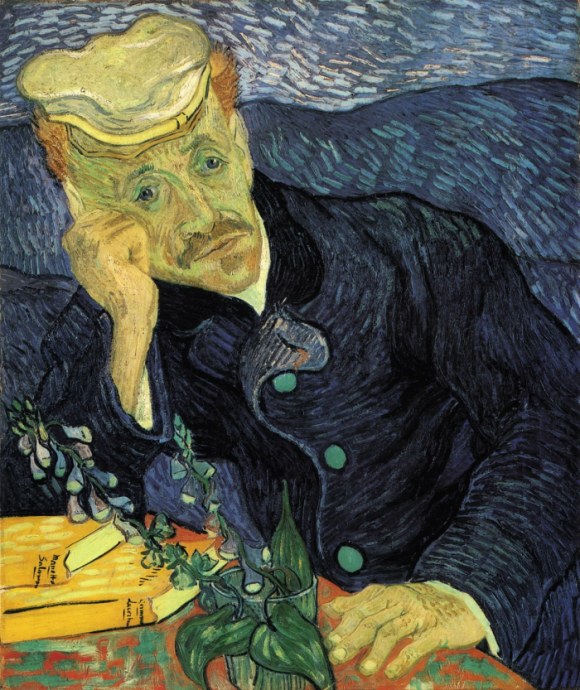
Sources disagree about whether the sixty-one-year-old Dr. Gachet actually dyed his hair the strange, unchanging yellow-orange color that had earned him the sobriquet "Dr. Saffron" long before Vincent painted his portrait (Rewald, Post-Impressionism from Van Gogh to Gauguin, pp. 365-366). Vincent weighs in on the question only indirectly: "I am working on his portrait, his head with a white cap -- very blond hair, very bright" (JLB 877, 6/3/1890; translation from ibid., p. 367). In a letter written to Wil some weeks later, Vincent refers to the "reddish hair" ("chevelure russe") in his portrait of Dr. Gachet, but neither of the two versions of the portrait (Portrait of Doctor Gachet [F 753 JH 2007] and Portrait of Doctor Gachet [F 754 JH 2014]) bear out this description (JLB 879, 6/5/1890). In both, the hair is orange and yellow. We suspect that the reference to "rousse" is part of Vincent's reparative delusion of solidarity with the doctor after their relationship (and Vincent's life in Auvers) had begun to unravel (see Ch. 42, n. 277).
Context:
JLB 875, 5/25/1890: "He seems very reasonable to me, but is as discouraged in his profession of country doctor as I with my painting."
Context:
BVG 635, 5/20/1890: "Then he said that I must work boldly on, and not think at all of what went wrong with me."
JLB 873, 5/20/1890: "Then he tells me that I must work a great deal, boldly, and not think at all about what I've had."
Context:
BVG 637, 5/25/1890: "He [Gachet] said to me besides, that if the depression or anything else became too great for me to bear, he could quite well do something to diminish its intensity, and that I must not find it awkward to be frank with him."
JLB 875, 5/25/1890: "He told me, besides, that if melancholy or something else were to become too strong for me to bear, he could well do something again to lessen its intensity, and that I mustn't be embarrassed to be open with him."
Context:
BVG 648, 5/24/1890: "I think that we must not count on Dr. Gachet at all."
JLB RM 20, 5/24/1890: "I think that we must in no way count on Dr Gachet."
Context:
BVG 636, 5/21/1890: " There is a great deal of colour here -- but there are such pretty middle-class country houses, much prettier than Ville d'Avray, etc., to my thinking."
JLB 874, 5/21/1890: " It's very colourful here -- but what pretty middle-class country houses there are; much prettier than Ville-d'Avray &c., to my taste."
Context:
JLB 874, 5/21/1890: "When you can do so, you might send me [Charles] Bargue's Exercices au fusain for a while, I absolutely need it, I'll copy them to keep the copies for good." (Emphasis in original)
Context:
JLB 875, 5/25/1890: "I have a drawing of an old vineyard of which I plan to do a no. 30 canvas, then a study of pink chestnut trees and one of white chestnut trees."
Context:
BVG 637, 5/25/1890: "But if circumstances allow it, I hope to work a little at the figure."
JLB 875, 5/25/1890: "But if circumstances permit, I hope to do a little figure work."
Context:
JLB 875, 5/25/1890: "Paintings vaguely present themselves to my sight which it will take time to shape, but that will come little by little."
Context:
JLB 875, 5/25/1890: "My trunk hasn't arrived yet, which annoys me, I sent a telegram this morning."
Context:
BVG 648, 5/24/1890: " Often, very often I think of my little nephew -- is he well? … And I say what I think, because you quite understand that I take an interest in my little nephew and am anxious for his well-being: since you were good enough to call him after me, I should like him to have a soul less unquiet than mine, which is foundering.
JLB RM 20, 5/24/1890: " Often, very often, I think of my little nephew -- is he well? ... And I say what I think because you well understand that I take an interest in my little nephew and care about his well-being; since you really wanted to name him after me, I'd wish him to have a less anxious soul than mine. Which is foundering."
Vincent's longing to "adopt" Theo's family had its disturbing side. That side can be seen in one of the images that Vincent brought with him to Auvers (in his head if not in his portfolio): Rembrandt's The Little Goldsmith. Theo had sent him a copy of this etching, along with The Good Samaritan" and The Raising of Lazarus, for his birthday in March 1890, in the depths of his delirium (JLB 860, 3/29/1890; see Ch. 41, n. 398). When he opened the letter in May, he found the little image, unknown to him, "so mysterious that I'm afraid of it and dare not wish to know what it is" (JLB 865, 5/1/1890). It showed the craftsman at his forge, just completing a small statuette of a woman with two infant children clinging to her. In a gesture both touching and strange, the lonely goldsmith wraps his arm protectively around his creations and leans in to embrace them.
Context:
BVG 462, Summer 1887: "If you were to fall properly in love and were to get married, then it doesn't seem impossible to me that you might manage to acquire a country house like so many other art dealers."
JLB 572, 7/23/1887-7/25/1887: "If you really fell in love and then got married, I wouldn't think it impossible that you too might manage to get hold of a house in the country, like so many other picture dealers."
Context:
JLB 577, 2/21/1888: "But I tell myself that you'll perhaps come here often yourself later on. It seems to me almost impossible to be able to work in Paris, unless you have a refuge in which to recover and regain your peace of mind and self-composure. Without that, you'd be bound to get utterly numbed."
Context:
BVG 648, 5/24/1890: " At present it seems to me that while the child is still only six months old, your milk is already drying up, already -- like Theo -- you are too tired."
JLB RM 20, 5/24/1890: " At present -- it seems to me that although the child is no more than 3 months old yet, the milk is already becoming sparse, already you're like Theo, too tired."
Context:
BVG 648, 5/24/1890: "But considering how things have happened – honestly -- I think that Theo, Jo and the little one are a little on edge and are worn out -- and besides, I myself am also far from having reached any kind of tranquility."
JLB RM 20, 5/24/1890: "But considering things as faits accomplis -- my word -- I think that Theo, Jo and the little one are a little on edge and worn out -- besides, I too am far from having arrived at some kind of tranquility."
Context:
BVG 648, 5/24/1890: " I always foresee that the child will suffer later on for being brought up in the city."
JLB RM 20, 5/24/1890: " I still foresee that it makes the child suffer later to be brought up in town."
Context:
JLB 875, 5/25/1890: "Often, very often, I think of your little one, and I then tell myself that I would like him to be big enough to come to the country. For it's the best system of bringing them up here."
Context:
BVG 637, 5/25/1890: " Auvers is very beautiful, among other things a lot of old thatched roofs, which are getting rare."
JLB 875, 5/25/1890: " Auvers is really beautiful -- among other things many old thatched roofs, which are becoming rare."
Context:
BVG 637, 5/25/1890: "So I should hope that by settling down to do some canvases of this there would be a chance of recovering the expenses of my stay -- for really it is profoundly beautiful, it is the real country, characteristic and picturesque. It is as I thought, I see more violet hues wherever they are.
JLB 873, 5/20/1890: "I'd hope, then, that in doing a few canvases of that really seriously, there would be a chance of recouping some of the costs of my stay -- for really it's gravely beautiful, it's the heart of the countryside, distinctive and picturesque."
Context:
BVG 636, 5/21/1890: "Auvers is decidedly very beautiful."
JLB 874, 5/21/1890: "Auvers is decidedly very beautiful."
Context:
BVG 636, 5/21/1890: "So I should hope that by settling down to do some canvases of this there would be a chance of recovering the expenses of my stay -- for really it is profoundly beautiful, it is the real country, characteristic and picturesque."
JLB 874, 5/21/1890: "I'd hope, then, that in doing a few canvases of that really seriously, there would be a chance of recouping some of the costs of my stay -- for really it's gravely beautiful, it's the heart of the countryside, distinctive and picturesque."
Context:
BVG 637, 5/25/1890: "Here one is far enough from Paris for it to be real country, but nevertheless how changed since Daubigny."
JLB 875, 5/25/1890: "Here we're far enough from Paris for it to be the real countryside, but nevertheless, how changed since Daubigny."
Context:
BVG 637, 5/25/1890: "This in an almost lush country, just at the moment when a new society is developing in the old, is not at all unpleasing; there is much well-being in the air."
JLB 875, 5/25/1890: "That in an almost lush countryside, just at this moment of the development of a new society in the old one, has nothing disagreeable about it; there's a lot of well-being in the air."
Context:
JLB 875, 5/25/1890: "I see or think I see a calm there
Context:
BVG 636, 5/21/1890: "I see or think I see in it a quiet like that of Puvis de Chavannes, no factories, but lovely greenery in abundance and well kept."
JLB 875, 5/25/1890: "I see or think I see a calm there
Context:
BVG 637, 5/25/1890: "It seemed to me however that you had less appetite than formerly, and according to what the doctors say, constitutions like ours need very solid nourishment."
JLB 875, 5/25/1890: "It seemed to me, though, that you had less appetite than before, and from what the doctors say, we should have very solid food for our temperaments."
Context:
BVG 646, 7/2/1890: " I honestly believe that Jo would have twice as much milk here, and other quadrupeds."
JLB 896, 7/2/1890: " I'd willingly believe that Jo would have twice as much milk here, and that then when she came here one could do without cows, donkeys and other quadrupeds."
Context:
JLB 877, 6/3/1890: "I often think of you, Jo and the little one, and I see that the children here look well in the healthy fresh air."
Context:
BVG 638, 6/3/1890: "And yet even here it is difficult enough to bring them up, therefore it must be all the more terrible at times to keep them safe and sound in Paris on a fourth floor.
JLB 877, 6/3/1890: "And yet it's difficult enough to raise them, even here, all the more is it rather terrible sometimes to keep them safe and sound in Paris on a fourth floor."
Context:
BVG 638, 6/3/1890: "And yet even here it is difficult enough to bring them up, therefore it must be all the more terrible at times to keep them safe and sound in Paris on a fourth floor."
JLB 877, 6/3/1890: "And yet it's difficult enough to raise them, even here, all the more is it rather terrible sometimes to keep them safe and sound in Paris on a fourth floor."
b4306 V/1984, "Gogh-Bonger, Jo van" to "Bonger, Hermina", 6/7/1890. (See Ch. 42, n. 96.)
Context:
JLB 896, 7/2/1890: "Otherwise I think it would be a good plan to come and lodge here -- at his house -- with the little one, at least for a good month -- I think that the country air has an enormous effect."
Context:
JLB 896, 7/2/1890: "As regards the little one I think you mustn't worry yourselves excessively; if it's that he's teething, well to make the task easier for him perhaps we could distract him more here where there are children, animals, flowers and good air."
Context:
BVG 646, 7/2/1890: "I am beginning to fear that it will be necessary to give him fresh air and, even more, the little bustle of other children that a village has."
JLB 896, 7/2/1890: "For the little one, truly I'm beginning to fear that he must be given air, and especially the little bustle of the other children of a village."
Context:
BVG 648, 5/24/1890: "I think that we must not count on Dr. Gachet at all. First of all, he is sicker than I am, I think, or shall we say just as much, so that's that. Now when one blind man leads another blind man, don't they both fall into the ditch?"
JLB RM 20, 5/24/1890: "I think that we must IN NO WAY count on Dr Gachet. In the first place he's iller than I am, it seemed to me, or let's say just as much, there you have it. Now when one blind man leads another blind man, do they not both fall into the ditch?" (Emphasis in original.)
Context:
BVG 639, 5/25/1890: " The physician here has shown me much sympathy, I may come to his house as often as I want, and he has a good knowledge of what is being done these days among the painters."
JLB 878, 6/5/1890: " The doctor here has been very kind to me; I can go to his home as often as I like, and he's very well informed about what's going on among painters these days."
Context:
BVG 638, 6/3/1890: "Altogether father Gachet is very, yes very like you and me."
JLB 877, 6/3/1890: "Anyway père Gachet is a lot, yes a lot like you and I."
Context:
JLB 877, 6/3/1890: "I feel that he'll understand us completely, and that he'll work with you and me without reservation, with all his intelligence, for the love of art for art's sake."
Vincent conveys the message of solidarity with Gachet from his very first description of the portrait: "I'm working on his portrait, the head with a white cap, very fair, very light, the hands also in light carnation, a blue frock coat and a cobalt blue background, leaning on a red table on which are a yellow book and a foxglove plant with purple flowers. It's in the same sentiment as the portrait of myself that I took when I left for here." (JLB 877, 6/3/1890; emphasis added.) The self-portrait he refers to is Self-Portrait (F 627 JH 1772), an uncharacteristically light and affectless image done as a reassurance of restored health for Theo in September 1889 after the terrible attacks of summer. Vincent took this painting to Auvers (see Ch. 42, n. 30) and, in the same letter, dated June 3, claims that Gachet "is absolutely fanatical about this portrait, and wants me to do one for him, if I can, absolutely like that" (JLB 877, 6/3/1890; emphasis in original). He defensively elaborates: "[Gachet] has now also come to understand the last portrait of the Arlésienne, one of which you have in pink -- he comes back all the time, when he comes to see the studies, to these two portraits and he accepts them fully, but fully as they are" (ibid.).
The reliability of this whole account is suspect. First, by Vincent's own testimony, Gachet did not come to see his paintings until Sunday, May 25 (JLB 875, 5/25/1890). Thus, his report that he always comes back to these "two portraits" has to be taken as partly hyperbole (JLB 877, 6/3/1890). Furthermore, the first portrait of Gachet (Portrait of Doctor Gachet [F 753 JH 2007]) is not, in fact, anything like the self-portrait he claims it is "exactly like." It is painted in a looser style with less precise rendering, using directional brushstrokes (not the swirling, Starry-Night-like strokes of Saint-Rémy), less impasto, and in a darker palette with some sharp contrasts (not the intentionally bland harmonies of the self-portrait). In short, Vincent's claim about similar "sentiment" is more a function of his delusional campaign to convince Theo of Gachet's fraternal solidarity (like the Montpelier collector Alfred Bruyas) than a function of the images themselves.
BVG 638, 6/3/1890: There was never any doubt that this portrait was intended for Theo. When Vincent began the first version (Portrait of Doctor Gachet [F 753 JH 2007]) in early June, he wrote his brother a detailed description, including a statement of his intent, then added: "I hope to send you a portrait of him soon" (JLB 877, 6/3/1890). He included a letter sketch of the painting along with the description. The second version (Portrait of Doctor Gachet [F 754 JH 2014]) was created because Dr. Gachet purportedly liked the first version but could not have it because it was bound for Theo, so Vincent painted it again (perhaps with additional posing).
Context:
JLB 877, 6/3/1890: "I hope to send you a portrait of him soon."
Context:
BVG R11, 8/11/1882: "It can't be helped -- but what is sure to remain is something of the stern poetry of the real heath. And this real heath seems to exist in Drenthe as it used to in Brabant."
JLB 256, 8/13/1882: "Well, what will remain in me is something of the austere poetry of the true heathland. And it seems that the true heath still exists in Drenthe just as it used to in Brabant."
Context:
JLB 877, 6/3/1890: "And my health is good, I go to bed at 9 o'clock but I get up at 5 o'clock most of the time."
Context:
BVG 636, 5/21/1890: "But I find the modern villas and the middle-class country houses almost as pretty as the old thatched cottages which are falling into ruin."
JLB 874, 5/21/1890: "But I find the modern villas and the middle-class country houses almost as pretty as the old thatched cottages that are falling into ruin."
Context:
BVG 636, 5/21/1890: "There is a great deal of colour here -- but there are such pretty middle-class country houses, much prettier than Ville d'Avray, etc., to my thinking."
JLB 874, 5/21/1890: "It's very colourful here -- but what pretty middle-class country houses there are; much prettier than Ville-d'Avray &c., to my taste."
Landscape with Bridge across the Oise, F 1639 JH 2023, June 1890, pencil, watercolor, gouache, 18.7 x 24.8 in., 47.5 x 63 cm., Tate Gallery, London. According to Pickvance, this painting, Landscape with Bridge Across the Oise, is "the only extensive view" of the river, although the riverbank appears in Bank of the Oise at Auvers (F 798 JH 2021) and in several chalk drawings (Landscape with the Oise [F 1627 JH 2024] and Landscape with the Oise [F 1629 JH 2025]) (Pickvance, p. 252). This is the opposite of the emphasis given in Daubigny's depictions of Auvers (ibid.).
Vincent painted the agricultural plateau above the riverbank community of Auvers many times in his seventy days there, probably first in the painting referred to in the text, Landscape with Carriage and a Train (F 760 JH 2019). Vincent himself connects this work to his 1888 painting of the Crau outside Arles (Harvest at La Crau, with Montmajour in the Background [F 412 JH 1440]), when he first reports painting it in mid-June: "I have another study that's in the genre of the Harvest that's at your place in the room where the piano is. Fields viewed from a height with a road on which there's a small carriage." (JLB 887, 6/14/1890.) He would return to the same vista in Wheat Fields near Auvers (F 775 JH 2038), Wheat Field under Clouded Sky (F 778 JH 2097), Plain Near Auvers (F 782 JH 2099), Wheat Fields at Auvers under Clouded Sky (F 781 JH 2102), Wheat Field with Cornflowers (F 808 JH 2118), and The Fields (F 761 JH 2120).
Chestnut Trees in Blossom, F 751 JH 1992, May 1890, oil on canvas, 27.6 x 22.8 in., 70 x 58 cm., Private collection.
Village Street and Steps in Auvers with Figures (F 795 JH 2111) and Two Women Crossing the Fields (F 819 JH 2112).
Village Street and Steps in Auvers with Two Figures (F 796 JH 2110), Village Street and Steps in Auvers with Figures (F 795 JH 2111), Two Women Crossing the Fields (F 819 JH 2112).
Old Vineyard with Peasant Woman, F 1624 JH 1985, May 1890, pencil, washed, blue, red, and white gouache, 17.1 x 21.3 in., 43.5 x 54 cm., Van Gogh Museum, Amsterdam. Vincent expressed an intention to paint a "large canvas" with the same motif as this gouache, but apparently never did so (JLB R20, 5/24/1890). (See Pickvance, p. 223.)
The painting described in the text is Young Peasant Woman with Straw Hat Sitting in the Wheat (F 774 JH 2053), but Vincent painted the same girl, standing in a wheatfield (instead of seated) in Young Girl Standing against a Background of Wheat (F 788 JH 2055). Although the dress is different, the hat, the face, the expression, and the upper body are so identical in the two paintings that Vincent appears to have either transferred one onto the other or to have used the same preparatory drawing for both. The seated version appears in a letter sketch (Girl with Straw Hat, Sitting in the Wheat [F 646 JH 2054]) (JLB 896, 7/2/1890). This, and the awkward posture of the standing version, suggest that the model originally posed from a seated position. Vincent painted a third portrait of the same model seen from the other side (The Little Arlesienne [F 518 JH 2056]; see Pickvance, p. 243). In this painting, she is well-dressed, shown from the chest up, bareheaded, and posed against what appears to be wallpaper.
These various circumstances suggest that the model may have been a member of Dr. Gachet's household, since these portraits date from around the same time as the portrait of Gachet's daughter Marguerite (Marguerite Gachet at the Piano [F 772 JH 2048]). Vincent writes c. June 24: "I hope to do the portrait of Mlle. Gachet next week, and perhaps I shall have a country girl pose too" (JLB 891, 6/24/1890). This pairing may reflect Paul Gachet's earlier offer to help Vincent find models to pose for him (JLB 877, 6/3/1890 and JLB 879, 6/5/1890). Or the sitter may have been the mother or governess of the two children that Vincent painted around the same time (Two Children [F 783 JH 2051], Two Children [F 784 JH 2052]), identified by Gustave Coquiot as the daughters of a local railroad signalman (see Distel and Stein, p. 86).
Child with Orange (F 785 JH 2057), Two Children (F 783 JH 2051), and Two Children (F 784 JH 2052) (although the attribution of the last two, especially Two Children (F 783 JH 2051), has been questioned). According to Distel and Stein, Gustave Coquiot interviewed Paul Gachet, Jr., who identified "this portrait of two little girls [as] the daughters of the signalman at a railroad crossing in Auvers" (Gachet, quoted in Distel and Stein, p. 86).
All three of the paintings of children (see Ch. 42, n. 126) are situated outdoors. In Two Children (F 783 JH 2051 and JH 2052), a pair of children sits in front of a tableau of thatch-roof cottages, one of them holding a flower. In Child with Orange (F 785 JH 2057), a single child sits in bed of flowers and holds an orange -- an emblem of healthy eating.
Young Man with Cornflower, F 787 JH 2050, June 1890, oil on canvas, 15.4 x 12 in., 39 x 30.5 cm., Private collection. This may be the same red-headed boy shown in Thatched Sandstone Cottages in Chaponval (F 780 JH 2115) in what appears to be an amorous approach to a dark-haired girl.
Context:
JLB 863, 4/29/1890: "I think that if you still have them I could now make something better of them from memory."
Field with Poppies, F 636 JH 2027, June 1890, oil on canvas, 28.7 x 36 in., 73 x 91.5 cm., Haags Gemeentemuseum, The Hague. Vincent refers to the image as "a field of poppies in some lucerne" (JLB 877, 6/14/1890). According to Pickvance: "The motif is reminiscent of several paintings by Monet" (p. 240).
The painting is Bank of the Oise at Auvers (F 798 JH 2021), which depicts two women and a man in and around a line of row boats moored on the river's edge. According to Pickvance: "Aptly called La Grenouillere (Frog Pond) by de la Faille and others, the motif is reminiscent of Monet's and Renoir's 1869 paintings of the Seine at Croissy, much closer to Paris" (p. 245).
The painting is Women Crossing the Fields, F 819 JH 2112, July 1890, oil on paper on canvas, 12.6 x 25.2 in., 32 x 64 cm., Marion Koogler MacNay Art Museum, San Antonio. Vincent had been particularly impressed by Puvis's Between Art and Nature at the Salon, which he saw during his brief time in Paris in May (see Ch. 42, n. 9). In late June, he commented on the Puvis-like character of some of the Auvers locals: "And then this has been gained, that in women's clothes one sees very pretty arrangements of bright colours. If only one could have the individuals one sees pass by to do their portraits, it would be as pretty as any past era, and I even think that often in nature there is currently all the grace of Puvis's painting, Between art and nature. Thus yesterday I saw two figures, the mother in dark carmine dress, the daughter in pale pink with a yellow hat without any ornamentation, very healthy figures, rustic, well tanned by the open air, burned by the sun, the mother especially with a very, very red face and black hair and two diamonds in her ears." (JLB 893, 6/28/1890.) Vincent apparently attempted this image, with some minor changes, on a relatively small (12" x 24") sheet of laid paper soon after he described it to Theo. The result was Two Women Crossing the Fields (F 819 JH 2112), which Pickvance calls an "unusual, jewellike frieze" and Vincent's "tangible answer to Puvis de Chavannes's Inter Artes et Naturam, which haunted van Gogh's imagination from the moment he saw it" (Pickvance, p. 254).
Context:
JLB 677, 9/9/1888: "One of these days you'll see a painting of the little house itself, in full sunshine or else with the window lit and the starry sky."
Context:
JLB 863, 4/29/1890: "Then if you like I'll redo the old tower at Nuenen and the cottage. I think that if you still have them I could now make something better of them from memory."
BVG W22, 6/5/1890. The painting Vincent refers to re-rendering (see Ch. 42, n. 136) is Old Church Tower at Nuenen, F 84 JH 772, May-June 1885, oil on canvas, 25.6 x 34.6 in., 65 x 88 cm., Van Gogh Museum, Amsterdam. In fact, he painted and drew the old church tower many times during his time in Nuenen. (See Chapter 25.)
Context:
JLB 879, 6/5/1890: "With that I have a larger painting of the village church -- an effect in which the building appears purplish against a sky of a deep and simple blue of pure cobalt, the stained-glass windows look like ultramarine blue patches, the roof is violet and in part orange. In the foreground a little flowery greenery and some sunny pink sand. It's again almost the same thing as the studies I did in Nuenen of the old tower and the cemetery. Only now the colour is probably more expressive, more sumptuous."
Context:
BVG W22, 6/5/1890: "Apart from these I have a larger picture of the village church -- an effect in which the building appears to be violet-hued against a sky of simple deep blue colour, pure cobalt; the stained-glass windows appear as ultramarine blotches, the roof is violet and partly orange."
JLB 879, 6/5/1890: "With that I have a larger painting of the village church -- an effect in which the building appears purplish against a sky of a deep and simple blue of pure cobalt, the stained-glass windows look like ultramarine blue patches, the roof is violet and in part orange."
BVG W22, 6/5/1890. (See Ch. 42, n. 139.)
Context:
BVG W22, 6/5/1890: "In the foreground some green plants in bloom, and sand with the pink flow of sunshine in it."
JLB 879, 6/5/1890: "In the foreground a little flowery greenery and some sunny pink sand."
BVG W22, 6/5/1890. (See Ch. 42, n. 139.) We believe Vincent's use of "again" is significant not superfluous. It underscores that he sees the images from Auvers as part of a coherent campaign to repaint the imagery of the past, as he promised Theo he would do before leaving Saint-Rémy in May, as a kind of expiation for his sins. In his delusional calculus, he expected to be rewarded for this act of contrition by being reunited with his family -- that is, Theo's family.
Context:
BVG W22, 6/5/1890: "And once again it is nearly the same thing as the studies I did in Nuenen of the old tower and the cemetery, only it is probably that now the colour is more expressive, more sumptuous."
JLB 879, 6/5/1890: "It's again almost the same thing as the studies I did in Nuenen of the old tower and the cemetery. Only now the colour is probably more expressive, more sumptuous."
Context:
BVG 636, 5/21/1890: " I'll be very glad if some time from now you were to come here one Sunday with your family."
JLB 874, 5/21/1890: " Will be very pleased if in a little while from now you could come here one Sunday with your family."
BVG 648, 5/24/1890. (See Ch. 42, n. 144.) Vincent did not send the letter in which he stated his ambitions so baldly so early. Not until more than a month later did he his longing demand to be aired openly: "I think it would be a good plan to come and lodge here -- at his house -- with the little one, at least for a good month -- I think that the country air has an enormous effect" (JLB 896, 7/2/1890).
Context:
BVG 648, 5/24/1890: "But -- without daring to say that this is enough -- however it may be, it is certainly preferable that father, mother and child should take a month of absolute rest in the country."
JLB RM 20, 5/24/1890: "But -- without daring to say that it might be enough -- whatever the case it's certainly preferable that father, mother and child take an absolute rest in the country for a month."
Context:
JLB 875, 5/25/1890: "How I would like you, Jo and the little one to have a rest in the country instead of the traditional journey to Holland."
Context:
BVG 637, 5/25/1890: "Yes, I know quite well that Mother will insist on seeing the little one, and that is certainly a reason for going, but she would surely understand if it was really better for the baby."
JLB 875, 5/25/1890: "However, she would certainly understand if it were really in the little one's best interests."
Context:
BVG 648, 5/24/1890: "But one more reason, putting aside all ambition, we can live together for years without ruining each other."
JLB RM 20, 5/24/1890: "But one more reason, setting aside all ambition, we can live together for years without ruining ourselves on either side" (emphasis in original).
Context:
BVG T35, 6/2/1890: " At some time or other I shall have to go there [Auvers], and I shall be pleased to lend a willing ear to your proposal to come with Jo and the little one, for I am feeling rather exhausted, and the country will do me good."
JLB 876, 6/2/1890: " I must come one time, and I'm very receptive to your proposal that I should come with Jo and the little one, for I feel quite emptied, and the countryside would do me good."
BVG T35, 6/2/1890. (See Ch. 42, n. 148.)
Context:
JLB 876, 6/2/1890: "If I can have around 3 weeks' holiday, we'd first go to you and then to Holland."
Context:
JLB 880, 6/5/1890: "He has invited us to come to his house next Sunday, where you would be too."
Context:
BVG T36, 6/5/1890: "Dr. Gachet came to see me yesterday, but unfortunately there were customers, which prevented me from talking with him very much, but at any rate he told me that he thought you entirely recovered, and that he did not see any reason for a return of your malady."
JLB 880, 6/5/1890: "Yesterday Dr Gachet came to see me, and unfortunately there were people there, which prevented me from talking with him much, but what he said to me was that he thought you cured and that he saw no need at all for it to recur."
Context:
BVG T36, 6/5/1890: "We should be damned glad to do it [visit Gachet and V next Sunday], but it is not possible all the same for Jo to make a definite promise."
JLB 880, 6/5/1890: "Would you go and see Dr Gachet and tell him that if the weather is fine we accept with great pleasure, but that we dare not promise outright, and that if we come we'd want to be home again before the evening."
Theo clearly reserved the right to cancel the trip right up until the morning of Sunday, June 8, if the weather did not meet his standards. Only the day before, Jo wrote her sister Mien: "You know that Vincent is in Auvers and met that Dr Gachet there. That doctor came to see Theo and invited us, with the child, for tomorrow and Theo was so keen on going. At first I was a bit afraid after that unfortunate trip to St Cloud, but anyway, we'll give it another try." (b4306 V/1984, ''Gogh-Bonger, Jo van'' to ''Bonger, Hermina'', 6/7/1890.) So tentative were the plans that neither Jo nor Theo canceled the alternate plans they had made to host Jo's brother Andries and his wife that Sunday. Andries' wife Anne wrote to Andries' parents about the last-minute change of plans: "On Sunday morning [June 8] we woke up very late. We had planned to visit Net [Jo] and Theo that afternoon, but around eleven o'clock we received a telegram to let us know that they were going to Auvers." (b1854 V/1970, ''Bonger-van der Linden, Anne Marie Louise'' to ''Bonger, H.C. en H.L.'', 6/11/1890.) So Theo didn't make a final decision to go to Auvers until eleven o'clock on the morning of June 8, around the time the train left the Paris station (see Ch. 42, n. 155).
BVG T35, 6/2/1890. JLB 876, 6/2/1890. Theo's primary reason for withholding a final commitment until the last minute (see Ch. 42, n. 153) was his fear of repeating the bad experience the family had had on its previous day-trip to a Paris suburb, St. Cloud, in late May: "We went to St-Cloud on Whit Sunday, and there we had that terrible downpour that must have fallen where you are too. Although the little one didn't catch cold he's been all upset since then, probably by the crowd we were obliged to pass through." (JLB 880, 6/5/1890.) Jo confirms this concern in her letter to her sister the day before the scheduled trip to Auvers: "Theo was so keen on going. At first I was a bit afraid after that unfortunate trip to St Cloud, but anyway, we'll give it another try." (See Ch. 42, n. 153.) To his credit, Theo did apparently commit to coming to Auvers alone on June 8 in the event of inclement weather: "I must say goodbye. I'll come in any case at the stated time" (JLB 880, 6/5/1890).
Context:
JLB 876, 6/2/1890: "We went to St-Cloud on Whit Sunday, and there we had that terrible downpour that must have fallen where you are too. Although the little one didn't catch cold he's been all upset since then, probably by the crowd we were obliged to pass through."
Van Gogh-Bonger, in Van Gogh, pp. li-lii. (See Ch. 42, n. 157.) The literature contains the possibility that Vincent accompanied Dr. Gachet to greet Theo and his family, although Jo does not mention this in her Memoir account. In his letter announcing the visit, Theo seems to specify the reception arrangements agreed upon with Dr. Gachet, and they do not include Vincent: "There's a train at 5.58 which we'd take. In the morning we'd leave with the 10.25 train, which arrives at Chaponval at 11.26. The Dr said to get off there, that he wanted to come to meet us." (JLB 880, 6/5/1890.) According to Demory, at Gachet's suggestion, the Van Goghs disembarked not at the train station but at a "café-cum-restaurant" called "À la halte de Chaponval" that had been designated as an additional stop for Auvers (Demory, p. 64). The café had been recently opened by the engraver Félix Penel, and "he was able to create so warm an atmosphere there that it attracted Van Gogh" (ibid.).
Van Gogh-Bonger, in Van Gogh, pp. li-lii. (See Ch. 41, n. 139.) On this score, Jo's later account is supported by a letter Vincent sent Wil soon after the visit that apparently contained a similar report. Vincent's letter has not survived, but Wil mentions it in a letter to Jo: "Vincent wrote about his first meeting with the animal kingdom. How nice it is that he lives within reach now. I am so happy that things appear to go well with him." (b2926 V/1982, "Gogh, Willemina van" to "Gogh-Bonger, Jo van", 6/26/1890.) Paul Gachet, Jr., a teenager when Vincent knew his father, later published an account that contained a similar story: "June 8th [1890] is a memorable day: Vincent is happy! His brother, his wife and young Vincent spend Sunday with us. ... Vincent, holding the child under his arm, took wild delight in throwing him to chase after the hens, roosters, chicken and ducks which fled in alarm. The oft-repeated game delighted the uncle even more than the nephew." (Gachet, Deux Amis des Impressionistes, pp. 112-113.) Vincent reported the same "game" in his letter to his mother after the visit: "Theo, his wife and his child were here on Sunday and we lunched at Dr. Gachet's. Then my little namesake had pretty much his first encounter with the animal kingdom, since there are 8 cats, 3 dogs, as well as hens, rabbits, ducks, pigeons &c. in great numbers around the place. But I don't think he understands very much of it for the present." (JLB 885, 6/13/1890.) The final note of disappointment ("I don't think he understands very much of it") reinforces the other accounts that the child did not enjoy his uncle's game.
b4306 V/1984, "Gogh-Bonger, Jo van" to "Bonger, Hermina", 6/7/1890: Theo bought the pram the day before the trip to Auvers, as Jo informed her sister on June 7: "This morning Theo bought a baby carriage because Victorine couldn't carry him as well as Joseph could. She tires easier." (Mrs.) "Joseph" was the Van Goghs' housekeeper. "Victorine" was apparently a new nanny or governess, who may have accompanied them on the trip to Auvers. None of the accounts include her, but it would be typical of the era not to note her presence. Included in Vincent's work from this period is a seated woman holding a baby in her lap (Sketch of a Woman with a Baby in her Lap [F 1617 JH 2076]), and several showing barnyard fowl (Sketch of a Hen [F 1731 JH 2068] and Sketches of a Hen and a Cock [F 1654v JH 2070]) as described in the various accounts of the Van Goghs' visit to Gachet's house (see Ch. 42, n. 158).
Context:
BVG 640, 6/10/1890: " Sunday has left me a very pleasant memory; in this way we feel that we are not so far from one another, and I hope that we shall often see each other again. … I thought that the little one looked well and you two also; you must come back soon."
JLB 881, 6/10/1890: " Sunday has left me a very pleasant memory. … I thought that the little one looks well, and you two also; you must come back quickly."
BVG 640, 6/10/1890. (See Ch. 42, n. 164.)
Context:
JLB 881, 6/10/1890: "Sunday has left me a very pleasant memory. In this way we really feel that we're not so far from one another, and I hope that we'll see each other again often."
Context:
BVG 641a, 6/12/1890: "It is a very reassuring feeling for me to live so much closer to them. You too will probably be seeing them soon."
JLB 885, 6/13/1890: "It was a very reassuring feeling for me to be more in their vicinity again."
Context:
BVG 640, 6/10/1890: "Here I pay 1 franc a day for sleeping, so if I had my furniture, the difference between 365 francs and 400 would be no great matter, I think, and then I should very much like you two to have a pied
Context:
BVG 614a, 5/25/1890: "As for me, I tell you as a friend, I feel impotent when confronted with such nature, for my Northern brains were oppressed by a nightmare in those peaceful spots, as I felt that one ought to do better things with the foliage."
JLB RM21, 5/25/1890: "Myself, I tell you as a friend, before such a nature I feel powerless, my northern brain having been seized by a nightmare in these peaceful places, because I felt one must be better to do it."
Context:
BVG 637, 5/25/1890: "And things may yet get better, I still think that it is mostly a malady of the South that I have caught, and that the return here will be enough to dissipate the whole thing."
JLB 875, 5/25/1890: "And they may get even better, I still believe that it's above all an illness of the south that I caught, and that the return here will be enough to dispel all that."
Context:
BVG 640, 6/10/1890: "All the same it is odd that here the nightmares have ceased to such an extent; I always told M. Peyron that returning to the North would free me from it, but it is also odd that under his direction, though he is very capable and certainly wished me well, it was somewhat aggravated."
JLB 881, 6/10/1890: "I always told Mr. Peyron that the return to the north would rid me of it, but odd, too, that it had got rather worse under the latter's supervision, although he's very capable and definitely wished me well."
BVG 639, 5/25/1890: "But the pleasure of seeing Theo again and making the acquaintance of Jo, who seems to me sensible and cordial and simple, and my new little namesake, and further, to be back among painters and interested in all the struggle and discussions and especially in the work of the little self-contained world of painters -- all this distraction has, it seems to me, a favourable effect in so far as the symptoms of the disease, which are a sort of thermometer, have quite disappeared these days -- though, as I have learned, one must not count too much on this."
JLB 878, 6/5/1890: "But the pleasure of seeing Theo again and meeting Jo, who seems to me sensible and warm-hearted and uncomplicated, and my new little namesake, and further to be back among painters and immersed again in all the conflict and discussion and above all work in the painters' little world of their own, all this distraction has a favourable effect, it seems to me, in so far as the symptoms of the malady (which are like its thermometer) have disappeared altogether recently -- although I've learned that one may not make too much of that."
BVG 640, 6/10/1890. (See Ch. 42, n. 168.)
Context:
JLB 881, 6/10/1890: "It's odd, all the same, that the nightmare should have ceased to such an extent here."
BVG 639, 5/25/1890. (See Ch. 42, n. 169.)
Context:
BVG 639, 5/25/1890: "But the pleasure of seeing Theo again and making the acquaintance of Jo, who seems to me sensible and cordial and simple, and my new little namesake, and further, to be back among painters and interested in all the struggle and discussions and especially in the work of the little self-contained world of painters -- all this distraction has, it seems to me, a favourable effect in so far as the symptoms of the disease, which are a sort of thermometer, have quite disappeared these days -- though, as I have learned, one must not count too much on this."
JLB 878, 6/5/1890: "But the pleasure of seeing Theo again and meeting Jo, who seems to me sensible and warm-hearted and uncomplicated, and my new little namesake, and further to be back among painters and immersed again in all the conflict and discussion and above all work in the painters' little world of their own, all this distraction has a favourable effect, it seems to me, in so far as the symptoms of the malady (which are like its thermometer) have disappeared altogether recently -- although I've learned that one may not make too much of that."
Context:
JLB 877, 6/3/1890: "Peyron asked for news of me when he wrote to you. I'm going to write to him this very evening that things are going well, for he was very kind to me and I'll certainly not forget him."
BVG 638, 6/3/1890. (See Ch. 42, n. 172.)
Context:
BVG 638, 6/3/1890: "I am going to write him this very evening that all is well, for he was very kind to me and I shall certainly not forget him."
JLB 877, 6/3/1890: "I'm going to write to him this very evening that things are going well, for he was very kind to me and I'll certainly not forget him."
Context:
JLB 878, 6/5/1890: "All this distraction has a favourable effect, it seems to me, in so far as the symptoms of the malady (which are like its thermometer) have disappeared altogether recently -- although I've learned that one may not make too much of that."
Context:
BVG T35, 6/2/1890: " I hope you will become friends. I should like very much to have a friend who is a doctor, for one wishes to know at any given moment, especially on account of the little one, the cause of those fits of depression and indisposition."
JLB 876, 6/2/1890: "What you write about Doctor Gachet interests me a great deal, I hope that you'll become good friends with him. I'd very much like to have a friend who was a doctor, for at every turn one would like to know, especially for the little one, where illnesses come from."
Context:
BVG W22, 6/5/1890: "And then I have found a true friend in Dr. Gachet, something like another brother, so much do we resemble each other physically and also mentally."
JLB 879, 6/5/1890: "Then I've found in Dr. Gachet a ready-made friend and something like a new brother would be -- so much do we resemble each other physically, and morally too."
Context:
BVG 639, 5/25/1890: "The physician here has shown me much sympathy, I may come to his house as often as I want, and he has a good knowledge of what is being done these days among the painters."
JLB 878, 6/5/1890: "The doctor here has been very kind to me; I can go to his home as often as I like, and he's very well informed about what's going on among painters these days."
Context:
JLB 883, 6/11/1890: "The latter knows a lot about painting, and likes mine very much, he encourages me a great deal, and two three times a week he comes to spend a few hours with me to see what I'm doing."
Context:
BVG 640a, 6/12/1890: " This gentleman knows a good deal about painting, and he greatly likes mine; he encourages me very much, and two or three times a week he comes and visits me for a few hours to see what I am doing."
JLB 883, 6/11/1890: " The latter knows a lot about painting, and likes mine very much, he encourages me a great deal, and two three times a week he comes to spend a few hours with me to see what I'm doing" (emphasis in original).
Context:
JLB 879, 6/5/1890: "We were friends, so to speak, immediately, and I'll go and spend one or two days a week at his house working in his garden, of which I've already painted two studies."
Context:
JLB 877, 6/3/1890: "He'll certainly continue to invite me to dinner each Sunday or Monday."
Context:
JLB 878, 6/5/1890: "He has two children, a girl of 19 and a boy of 16."
Context:
BVG 638, 6/3/1890: "The thing that has somewhat prevented me from protesting against it is that it recalls the old times to him, when there were those family dinners which we ourselves know so well."
JLB 877, 6/3/1890: "What has held me back a little from saying something about it is that I see that, for him, it reminds him of the days of yore when people had family dinners, which anyway we too well know."
Context:
JLB 893, 6/28/1890: "Yesterday and the day before yesterday I painted Miss Gachet's portrait, ... It's a figure I enjoyed painting -- but it's difficult. He's promised to get her to pose for me another time with a little organ. I'll do one for you."
Context:
BVG 638, 6/3/1890: "I shall most probably also do the portrait of his daughter, who is nineteen years old, and with whom I imagine Jo would soon be friends."
JLB 877, 6/3/1890: "I'll very probably also do the portrait of his daughter, who is 19, and with whom I can easily imagine Jo will quickly make friends."
Context:
BVG 646, 7/2/1890: "But for that, I think that it would be a good plan to come and stay here -- with him -- with the little one, for a full month at least. I think that country air has an enormous effect."
JLB 896, 7/2/1890: "Otherwise I think it would be a good plan to come and lodge here -- at his house -- with the little one, at least for a good month -- I think that the country air has an enormous effect."
Context:
JLB 873, 5/20/1890: "He [Gachet] directed me to an inn where they were asking 6 francs a day. For my part I've found one where I'll pay 3.50 a day."
Context:
BVG 646, 7/2/1890: "I think that country air has an enormous effect."
JLB 896, 7/2/1890: "Otherwise I think it would be a good plan to come and lodge here -- at his house -- with the little one, at least for a good month -- I think that the country air has an enormous effect."
Context:
BVG 646, 7/2/1890: " The people at the inn here used to live in Paris, where they were constantly unwell, parents and children; here they never have anything wrong with them at all, especially the youngest one, who came when he was two months old, and then the mother had difficulty nursing him, whereas here everything came right almost at once."
JLB 896, 7/2/1890: " The people here at the inn used to live in Paris; there they were constantly indisposed, parents and children, here they never have anything, and especially not the littlest one which came here when it was 2 months old, and then the mother had difficulty in suckling him, while here all of that went well almost immediately."
Tralbaut, p. 320: Tralbaut supplies the name of the two-month-old male child described by Vincent (JLB 896, 7/2/1890; see Ch. 42, n. 193), but mistakenly identifies him as "Levert." "Levert" would have been the son of a carpenter named Levert, who later made Vincent's coffin (Pickvance, p. 217).
BVG 646, 7/2/1890. (See Ch. 42, n. 193.)
Context:
BVG 646, 7/2/1890: "The people at the inn here used to live in Paris, where they were constantly unwell, parents and children; here they never have anything wrong with them at all, especially the youngest one, who came when he was two months old, and then the mother had difficulty nursing him, whereas here everything came right almost at once."
JLB 896, 7/2/1890: "The people here at the inn used to live in Paris; there they were constantly indisposed, parents and children, here they never have anything, and especially not the littlest one which came here when it was 2 months old, and then the mother had difficulty in suckling him, while here all of that went well almost immediately."
Portrait of Adeline Ravoux, F 768 JH 2035, June 1890, oil on canvas, 26.4 x 21.7 in., 67 x 55 cm., Private collection. Vincent painted two other portraits of Adeline, Portrait of Adeline Ravoux (F 786 JH 2036) and Portrait of Adeline Ravoux (F 769 JH 2037). According to interviews Adeline Ravoux-Carrié gave late in life, she only sat once for Vincent and only participated in one painting. (See: Ravoux-Carrié, "Recollections on Vincent van Gogh's Stay in Auvers-sur-Oise," in Stein, ed., p. 213.) The others were either copied from the one done from life (Vincent reports doing a copy for his brother in late June [JLB 891, 6/24/1890]), or based on sketches made at the same time. (Portrait of Adeline Ravoux [F 786 JH 2036] shows the model from a different angle.)
Studies of a Man Digging and a Landscape with Cypresses, F 1593v JH 1890, February-March 1890, pencil, 9.3 x 12.4 in., 23.5 x 31.5 cm., Van Gogh Museum, Amsterdam. (Germaine Ravoux, daughter of Gustave Ravoux.)
Context:
BVG 638, 6/3/1890: "And that if you come with Jo and the little one, you could not do better than stay at this same inn."
JLB 877, 6/3/1890: "That if you come, and Jo and the little one, you can't do better than stay at this same inn."
Context:
BVG 638, 6/3/1890: "Then I am looking forward to doing the portraits of all of you in the open air; yours, Jo's and the little one's."
JLB 877, 6/3/1890: "So I'm looking forward to doing the portraits of all of you in the open air, yours, Jo's and the little one's."
Context:
JLB 394, 10/12/1883: "As to the question of models, they'd definitely have to do what I wanted, have to trust that I had my reasons for it. If I were to say to Ma or to Wil or Lies, pose for me, it would have to happen."
Context:
BVG W22, 6/5/1890: " What impassions me most -- much, much more than all the rest of my métier -- is the portrait, the modern portrait. I seek it in colour, and surely I am not the only one to seek it in this direction. I should like -- mind you, far be it from me to say that I shall be able to do it, although this is what I am aiming at -- I should like to paint portraits which would appear after a century to people living then as apparitions. By which I mean that I do not endeavour to achieve this by a photographic resemblance, but by means of our impassioned expressions -- that is to say, using our knowledge of and our modern taste for colour as a means of arriving at the expression and the intensification of the character."
JLB 879, 6/5/1890: " What I'm most passionate about, much much more than all the rest in my profession -- is the portrait, the modern portrait. I seek it by way of colour, and am certainly not alone in seeking it in this way. I would like, you see I'm far from saying that I can do all this, but anyway I'm aiming at it, I would like to do portraits which would look like apparitions to people a century later. So I don't try to do us by photographic resemblance but by our passionate expressions, using as a means of expression and intensification of the character our science and modern taste for colour." (Emphasis in original.)
Context:
BVG 638, 6/3/1890: "Now in order to get some clients for portraits, one must be able to show different ones that one has done. That is the only possibility I see of selling anything."
JLB 877, 6/3/1890: "Now to have clients for portraits one must be able to show different ones that one has done. That's the only possibility I can see of placing something."
Examples, all from June 1890, are Wild Flowers and Thistles in a Vase (F 763 JH 2030), Still Life: Red Poppies and Daisies (F 280 JH 2032), Still Life: Glass with Wild Flowers (F 589 JH 2033), Still Life: Glass with Carnations (F 598 JH 2043), Still Life: Vase with Flower and Thistles (F 599 JH 2044), Still Life: Japanese Vase with Roses and Anemones (F 764 JH 2045), and Still Life: Vase with Rose-Mallows (F 764a JH 2046).
Context:
JLB 881, 6/10/1890: "One day or another I believe I'll find a way to do an exhibition of myself in a café."
For posters, see Vincent's plans for a joint café exhibition with Jules Chéret (JLB 881, 6/10/1890; see Ch. 42, n. 206). As for prints, in his renewed fever of solidarity with Gauguin, Vincent imagines an entire joint project of prints. In the first draft of a letter to Theo, which he does not send, Vincent initially proposes making an etching based on his Arlésienne portrait (the one based on Gauguin's drawing): "I'm going to emphasize the thing even more by etching it, that thing, then that's enough. Whoever wants it can have it." (JLB RM23, 7/17/1890) He also wants to include some of his last paintings from the Midi: "I'll probably make etchings of this one [landscape with moon and star and cypress, Road with Cypress and Star (F 683 JH 1982) of other landscapes and subjects, reminiscences of Provence, then I'll look forward to giving you an ensemble, a rather deliberate and studied summary" (ibid.). Clearly, he has begun to see this album as a celebration of the Yellow House collaboration -- much as he saw the joint book of lithographs with Van Rappard as a celebration of their mutual admiration for magazine illustrations (see Chapter 18). Vincent also clearly had in mind as a model the book of lithographs after the paintings of Adolphe Monticelli (his Midi saint) being prepared by Auguste Lauzet, a Marseille artist (see Ch. 37, n. 335).
In the final version of the letter that he sends to Theo, however, when Vincent mentions this projected "book" of etchings of Provence to Theo, it remains (presumably for commercial reasons) primarily a Gauguin project: "I really hope to do a few etchings of subjects from the south, let's say, since I can print them free of charge at Mr Gachet's; he's very willing to run them off for nothing if I do them. It's certainly a thing that must be done, and we'll act in such a way that in some way it forms a sequel to the Lauzet-Monticelli publication, if you approve." (JLB 889, 6/17/1890.) Vincent adds himself to the project only as a seeming afterthought: "And Gauguin will probably engrave a few of his canvases in combination with me. ... Mr Gachet will come one day to see my canvases in Paris, and then we'd choose the ones to be engraved." (ibid.) Vincent apparently did at least one etching, showing Dr. Gachet smoking a pipe (Portrait of Doctor Gachet: L'Homme a la Pipe).
BVG 637, 5/25/1890. The reference is to Anna Boch, who bought Vincent's The Red Vineyard [F 495 JH 1626] from the Vingt exhibition in Brussels and her brother, Eugène, a painter whom Vincent had known briefly in Arles (see Chapter 32). Vincent, at least, knew that Anna Boch was a painter as well as a patron. Stolwijk and Thomson report on the result of this instruction to Theo: "In June 1890 Theo exchanged one of Vincent's works for Eugène Boch's The Crachet-Pecry Mine, Borinage, which he deemed neither 'handsome' nor 'powerful,' although it was 'sincere': 'I consider it remarkable, particularly the subject and his intention with this work'" (Stolwijk and Thomson, pp. 161-163). There is no indication that Vincent's suggestion for an exchange with Anna Boch ever took place. During June 1890, Theo reported at least three additional offers of exchanges with Vincent: (1) "Guillaumin has placed at your disposal a magnificent painting which was at Tanguy's, Sunset. It will look good in your studio." (JLB 880, 6/5/1890.); (2) "[ Louis Léon] Gausson wants to do an exchange with you, anything you want of his in exchange for what you want to give him. I told him to come one day with me to see you at your place." (ibid.)
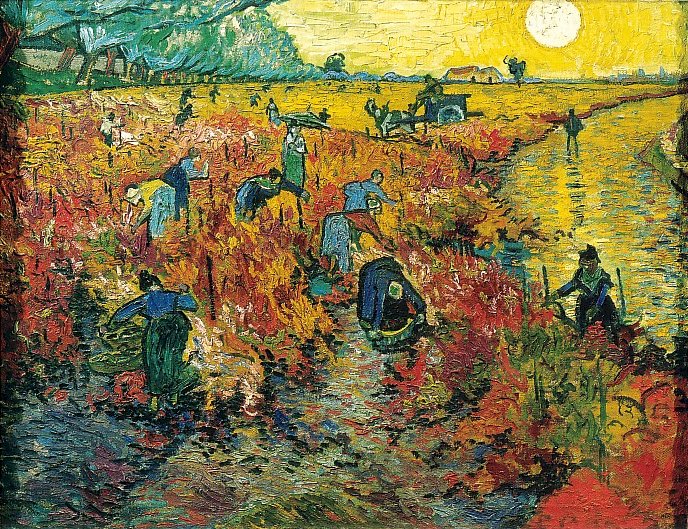

(3) "Yesterday I was first at the Salon with Boch, who then came to lunch, after which we saw your paintings. He likes them very much, and it seems to me that he understands them. ... He seemed delighted, and put everything he had at your disposal." (JLB 890, 6/23/1890.) Confusingly, BVG calls this artist "De Bock" (Théophile Emile Achille de Bock, who was an old acquaintance of both Van Gogh brothers from The Hague (see Chapter 16). The facsimile version of Theo's letter doesn't resolve the discrepancy; it clearly says "Bock" -- whereas Vincent clearly spells Eugène Boch's name "Boch", not "Bock." The brothers could be confusing each other with these similar names or Jo, who was in Paris at the time, may well have inserted the "De" from an independent knowledge of the encounter. We accept JLB's assumption that Theo must have been referring to Eugène Boch.
In the same letter, Theo reports on a favorable encounter with Ernest Quost, a favorite of Vincent's: "I saw Quost the other day and I spoke to him about you. I was telling him that you liked his talent very much, which pleased him very much, he said. If you come to Paris you mustn't fail to go and see him, he'll be very pleased when you come to see him, either in the park or at his place." (ibid.) Interestingly, Theo does not mention any offer of exchange. Vincent takes up this omission in his response: "I'd very much like to come to Paris for a few days a little later, precisely in order to go and see Quost once, to see Jeannin, one or two others. I'd very much like you to have a Quost, and there would probably be a way of exchanging one." (JLB 891, 6/24/1890.)
Context:
JLB 875, 5/25/1890: "When you have the opportunity, will you tell me which painting Miss Boch bought? I must write to her brother to thank them, and then I would propose the exchange of two of my studies for one by each of them."
Context:
JLB 878, 6/5/1890: "And I can pay him in paintings, and I wouldn't be able to do that with somebody else, should something happened so that I needed his help."
BVG 643, 6/17/1890: In mid-June, only two weeks after his panegyric about portraiture to Wil, Vincent drafts a letter to Gauguin (see Ch. 42, n. 203). Although Vincent does not send this version of the letter to Gauguin (he sends [JLB 889, 6/17/1890] instead), he does appear to carry out the project it describes, producing two portraits of the same girl, Young Peasant Woman with Straw Hat Sitting in the Wheat (F 774 JH 2053) and Young Girl Standing against a Background of Wheat (F 788 JH 2055). (See Ch. 42, n. 151.) He also painted a scene that is part still-life, part landscape, and part sous-bois, called Ears of Wheat (F 767 JH 2034), which seems almost a preparation for the backgrounds of the two portraits and an effort to capture the "soft sound of the ears swaying in the breeze" that he describes to Gauguin.
Context:
JLB RM 23, 6/17/1890: "On it, on a very alive and yet tranquil background, I would like to paint portraits. It is greens of different quality, of the same value, in such a way as to form a green whole which would by its vibration make one think of the soft sound of the ears swaying in the breeze. It's not at all easy as a colour scheme."
Context:
BVG 548, 10/9/1888: "I always hope that we are still to have a great revolution in portraiture."
JLB 700, 10/9/1888 or 10/10/1888: "I always have hopes that a great revolution still awaits us in portraiture."
When he received Gauguin's reaction, he responded with elation: "it gives me enormous pleasure that you say that you liked the portrait of the Arlésienne based rigorously on your drawing. I tried to be respectfully faithful to your drawing while taking the liberty of interpreting through the medium of a colour the sober character and the style of the drawing in question. It's a synthesis of an Arlésienne if you like, as syntheses of Arlésiennes are rare, take it as a work by you and me, like a summary of our months of work together. To do it I, for my part, paid with another month of illness, but I also know that [the Arlésienne is] a canvas that will be understood by you, me and just one or two others, as we'd like it to be understood." (JLB RM 23, 6/17/1890.)
Note how Vincent adopts the new nomenclature of "synthesism" introduced into the bouillabaisse of "isms" in the avant-garde art world by none other than Albert Aurier in response to Gauguin's Volpini Show in 1889. This was undoubtedly intended as a show of respect. While waiting for Gauguin's reaction, Vincent had managed to talk Gachet into liking the Arlésienne portrait, a version of which he had brought with him to Auvers: "my friend Dr. Gachet came to it completely after two, three hesitations and says: 'how difficult it is to be simple'" (ibid.).
Gauguin, "Avant et Après," in Stein, ed., pp. 127-128: Gauguin quotes this letter in his book Avant et après: "The last letter that I had from him was dated from Auvers, near Pontoise ... 'Dear master (the only time that he had used this word), after having known you and caused you pain, it is more dignified to die in a good state of mind than in a degraded state.'" If this letter existed, it was probably the ultimate version of a draft that survives, which was found in Vincent's papers after his death (JLB RM 23, 6/17/1890). The draft, however, opens "Mon cher ami Gauguin" (My dear friend Gauguin) (ibid.).
Context:
BVG 643, 6/17/1890: "Thank you for having written to me again, old fellow, and rest assured that since my return I have thought of you every day."
JLB RM 23, 6/17/1890: "Thanks for writing to me again, my dear friend, and be assured that since my return I've thought about you every day."
Context:
JLB 889, 6/17/1890: "It was with pleasure that I made the acquaintance of the Dutchman, who came yesterday. He looks much too nice to be doing painting in the current conditions. If he nevertheless persists in wanting to do it I told him that he would do well to go to Brittany with Gauguin and De Haan, because he'll live there on 3 francs a day instead of 5 francs, and will have good company. That I myself also hope very much to join them, since Gauguin is going there. I was really pleased to learn that they're going to renew their attempt there. Certainly you're right that it's better for Gauguin than staying in Paris. Very pleased, too, that he likes the head of that Arlésienne."
Context:
BVG 643, 6/17/1890: "Then we will try to do something purposeful and serious, such as our work would probably have become if we had been able to carry on down there."
JLB RM 23, 6/17/1890: "Then we'll try to do something deliberate and serious, as it would probably have become if we'd been able to continue down there."
Context:
JLB 872, 5/13/1890: "I've also written to Arles for them to send the two beds and the bed linen by goods train. I estimate that this can only cost a good ten francs in transport charges, and it's still something gained from the debacle."
Context:
JLB RM 20, 5/24/1890: "I can have lodgings, 3 small rooms at 150 a year. This if I don't find better, and I hope to find better, is in any case preferable to the bedbug-infested hole at Tanguy's, and besides I'd find a shelter myself there and could retouch the canvases that need it."
Contrast:
BVG 648, 5/24/1890: "So that the pictures will be less ruined, and by keeping them in good condition, there will be a greater chance of getting some profit out of them."
JLB RM 20, 5/24/1890: "In such a way the paintings will be less spoiled, and by keeping them in order the chance of deriving some profit from them would increase."
BVG 638, 6/3/1890. (See Ch. 42, n. 223.)
Context:
JLB 877, 6/3/1890: "I still haven't found anything interesting in the way of a possible studio, and yet I'll have to take a room to put in the canvases which are surplus at your apartment and which are at Tanguy's. For they still need a great deal of retouching."
Context:
BVG 648, 5/24/1890: "That, if I find nothing better, and I hope to find a better one, is in any case preferable to the bedbug infested hole at Tanguy's, and besides, I should find a shelter for myself and could retouch the canvases that need it. So that the pictures will be less ruined, and by keeping them in good condition, there will be a greater chance of getting some profit out of them."
JLB RM 20, 5/24/1890: "This if I don't find better, and I hope to find better, is in any case preferable to the bedbug-infested hole at Tanguy's, and besides I'd find a shelter myself there and could retouch the canvases that need it. In such a way the paintings will be less spoiled, and by keeping them in order the chance of deriving some profit from them would increase."
Context:
BVG 648, 5/24/1890: "So that the pictures will be less ruined, and by keeping them in good condition, there will be a greater chance of getting some profit out of them."
JLB RM 20, 5/24/1890: "In such a way the paintings will be less spoiled, and by keeping them in order the chance of deriving some profit from them would increase."
Context:
BVG 648, 5/24/1890: "Now canvases like these -- again I do not speak of my own -- are merchandise which has kept and keeps a certain value, and neglecting it is one of the causes of our mutual penury.
JLB RM 20, 5/24/1890: "Now canvases like those - once again I'm not talking about my own -- are merchandise which has and will retain a certain value, and neglecting it is one of the causes of our mutual financial embarrassment."
Context:
JLB 881, 6/10/1890: "On reflection, as regards taking that house or another one, here's what there is. Here I pay one franc a day for my bed, so if I had the furniture the difference between 365 francs and 400 wouldn't, in my opinion, be of very great importance, and then I'd very much like you to have a pied-
Context:
BVG 640, 6/10/1890: "On consideration, as for taking this house or else another, this is how it is. Here I pay 1 franc a day for sleeping, so if I had my furniture, the difference between 365 francs and 400 would be no great matter, I think, and then I should very much like you two to have a pied
BVG 640, 6/10/1890. (See Ch. 42, n. 164.)
Context:
JLB 881, 6/10/1890: "I'd very much like you to have a pied-
Context:
JLB 881, 6/10/1890: "So please would you ask père Tanguy to set to work with all speed to take all the nails out of the canvases that are on stretching frames up there in the attic. He can make rolls of the canvases, parcels of the stretching frames."
BVG 640, 6/10/1890. In the same letter he announces finding a house to rent for 400 francs (see Ch. 42, n. 229), Vincent writes: "Since Sunday I've done two studies of houses in the greenery" (JLB 881, 6/10/1890). Almost certainly these were depictions of the house that he had found. The reference has not been connected to any specific painting from the many Vincent did in Auvers showing houses. It may be the house shown in a painting that Vincent talks about a week afterward: "a white house amid greenery with a star in the night sky and an orange light at the window and dark greenery and a sombre pink note" (JLB 889, 6/17/1890). The invocation of the starry night (connecting it to the Yellow House [see Ch. 42, n. 134]) would certainly suggest that the large, multi-windowed, parsonage-like house shown in The White House at Night (F 766 JH 2031) is the house Vincent had set his sights on. The passage immediately proceeds to a mention of another touchstone of Vincent's image of a house shared with Theo, the house of the painter Charles Daubigny: "I have an idea for doing a more important canvas of Daubigny's house and garden, of which I already have a small study" (ibid., emphasis in original).
Context:
JLB 881, 6/10/1890: "Sunday has left me a very pleasant memory. In this way we really feel that we're not so far from one another, and I hope that we'll see each other again often. Since Sunday I've done two studies of houses in the greenery; a whole colony of Americans has installed itself beside the house where I am. They paint, but I haven't yet seen what they do."
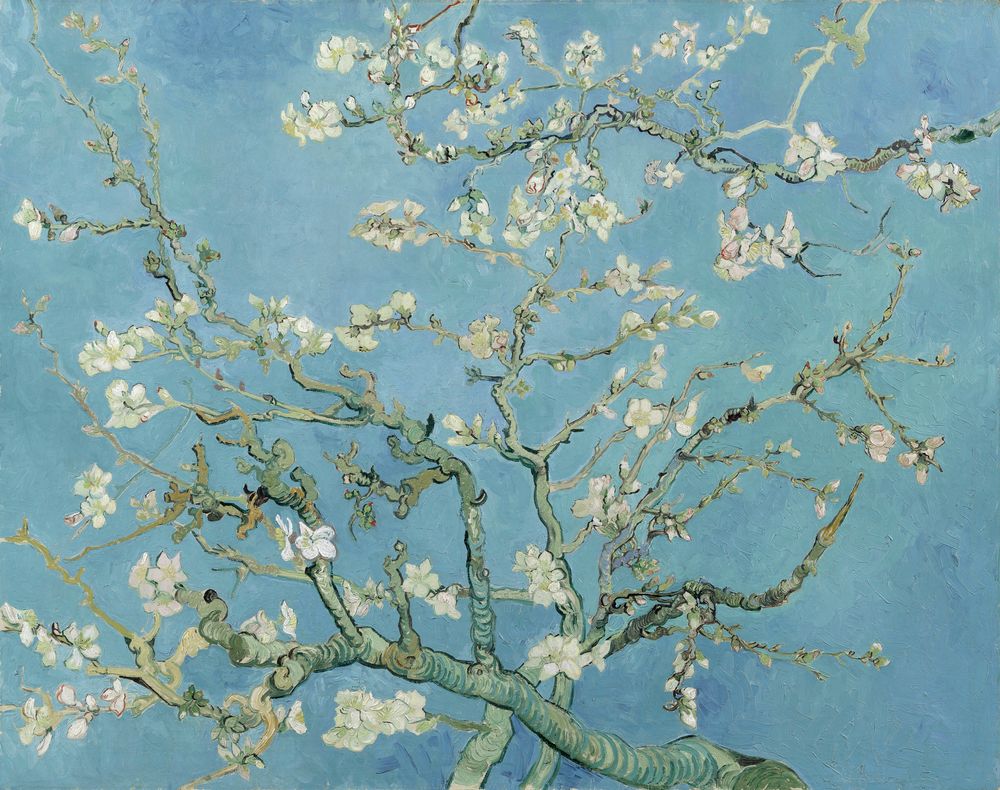
Context:
JLB 887, 6/14/1890: "Enclosed I must send you an order for some colours. I have another study that's in the genre of the Harvest that's at your place in the room where the piano is. Fields viewed from a height with a road on which there's a small carriage."
Hulsker, Vincent and Theo van Gogh, pp. 428-429: Hulsker identifies Wheat Fields near Auvers (F 775 JH 2038) as one of the two paintings described in Vincent's first report of the double-square format: "Then I have a canvas one metre long by only 50 centimetres high, of fields of wheat, and one that makes a pendant of undergrowth, lilac trunks of poplars, and underneath them some flower-dotted grass, pink, yellow, white and various greens" (JLB 891, 6/24/1890). He bases this identification on sketches Vincent included in the next letters, (JLB 893, 6/28/1890) and (JLB 896, 7/2/1890). However, JLB identify the painting Couple Walking between Rows of Poplars (F 773 JH 2041) as the work mentioned in JLB 891 (see Ch. 42, n. 7). The sketch in JLB 893 is Wheatfields (no CR numbers), and two sketches appear in JLB 896: Couple Walking between Rows of Poplars (F – JH 2042) and Wheatfields (F – JH 2039).

Context:
JLB 891, 6/24/1890: "Then I have a canvas one metre long by only 50 centimetres high, of fields of wheat, and one that makes a pendant of undergrowth, lilac trunks of poplars, and underneath them some flower-dotted grass, pink, yellow, white and various greens."
BVG 644, 6/24/1890-6/25/1890. (See Ch. 42, n. 236.)
Context:
BVG 644, 6/24/1890-6/25/1890: "Then I have a canvas 40 inches long and only 20 inches high, of wheat fields [JH 2038], and one which is a pendant to it, of undergrowth [JH 2041], lilac poplar trunks and at their foot, grass with flowers, pink, yellow, white and various greens."
JLB 891, 6/24/1890: "Then I have a canvas one metre long by only 50 centimetres high, of fields of wheat, and one that makes a pendant of undergrowth, lilac trunks of poplars, and underneath them some flower-dotted grass, pink, yellow, white and various greens."
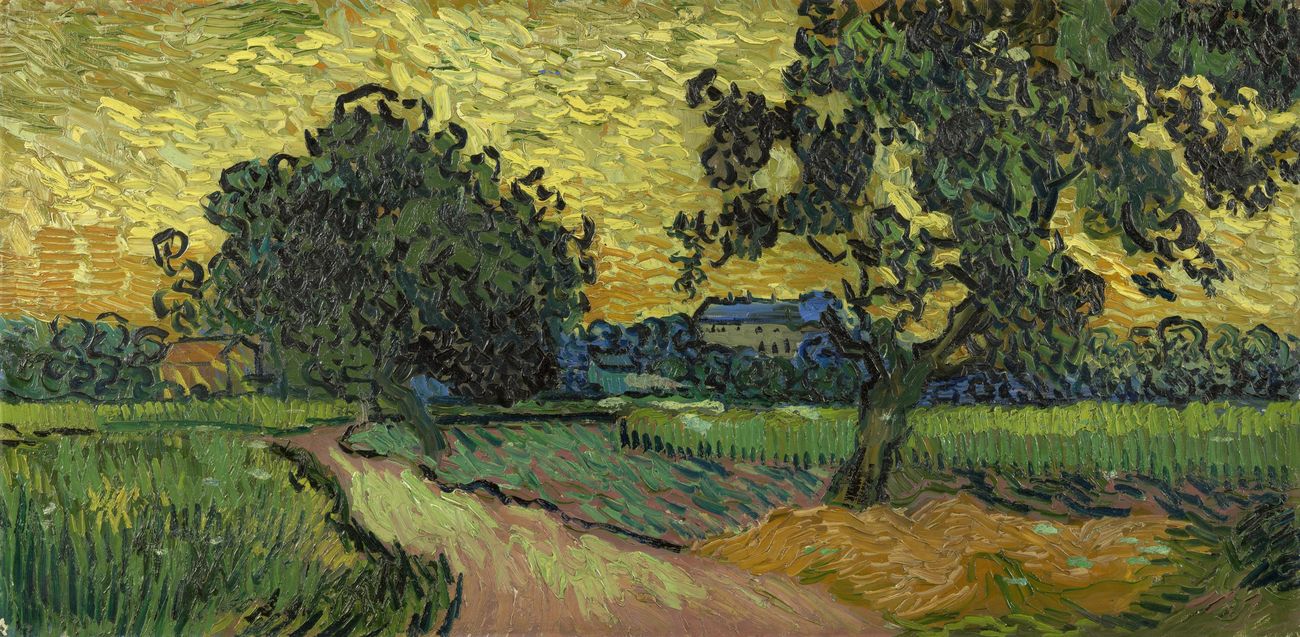
Context:
JLB 891, 6/24/1890: "Finally a night effect -- two completely dark pear trees against yellowing sky with wheatfields, and in the violet background the castle encased in the dark greenery."
BVG 644, 6/24/1890-6/25/1890. (See Ch. 42, n. 238.)
Context:
JLB 891, 6/24/1890: "Finally a night effect -- two completely dark pear trees against yellowing sky with wheatfields, and in the violet background the castle encased in the dark greenery."
Kools, p. 64. (See Ch. 3, n. 129.)
Context:
JLB 891, 6/24/1890: "Finally a night effect -- two completely dark pear trees against yellowing sky with wheatfields, and in the violet background the castle encased in the dark greenery."
Context:
JLB 879, 6/5/1890: "This description doesn't say anything -- but by seeing the painting, by looking at it for a long time one would think one was present at an inevitable but benevolent rebirth of all things that one might have believed in, that one might have desired, a strange and happy meeting of the very distant days of antiquity with raw modernity."
Context:
BVG W22, 6/5/1890: "There is a superb picture by Puvis de Chavannes at the exhibition. The figures of the persons are dressed in bright colours, and one cannot tell whether they are costumes of today or on the other hand clothes of antiquity. On one side two women, dressed in simple long robes, are talking together, and on the other side men with the air of artists; in the middle of the picture a woman with her child on her arm is picking a flower off an apple tree in bloom. One figure is forget-me-not blue, another bright citron yellow, another of a delicate pink colour, another white, another violet. Underneath their feet a meadow dotted with little white and yellow flowers. A blue distance with a white town and a river. All humanity, all nature simplified, but as they might be if they are not like that. This description does not tell you anything -- but when one sees this picture, when one looks at it for a long time, one gets the feeling of being present at a rebirth, total but benevolent, of all things one should have believed in, should have wished for -- a strange and happy meeting of very distant antiquities and crude modernity."
JLB 879, 6/5/1890: "At the exhibition there's a superb painting by Puvis de Chavannes. The figures are dressed in bright colours and one doesn't know if they're costumes from now or clothes from antiquity; two women are talking (also in long, simple dresses). On one side, artistic-looking men on the other, in the centre a woman, her child in her arms, is picking a flower from an apple tree in blossom. One figure will be forget-me-not blue, another bright lemon, another soft pink, another white, another violet, the ground a meadow dotted with little white and yellow flowers. Blue distance with a white town and a river. All humanity, all nature simplified, but how it could be, if it isn't already. This description doesn't say anything -- but by seeing the painting, by looking at it for a long time one would think one was present at an inevitable but benevolent rebirth of all things that one might have believed in, that one might have desired, a strange and happy meeting of the very distant days of antiquity with raw modernity."
Context:
JLB 896, 7/2/1890: "It's a no. 30 canvas but it's really a little coarse, I fear. Then the horizontal landscape with the fields, a subject like one of Michel's -- but then the coloration is soft green, yellow and green-blue."
Context:
JLB 902, 7/23/1890: " Daubigny's garden ... Foreground of green and pink grass, on the left a green and lilac bush and a stem of plants with whitish foliage. In the middle a bed of roses. To the right a hurdle, a wall, and above the wall a hazel tree with violet foliage. Then a hedge of lilac, a row of rounded yellow lime trees. The house itself in the background, pink with a roof of bluish tiles." (Emphasis in original.)
Context:
BVG 120, 3/3/1878: "Uncle [Cor] told me that Daubigny had died. I freely confess that I was downcast when I heard the news, just as I was when I heard that Brion [Gustave Brion, 1824-1877; French artist] had died (his Bénédicité hangs in my room), because the work of such men, if it is understood, touches us more deeply than one realizes. It must be good to die in the knowledge that one has done some truthful work and to know that, as a result, one will live on in the memory of at least a few and leave a good example for those who come after."
JLB 142, 3/3/1878: "Uncle told me that Daubigny has died, I freely admit that b>it made me sad to hear it, just as it did to hear that Brion had died (his Saying grace is hanging in my room), because the work of such men, if one understands it, moves one more deeply than one is aware of, it must be truly good, when one dies, to be conscious of having done a thing or two in truth, knowing that as a result one will continue to live in the memory of at least a few, and having left a good example to those who follow."
Context:
JLB 898, 7/10/1890: "Now the third canvas is Daubigny's garden, a painting I'd been thinking about ever since I've been here."
Context:
JLB 874, 5/21/1890: "From what people say, Mrs. [Marie Sophie] Daubigny and Mrs. [Marie Alexandrine] Daumier are still living here, at least I'm sure that the former still lives here."
BVG 642, 6/17/1890: The "small study" referred to is Daubigny's Garden (F 765 JH 2029, June 1890, oil on canvas, 20 x 20 in., 50.7 x 50.7 cm., Van Gogh Museum, Amsterdam). It is painted on a linen towel. (See Pickvance, p. 240 and p. 272.) This resort to towels (Vincent painted several works on them at this time) represents not light-hearted experimentation or spontaneity, but an anguish of guilt. In mid-June, Vincent ran out of canvas, and rather than ask for more money, resorted for a while to painting on towels (napkins). Theo ended the long dry spell by sending 50 francs on June 23 (JLB 890, 6/23/1890).
Context:
JLB 889, 6/17/1890: "I have an idea for doing a more important canvas of Daubigny's house and garden, of which I already have a small study."
Context:
BVG 637, 5/25/1890: "This in an almost lush country, just at the moment when a new society is developing in the old, is not at all unpleasing; there is much well-being in the air. I see or think I see in it a quiet like that of Puvis de Chavannes, no factories, but lovely greenery in abundance and well kept."
JLB 875, 5/25/1890: "That in an almost lush countryside, just at this moment of the development of a new society in the old one, has nothing disagreeable about it; there's a lot of well-being in the air. I see or think I see a calm there
Context:
BVG 648, 5/24/1890: "But considering how things have happened -- honestly -- I think that Theo, Jo and the little one are a little on edge and are worn out -- and besides, I myself am also far from having reached any kind of tranquility."
JLB RM 20, 5/24/1890: "But considering things as faits accomplis -- my word -- I think that Theo, Jo and the little one are a little on edge and worn out -- besides, I too am far from having arrived at some kind of tranquility."
Context:
JLB 881, 6/10/1890: "I've just written to them again for the third time that I have urgent need of it, I said in my letter that if I didn't have news of them I would feel obliged to send them a louis for the costs of sending it. That will probably have some effect, but it's impolite."
The sincerity of this warmth can be gauged by the Ginoux's failure to send the furniture on the date promised in the letter (Saturday, June 14). It took at least one more letter from Vincent (JLB 883, 6/11/1890) and an offer to pay someone else to do the packing and "all the expenses" (a substantial ransom) to spur the Ginouxs into action. The furniture finally arrived in July, only a few weeks before Vincent's death. Vincent closes this relationship on a melancholy, stubbornly delusional note: "But I still often think of you all, one can't do as one wants in life, one must leave the place one feels most attached to -- but the memories remain and one remembers -- obscurely as in a mirror -- absent friends" (ibid.).
Context:
JLB 887, 6/14/1890: "At last I've received news about my furniture, the man who has it has been ill all the time, having been struck by the horn of one of the bulls while helping to unload them. So his wife writes to me that it was because of this that they'd put it off from one day to the next."
Context:
BVG 640, 6/10/1890: "My friends whom it is with will not, so far as I can see, put themselves out to send it to me, as I am no longer there. It is mostly the traditional laziness and the old traditional story that passing strangers leave temporary furniture in the place where it is."
JLB 881, 6/10/1890: "As far as I can imagine, my friends where it is [i.e., the Ginouxs] won't put themselves out to send it to me, as I'm no longer there. It's above all the traditional laziness and the old traditional story that on their side strangers who pass through leave the temporary furniture in the place where it is."
Context:
BVG 640, 6/10/1890: "Once you are in Paris, you seem to be in another world, and I think that they probably won't put themselves out, all the more because they will not like to be mixed up any further in this business which has been talked about so much in Arles."
JLB 881, 6/10/1890: "The moment you're in Paris it's like being in the otherworld. And I think that they probably won't put themselves out, all the more so because they won't like to get more mixed up in this business which people have talked so much about in Arles."
Context:
BVG 642, 6/17/1890: "If he went to Madagascar, however, I should be capable of following him there, for you must go there in twos or threes."
JLB 889, 6/17/1890: "If, however, he went to Madagascar I'd be able to follow him there. For one should go there in twos or threes." (Emphasis in original.)
Context:
BVG 642, 6/17/1890: " Certainly the future of painting is in the tropics, either in Java or Martinique, Brazil or Australia, and not here, but you know that I am not convinced that you, Gauguin or I are the men of that future."
JLB 889, 6/17/1890: " Certainly the future is very much in the tropics for painting, either in Java or in Martinique, Brazil or Australia, and not here, but you feel that it hasn't been proved to me that you, Gauguin or I are those people of that future."
Context:
BVG 649, 7/10/1890: "I often think of the little one. I think it is certainly better to bring up children than to give all your nervous energy to making pictures, but what then, I am--at least I feel -- too old to retrace my steps or to desire anything different. That desire has left me, though the mental suffering of it remains."
JLB 898, 7/10/1890: "I often think of the little one, I believe that certainly it's better to bring up children than to expend all one's nervous energy in making paintings, but what can you do, I myself am now, at least I feel I am, too old to retrace my steps or to desire something else. This desire has left me, although the moral pain of it remains."
Context:
Context:
BVG W23, 6/12/1890: " Knowing what I know now, if I were ten years younger, with what ambition I should work at this!"
JLB 886, 6/13/1890: "If I were ten years younger, with what I know now, how much ambition I would have for working on that."
Context:
BVG W23, 6/12/1890: "I am working a good deal and quickly these days; by doing this I seek to find an expression for the desperately swift passing away of things in modern life."
JLB 886, 6/13/1890: "Lately I've been working a lot and quickly; by doing so I'm trying to express the desperately swift passage of things in modern life."
BVG W23, 6/12/1890 (we have slightly altered the translation): The text depends on seeing a self-portrait in Vincent's description of his portrait of Dr. Gachet (Portrait of Doctor Gachet [F 753 JH 2007, June 1890, oil on canvas, 26.4 x 22 in., 66 x 57 cm., Private collection]). Vincent acknowledges this relationship between the two images when he first reports undertaking Gachet's portrait in early June: "I'm working on his [Gachet's] portrait the head with a white cap, very fair, very light, the hands also in light carnation, a blue frock coat and a cobalt blue background, leaning on a red table on which are a yellow book and a foxglove plant with purple flowers. It's in the same sentiment as the portrait of myself that I took when I left for here. Mr. Gachet is absolutely fanatical about this [self-]portrait, and wants me to do one of him if I can, absolutely like that, which I also wish to do." (JLB 877, 6/3/1890; emphasis in original.) Vincent tells his sister Wil the same thing around the same time: "My friend Dr. Gachet is decidedly enthusiastic ... about a portrait of myself, and that gave me pleasure. ... My portrait of myself is almost like this too, but the blue is a fine southern blue and the suit is light lilac." (JLB 879, 6/5/1890; emphasis in original.) In both instances, Vincent is referring to the self-portrait (Self-Portrait [F 627 JH 1772]) that he made in Saint-Rémy the previous September, after emerging from the attacks that summer. He apparently took this painting with him to Auvers. (See JLB 877, 6/3/1890.)
At the same time he establishes the relationship between the two paintings (the self-portrait and the portrait), Vincent also vehemently argues how much he actually resembles Gachet: "I've found in Dr. Gachet a ready-made friend and something like a new brother would be -- so much do we resemble each other physically, and morally too" (JLB 879, 6/5/1890). But around the middle of June, after the portrait is complete, Vincent's view of it changes dramatically; it has become a haunted and haunting image: "I've done the portrait of Mr. Gachet with an expression of melancholy which might often appear to be a grimace to those looking at the canvas" (JLB 886, 6/13/1890). This view darkens even further over the next week when Vincent begins a copy (Portrait of Doctor Gachet [F 754 JH 2014]), which he promised to do for Theo (JLB 877, 6/3/1890). Now he writes to Gauguin about the image: "Now I have a portrait of Dr. Gachet with the deeply sad expression of our time. If you like something like you were saying about your Christ in the Garden of Olives, not destined to be understood, but anyhow up to that point I follow you, and my brother clearly grasps this nuance." (JLB RM 23, 6/17/1890.) This description is remarkable not just because it represents an abrupt change in Vincent's view of the subject from the reassuring doctor-friend he first described to Theo (see Ch. 42, n. 107 and n. 108), but mostly because the 1889 self-portrait does not show the slightest hint of the "expression of melancholy" that Vincent subsequently emphasizes in the portrait of Gachet (which, earlier, he had described as "exactly like" the self-portrait).
In fact, the self-portrait had been painted precisely for the purpose of reassuring Theo about Vincent's recovery after the attacks of the previous summer (see Chapter 40). That purpose explains both the determinedly affect-less expression (like the Berceuse) and the summer-breeze palette of the self-portrait (echoed in Vincent's initial description of the Gachet portrait as "a fine southern blue and the suit is light lilac"). Finally, the portrait of Gachet does not fit Vincent's belated characterization of it as "melancholic" -- a word that Vincent often uses to refer to himself and his self-portraits. For all these reasons, we take Vincent's changing view of the Gachet portrait as a changing -- darkening -- view of himself, and his description as a veiled confession about his own darkening mood. He now looks at the doppelganger Gachet and sees Gauguin's Christ in the Garden -- an image of torment and suffering that he often sees in the mirror at times of mental crisis -- not the image of serenity that he portrayed in his self-portrait the previous September and initially claimed for Gachet's portrait. It is significant, we think, that Vincent confides the new, distressing view of the Gachet portrait only to his sister (JLB 886, 6/13/1890) and Gauguin (JLB RM 23, 6/17/1890), not to Theo, as this "admission" would have contradicted his portrait of Auvers as a reparative rural retreat and undermined his campaign to lure his brother's family there. Curiously, Auvers is one of the few periods in Vincent's artistic career when he apparently did not attempt any actual self-portraits.

Context:
BVG W23, 6/12/1890: "I painted a portrait of Dr. Gachet with an expression of melancholy, which would seem to look like a grimace to many who saw the canvas."
JLB 886, 6/13/1890: "I've done the portrait of Mr. Gachet with an expression of melancholy which might often appear to be a grimace to those looking at the canvas."
BVG 643, 6/17/1890. (See Ch. 42, n. 277.)
Context:
BVG 643, 6/17/1890: "Meanwhile I have a portrait of Dr. Gachet with the heart-broken expression of our time."
JLB RM 23, 6/17/1890: "Now I have a portrait of Dr. Gachet with the deeply sad expression of our time."
BVG 643, 6/17/1890. (See Ch. 42, n. 277.)
Context:
JLB RM 23, 6/17/1890: " If you like something like you were saying about your Christ in the Garden of Olives, not destined to be understood, but anyhow up to that point I follow you, and my brother clearly grasps this nuance" (emphasis in original).
Context:
BVG 641a, 6/12/1890: "I was struck by what you say in your letter about having been to Nuenen. You saw everything again, 'with gratitude that once it was yours' -- and are now able to leave it to others with an easy mind."
JLB 885, 6/13/1890: "It struck me in your letter that you said that seeing things again in Nuenen you 'were grateful that it had once been yours ' -- and were now content to leave everything to the others."
Context:
BVG 641a, 6/12/1890: " As through a glass, darkly -- so it has remained; life, the why or wherefore of parting, passing away, the permanence of turmoil -- one grasps no more of it than that."
JLB 885, 6/13/1890: " Through a glass, darkly -- it has remained thus; life and the why of parting and passing away and the persistence of turmoil, one understands no more of it than that."
Context:
BVG 641a, 6/12/1890: "As through a glass, darkly -- so it has remained; life, the why or wherefore of parting, passing away, the permanence of turmoil -- one grasps no more of it than that."
JLB 885, 6/13/1890: "Through a glass, darkly -- it has remained thus; life and the why of parting and passing away and the persistence of turmoil, one understands no more of it than that."
Context:
JLB 885, 6/13/1890: "For me life might well remain solitary. I haven't perceived those to whom I've been most attached other than through a glass, darkly."

The story sounds, sadly, very much like Vincent, and we have accepted it, to this extent, as true. Alas, either Doiteau or Gachet could not resist the temptation to invest the argument with ominous significance because of its close proximity to Vincent's death -- by gunshot wound -- only weeks or days later. That explains the sudden appearance in Doiteau's account -- for the first time in the letters or literature -- of a firearm: "Then Vincent became violently angry, a lightning strike of furious madness made him lose his reason and feverishly he plunged his hand into one of his pockets. Dr. Gachet realised that he was about to grab his revolver and glimpsed the destiny that Vincent had in store for him." (Doiteau, "La curieuse figure de Docteur Gachet," pp. 278-279.)
We take this as an audaciously inventive attempt -- whether by Dr. Gachet or Doiteau -- to connect the argument over the Guillaumin painting with Vincent's death. Dr. Gachet's (or Doiteau's) account also borrows from Gauguin's fictions (around the same time) related to Vincent's "murderous" behavior in Arles in 1888, both in the inference of homicidal intent and in the manly response of the intended victim: "[Gachet] kept his nerve ... He fixed Vincent with a commanding and imperious look which brought him under control and the latter, defeated, drew his hand out of his pocket, quickly moved to the door and left, his head lowered, silent and crestfallen." (Gachet, Deux Amis des Impressionistes, p. 32) (Compare this to Gauguin's response to Vincent's purported attempt to assault him with a razor [Ch. 36, n. 354].)
Gachet's son later tried to rescue the story by saying that his father never meant to suggest that Vincent actually made an attempt on his life, but only that "after Vincent's death, Doctor Gachet wondered if perhaps on the day of the quarrel he [Vincent] was already carrying the murderous weapon which he seemed to be holding, with his hand hidden in his trouser pocket, and which he could have used" (ibid., p. 33). This clarification did not deter subsequent commentators from invoking the sexier version of the story (see Tralbaut, p. 324). Even Rewald cites it in a footnote, although with this credulous caveat: "Yet it seems utterly inconceivable that Dr. Gachet would not have tried to disarm the painter and should have left a pistol in his friend's possession" (p. 403, n. 26).
Context:
JLB 877, 6/3/1890: "I'll very probably also do the portrait of his daughter, who is 19 [sic], and with whom I can easily imagine Jo will quickly make friends."
Context:
JLB 893, 6/28/1890: "Yesterday and the day before yesterday I painted Miss Gachet's portrait. ... It's a figure I enjoyed painting -- but it's difficult. [Gachet has] promised to get her to pose for me another time with a little organ. I'll do one for you."
Gauthier, n.p. Sund finds this discomfort in the sitter's pose and expression in Portrait of Adeline Ravoux (F 768 JH 2035) (see Ch. 42, n. 197): "Her wide-eyed look, pursed mouth, and flexed fingers hint at restiveness (though van Gogh reportedly complimented her on her deportment), and the painter's decision to render Ravoux in the pure profile view (long used to suggest a female sitter's modest refusal to meet a stranger's gaze) adds to the viewer's sense of the girl's uneasiness under van Gogh's scrutiny" (Sund, in Dorn et al., p. 219). Sunds sees Vincent's rendering of Adeline Ravoux as related to his "Japanese" child-bride La Mousmé from Arles ( La Mousmé, Sitting [F 431 JH 1519]; who "wears a dress and hairdo of similar style, and though she faces and makes eye contact with the artist/viewer, she does so with a touch of stiffness that betrays ingenuous adolescence" (ibid.).
b3023 V/1982, "Hirschig, A.M." to "Plasschaert, A.", 9/8/1911. (See Ch. 42, n. 298.)
BVG 641a, 6/12/1890. Vincent wrote the same report to his brother around the same time: "a whole colony of Americans has installed itself beside the house where I am. They paint, but I haven't yet seen what they do" (JLB 881, 6/10/1890). We suspect that these "Americans" were probably Australians, or some mix of English-speaking artists, and that Walpole Brooke, whom Vincent later mentions befriending (see Ch. 42, n. 307), was probably one of them. Vincent was not good at differentiating English-speaking nationals (e.g., "An Englishman, Australian, called Walpole Brooke will probably come to see you" [JLB 896, 7/2/1890]) -- just as he always confused Japanese and Chinese.
Context:
JLB 885, 6/13/1890: "There are a lot of painters here in the village; next door a whole family of Americans who paint day in and day out, but I haven't seen any of their work yet, and it's usually just all too weak."
Context:
JLB 877, 6/3/1890: "Dumoulin, the one who has Japanese paintings at the Champ de Mars, has come back here, and I very much hope to meet him."
See Ch. 42, n. 304. There is no record of Vincent having met Dumoulin, and he is not mentioned again in Vincent's correspondence (JLB 877, 6/3/1890). This loose end and silence could hide an awkward encounter or repeated rebuffs, or just a misfortune of scheduling or oversight. Either way, it joins a long list of similarly unfulfilled prospects of association and collegiality.
Context:
JLB 896, 7/2/1890: "An Englishman, Australian, called Walpole Brooke will probably come to see you ... I told him that you would let him know a time when he could come and see my canvases that are at your place. He'll probably show you some of his studies, which are still rather lifeless, but however he does observe nature. He has been here in Auvers for months, and we went out together sometimes, he was brought up in Japan, you would never think so from his painting -- but that may come."
Context:
JLB 896, 7/2/1890: "An Englishman, Australian, called Walpole Brooke will probably come to see you ... I told him that you would let him know a time when he could come and see my canvases that are at your place.
Context:
BVG 644, 6/24/1890-6/25/1890: "The Dutchman works quite diligently, but he still has quite a few illusions about the originality of his way of seeing things."
JLB 891, 6/24/1890: "The Dutchman is working quite assiduously, but still deludes himself considerably about the originality of his way of seeing."
BVG 644, 6/24/1890-6/25/1890. (See Ch. 42, n. 309.)
Context:
BVG 644, 6/24/1890-6/25/1890: "But alone or with painters who work little, he won't come to much, I think."
JLB 891, 6/24/1890: "But alone or with painters who work little he wouldn't do much, I think."
Context:
JLB 893, 6/28/1890: "If only one could have the individuals one sees pass by to do their portraits, it would be as pretty as any past era, and I even think that often in nature there is currently all the grace of Puvis's painting, Between art and nature. Thus yesterday I saw two figures, the mother in dark carmine dress, the daughter in pale pink with a yellow hat without any ornamentation, very healthy figures, rustic, well tanned by the open air, burned by the sun, the mother especially with a very, very red face and black hair and two diamonds in her ears."
Doiteau, "Deux 'copains' de Van Gogh, inconnus," p. 40. (See Ch. 42, n. 319.) In his 1923 account, Coquiot quotes an Auvers local who, in the same spirit, blithely referred to Vincent as " toujours un peu 'bizarre' [always a little 'bizarre']" (Coquiot, p. 258).
Doiteau, "Deux 'copains' de Van Gogh, inconnus," pp. 57: René Secrétan was born in January 1874. He was interviewed about his relationship with Vincent van Gogh eighty-two years later, in 1956, by Victor Doiteau, around the time of the release of the movie version of Irving Stone's popular biography of Vincent, Lust for Life (1934). René's older brother Gaston died in 1943. (See Ch. 42, n. 328.) Doiteau interviewed and corresponded with René at considerable length prior to the latter's death in 1957. We provide here a synopsis of the biographical information that Doiteau gives for René. We do so for the same reason Doiteau did: to justify the credence we invest in his account. An avowed "materialist" and philistine from an early age, René Secrétan was educated at Paris's famous Lycée Condorcet, the same school where Paul Verlaine and Marcel Proust studied and Stéphane Mallarmé and (Jean-Paul Sartre taught (ibid., p. 39). Doiteau describes seeing pictures of René and his brother as "handsome young men with money and style, dressed in the fashion of the time" (ibid., p. 40).
René grew up to become a respected Parisian businessman and banker (ibid., p. 57). He served as "sector controller" in the gold mines around Johannesburg, South Africa, after the Boer War. He served on the Board of Directors of the Swiss Reinsurance Company (later renamed Swiss Re). (http: //www.musees-vd.ch/fileadmin/groups/19/Rapport_annuel_2008.pdf.) He remained an avid outdoorsman his entire life. He won shooting championships and was inducted into France's St. Hubert Club, a prestigious international organization of hunters (ibid.). He became a pillar of his community and active member of society. He retired to a small town in Picardy in northern France. Doiteau describes him as "a rich man of the Belle Époque" who remained in "good physical and mental shape" until the end of his life (ibid.).
René's account of his time with Vincent was given long after Vincent became famous. Indeed, he offered his testimony to Doiteau partly to correct the image he saw in the press around the time Lust for Life was released. (The movie was partly filmed in France.) He called the film's "made in USA" depiction of Vincent "quite a joke" and "grotesque" (ibid., p. 56). "The painter in cords and hiking boots in the photo [in the (Paris) Match showing Kirk Douglas as Vincent] bears no resemblance to our friend who always looked more like a tramp with shoes on his feet" (ibid.). René's account to Doiteau, taken as a whole, is richly and convincingly detailed, internally consistent, and not self-inflating or self-serving. Indeed, it is often self-indicting, both intentionally and unintentionally. To us, it bears the hallmarks of a man who has kept a truth to himself for a lifetime but cannot die without telling it -- or, at least, most of it -- to ease his conscience at the end.
As a variety performer in Paris, Gaston Secrétan provided the songs for several films made in the 1920s and 1930s, including "Vitus en vitesse" from the "Lune Rousse" of 1927. He also appeared in several films: "Il est charmant" (1932), "Avec le sourire" (1936), "L'Habit vert" (1937), and "La Fin du jour" (1939). After leaving the Lycée Concordet, Gaston relocated to Seiches (Maine-et-Loire), where he died in 1943 (see Ch. 42, n. 325). Interestingly, Doiteau had known Gaston Secrétan in the 1930s in his role as a variety performer, but the two did not talk about Vincent van Gogh "because at that time I did not know he had known Vincent and he did not know that I had a special interest in this painter" (Doiteau, "Deux 'copains' de Van Gogh, inconnus," p. 57). Fourteen years after Gaston died, Doiteau published his portrait of Vincent and the Secrétans based solely on the accounts of his younger brother René (see Ch. 42, n. 325).
One of these images, (3), involves René "posing" -- or at least allowing Vincent to depict him. There is also a drawing (Head of a Boy with Broad-Brimmed Hat [F 1622v JH 2075]) showing a young man in what clearly appears to be a "Buffalo Bill" hat. This could be -- must be -- a sketch of René Secrétan in his Buffalo Bill costume. How many other boys of the right age wearing a Buffalo Bill hat could have posed for Vincent in Auvers? Wherever he lived, people were wary of posing for him, and yet we know that René did pose for him.
However, none of the six paintings René describes corresponds exactly with any painting known to have survived from the Auvers period. There are a set of drawings showing the riverside (Landscape with the Oise [F 1627 JH 2024], Landscape with the Oise [F 1629 JH 2025], Little Stream Surrounded by Bushes [F 1628 JH 2026]). The last of these corresponds roughly with the image that René lists second: "Towpath and the bend in the riverbank next to père Martin's bar." The image of "two fishermen in a boat" evokes Vincent's well-known painting Riverbank with Rowboats and Three Figures (F 798 JH 2021), which might show René with two of his "cantinières" (canteen women) from Paris (see Ch. 42, n. 340), although, if so, it is odd that René did not include it on his list. Doiteau speculates that the Secrétan brothers' bourgeois father, a "good quiet pharmacist," was "scandalized" by these gifts from Vincent and "flung" them into the dustbin (Doiteau, "Deux 'copains' de Van Gogh, inconnus," pp. 45-46).
Context:
BVG T39, 6/30/1890: "We are now giving him ass's milk, and this is doing him good, but you never heard anything so grievously distressing as this almost continuous plaintive crying all through many days and many nights, when you don't know what to do, and all you do seems to aggravate his sufferings."
JLB 894, 6/30/1890-7/1/1890: "Now we're giving him ass's milk and that has done him good, but you've never heard anything so painful as this almost continual plaintive crying lasting several days and several nights and with us not knowing what to do and everything we do seeming to aggravate his suffering."
Context:
BVG T39, 6/30/1890: "We are now giving him ass's milk, and this is doing him good, but you never heard anything so grievously distressing as this almost continuous plaintive crying all through many days and many nights, when you don't know what to do, and all you do seems to aggravate his sufferings."
JLB 894, 6/30/1890-7/1/1890: "Now we're giving him ass's milk and that has done him good, but you've never heard anything so painful as this almost continual plaintive crying lasting several days and several nights and with us not knowing what to do and everything we do seeming to aggravate his suffering."
Context:
JLB 894, 6/30/1890-7/1/1890: "We've been going through the greatest anxiety, our dear one has been very ill, but fortunately the doctor, who was anxious himself, said to Jo yesterday, you won't lose the child from this."
Context:
BVG T39, 6/30/1890: "A true mother, but for all that she wore herself out a good deal too much; may she recover her strength and not be subjected to new trials. Fortunately she is asleep at the moment, but she is moaning in her sleep, and there is nothing I can do for her."
JLB 894, 6/30/1890-7/1/1890: "A true mother, but she has tired herself very much, too much even, may she recover her strength and not have any more ordeals to undergo. At this moment, fortunately, she's sleeping, but she's moaning in her sleep and I can do nothing about it."
Context:
BVG T39, 6/30/1890: "Ought I to live without a thought for the morrow, and when I work all day long not earn enough to protect that good Jo from worries over money matters, as those rats Boussod and Valadon are treating me as though I just entered their business, and are keeping me on a short allowance?"
JLB 894, 6/30/1890-7/1/1890: "Ought I to live without worrying about tomorrow, and when I work all day and still don't manage to spare this good Jo from worries about money, since those rats Boussod & Valadon treat me as if I'd just started working for them and keep me on a leash."
Context:
BVG T39, 6/30/1890: "Ought I to live without a thought for the morrow, and when I work all day long not earn enough to protect that good Jo from worries over money matters, as those rats Boussod and Valadon are treating me as though I just entered their business, and are keeping me on a short allowance?"
JLB 894, 6/30/1890-7/1/1890: "Ought I to live without worrying about tomorrow, and when I work all day and still don't manage to spare this good Jo from worries about money, since those rats Boussod & Valadon treat me as if I'd just started working for them and keep me on a leash."
Context:
BVG T39, 6/30/1890: "Ought I to live without a thought for the morrow, and when I work all day long not earn enough to protect that good Jo from worries over money matters, as those rats Boussod and Valadon are treating me as though I just entered their business, and are keeping me on a short allowance?"
JLB 894, 6/30/1890-7/1/1890: "Ought I to live without worrying about tomorrow, and when I work all day and still don't manage to spare this good Jo from worries about money, since those rats Boussod & Valadon treat me as if I'd just started working for them and keep me on a leash."
Context:
BVG T39, 6/30/1890: "Oughtn't I to be calculating, if I spend nothing on extras and am short of money -- oughtn't I to tell them how matters stand, and if they should dare refuse me, oughtn't I to tell them at last, Gentlemen, I am going to take the plunge, and establish myself as a private dealer in my own house?"
JLB 894, 6/30/1890-7/1/1890: "When I'm not calculating, without spending on extras and am short of money, must I tell them how things are, and if they dare refuse, finally tell them, Sirs, I'm taking the plunge and I'm going to set myself up as a dealer on my own account?"
Context:
JLB 894, 6/30/1890-7/1/1890: "… that it's my duty, and that if Ma or Jo or you or I tighten our belts a little, it won't get us anywhere, and that on the contrary."
Context:
JLB 894, 6/30/1890-7/1/1890: "… we'll battle all our lives without taking the oats of charity they give to the old horses in grand houses. We'll pull the plough until it moves no longer, and we'll still gaze with admiration at the sun or the moon, according to the time of day."
Context:
BVG T39, 6/30/1890: "While writing I think I came to the conclusion that this is my duty, and that if Mother, or Jo, or you or I myself should resign ourselves to starvation, it won't be of the slightest service to us -- on the contrary. What would be the good of you and me going through the world like a pair of down-and-out beggars with nothing to eat? On the contrary, by keeping up our courage, and by living, all of us, sustained by our mutual love and mutual esteem, we shall make better headway, and we shall be able to fulfill our duty and our task with much greater security than if we were to weigh every mouthful of bread. What do you have to say to this, old fellow?"
JLB 894, 6/30/1890-7/1/1890: "I think that as I write to you I'm reaching this conclusion, that it's my duty, and that if Ma or Jo or you or I tighten our belts a little, it won't get us anywhere, and that on the contrary, you and I by moving in the world not as poor down-and-outs who don't eat, but on the contrary keeping up our courage and all living buoyed up by our mutual love, we'll go much further and we'll accomplish our duty and our task with much more serenity than by weighing each mouthful of bread. What do you say to this old chap?"
Context:
BVG T39, 6/30/1890: "Oughtn't I to be calculating, if I spend nothing on extras and am short of money -- oughtn't I to tell them how matters stand, and if they should dare refuse me, oughtn't I to tell them at last, Gentlemen, I am going to take the plunge, and establish myself as a private dealer in my own house?"
JLB 894, 6/30/1890-7/1/1890: "When I'm not calculating, without spending on extras and am short of money, must I tell them how things are, and if they dare refuse, finally tell them, Sirs, I'm taking the plunge and I'm going to set myself up as a dealer on my own account?"
Context:
BVG T39, 6/30/1890: "Is this enough? No -- I have, and I hope from the bottom of my heart that you too will someday have, -- a wife to whom you will be able to say these things; and as for me -- whose mouth is so often closed, and whose head is so often empty -- it is from her that I receive the germs, which in all probability come from afar, but which were found by our beloved father and mother -- perhaps they will grow so that at least I may become a man, and who knows whether my son, if he can stay alive and if I can help him -- who knows whether he will not grow up to be Somebody."
JLB 894, 6/30/1890-7/1/1890: "Is it enough, no, myself I have and you will have one day, I hope with all my heart, a wife to whom you can say these things, and I whose mouth is often closed and whose head is often empty, it's through her that the seeds that more than likely come from very far off but which were passed on by our beloved father and mother, they will perhaps grow so that I may become at least a man, and who knows if my son, if he may live and if I can help him, who knows he may be someone."
Context:
BVG T39, 6/30/1890: "Is this enough? No -- I have, and I hope from the bottom of my heart that you too will someday have, -- a wife to whom you will be able to say these things; and as for me -- whose mouth is so often closed, and whose head is so often empty -- it is from her that I receive the germs, which in all probability come from afar, but which were found by our beloved father and mother -- perhaps they will grow so that at least I may become a man, and who knows whether my son, if he can stay alive and if I can help him -- who knows whether he will not grow up to be Somebody."
JLB 894, 6/30/1890-7/1/1890: "Is it enough, no, myself I have and you will have one day, I hope with all my heart, a wife to whom you can say these things, and I whose mouth is often closed and whose head is often empty, it's through her that the seeds that more than likely come from very far off but which were passed on by our beloved father and mother, they will perhaps grow so that I may become at least a man, and who knows if my son, if he may live and if I can help him, who knows he may be someone."
BVG T39, 6/30/1890. (See Ch. 42, n. 358.)
Context:
BVG T39, 6/30/1890: "Is this enough? No -- I have, and I hope from the bottom of my heart that you too will someday have, -- a wife to whom you will be able to say these things; and as for me -- whose mouth is so often closed, and whose head is so often empty -- it is from her that I receive the germs, which in all probability come from afar, but which were found by our beloved father and mother -- perhaps they will grow so that at least I may become a man, and who knows whether my son, if he can stay alive and if I can help him -- who knows whether he will not grow up to be Somebody."
JLB 894, 6/30/1890-7/1/1890: "Is it enough, no, myself I have and you will have one day, I hope with all my heart, a wife to whom you can say these things, and I whose mouth is often closed and whose head is often empty, it's through her that the seeds that more than likely come from very far off but which were passed on by our beloved father and mother, they will perhaps grow so that I may become at least a man, and who knows if my son, if he may live and if I can help him, who knows he may be someone."
Context:
BVG T39, 6/30/1890: "Look here, old boy, watch your health as much as you can, and I shall do the same, for we have too much in our noodles to forget the daisies and the lumps of earth freshly cast up by the plow, neither do we forget the branches of the shrubs which put forth buds in spring, or the bare branches of the trees shivering in winter, nor the limpid blue of the serene skies, nor the big clouds of autumn, nor the uniformly gray sky in winter, nor the sun rising over our aunts' garden, nor the red sun going down into the sea at Scheveningen, nor the moon and stars of a fine night in summer or winter -- no, come what may, this is our profession.
JLB 894, 6/30/1890-7/1/1890: "Look old fellow, do everything for your health, I too will do as much, we have too much in our noddles for us to forget the daisies and the freshly stirred clods of earth, and the branches of the bushes that bud in spring, nor the bare tree branches that shiver in the winter, nor the serene skies of limpid blue, nor the big clouds of autumn, nor the uniformly grey sky in winter, nor the sun as it rose above our aunts' garden, nor the red sun setting in the sea at Scheveningen, nor the moon and the stars one fine night in summer or winter, no, whatever happens, that is our possession."
Context:
BVG 646, 7/2/1890: "I have just received the letter in which you say that the child is ill; I should greatly like to come and see you, and what holds me back is the thought that I should be even more powerless than you in the present state of anxiety. But I feel how dreadful it must be and I wish I could help you. I am afraid of increasing the confusion by coming immediately. But I share your anxiety with all my heart."
JLB 896, 7/2/1890: "I've just received the letter in which you say that the child is ill; I'd very much like to come and see you, and what holds me back is the thought that I'd be even more powerless than you are in the given state of distress. But I can feel how very exhausting it must be, and would like to be able to lend a hand. By coming straightaway I fear I would increase the confusion. However, I share your anxieties with all my heart."
BVG 646, 7/2/1890. (See Ch. 42, n. 360.)
Context:
BVG 646, 7/2/1890: "It is a great pity that M. Gachet's house is so encumbered with all sorts of things. But for that, I think that it would be a good plan to come and stay here -- with him -- with the little one, for a full month at least. I think that country air has an enormous effect."
JLB 896, 7/2/1890: "It's a real pity that at Mr Gachet's the house is so cluttered with all sorts of things. Otherwise I think it would be a good plan to come and lodge here -- at his house -- with the little one, at least for a good month -- I think that the country air has an enormous effect."
Context:
JLB 896, 7/2/1890: "Coming here to the inn would be possible too, it's true. So that you aren't too alone I could come myself to stay at your place for a week or fortnight. That wouldn't increase the expenses."
Context:
BVG 646, 7/2/1890: " So that you should not be too much alone, I should come to you myself for a week or fortnight."
JLB 896, 7/2/1890: " So that you aren't too alone I could come myself to stay at your place for a week or fortnight."
Not only is this impetuousness (especially in regard to arrivals and departures) typical of Vincent (and atypical of Theo), but the circumstantial evidence points to the later date as the intended one. In his "invitation" of July 5, Theo lays out the schedule for Vincent's visit in some detail: "in the morning you'll see Walpole Brooke, who's coming to see your paintings at Tanguy's, next a Japanese Buddha which I saw in a curio shop, and after that we're going to have lunch at our place to see your studies. You can stay with us as long as you want, and you can give us advice on the arrangement of our new apartment." (JLB 897, 7/5/1890.) But, in fact, judging by all the other sources, Vincent does none of these things on his visit of July 6 except "advise" on the hanging of paintings in the apartment (see Ch. 42, n. 388). Even Jo's account of the day (which we do not credit; see Ch. 42, n. 393) follows a completely different scenario, none of it involving a trip out of the apartment.
The sources that we do credit (mostly the subsequent correspondence between Theo and Vincent) paints a third and far more credible picture of a day spent in long, painful, and occasionally heated discussions between Jo, Theo, Vincent, and Andries Bonger. No other encounters, trips, visitors, or visits are mentioned (except see Ch. 42, n. 393), which is appropriate given Vincent's sudden and unexpected appearance in an era of advance planning and careful calendars. All of this indicates to us that the itinerary Theo proposed on July 5 was for the following Sunday, July 13, not the next day, July 6, which was also the day before he planned to confront his bosses at Boussod and Valadon about his future (see Stolwijk and Thomson, p. 54). Surely Theo did not want his difficult brother descending on his apartment at such a fraught time with his wife and child just recovering. It also contradicts Theo's tendency toward cautious planning to spring this invitation on his brother at the last minute, depending on the French postal service, excellent as it was, to deliver his letter the same day in Auvers.
Context:
JLB 897, 7/5/1890: "I'm having a lot of luck in business, even if I haven't sold paintings for 800,000,000,000 francs, but among other things I've sold two Gauguins."
Context:
BVG 647, 7/7/1890: "My impression is that since we are all rather distressed and a little overwrought besides, it matters comparatively little to insist on having any very clear definition of the position in which we are."
JLB RM 24, 7/7/1890: "My impression is that as we're all a little dazed, and moreover all working quite hard, it's relatively unimportant to insist on having very clear-cut definitions of the position in which we find ourselves."
Context:
BVG 647, 7/7/1890: "My impression is that since we are all rather distressed and a little overwrought besides, it matters comparatively little to insist on having any very clear definition of the position in which we are."
JLB RM 24, 7/7/1890: "My impression is that as we're all a little dazed, and moreover all working quite hard, it's relatively unimportant to insist on having very clear-cut definitions of the position in which we find ourselves."
Context:
JLB 901, 7/22/1890: "Where did you see these violent domestic quarrels? That we were very tired by uninterrupted preoccupations on the subject of all our futures, yes; that I didn't really know where my interest lay with this affair as regards the company, yes, but really I don't see the intense domestic quarrels you speak of."
Context:
BVG 649, 7/10/1890: " It was no slight thing when we all felt our daily bread was in danger, no slight thing when for reasons other than that we felt that our means of subsistence were fragile."
JLB 898, 7/10/1890: " It's no small thing when all together we feel the daily bread in danger, no small thing when for other causes than that we also feel our existence to be fragile."
Context:
BVG T41a, 7/22/1890: "Where did you see these violent domestic quarrels?"
JLB 901, 7/22/1890: "Where did you see these violent domestic quarrels?"
Context:
JLB 901, 7/22/1890: "Where did you see these violent domestic quarrels? ... Is it the discussion with Dries? Certainly I'd wanted to see him a little bolder in undertaking something, but that's how it is, and it's no reason to break with him."
Context:
BVG T41a, 7/22/1890: "Where did you see these violent domestic quarrels? That we were very tired by these interminable preoccupations on the subject of the future of us all, yes, that with this affair vis-a-vis the house, about which I am unsure if it is in my own best interest, yes, but truly I don't see these intense domestic quarrels that you talk about."
JLB 901, 7/22/1890: "Where did you see these violent domestic quarrels? That we were very tired by uninterrupted preoccupations on the subject of all our futures, yes; that I didn't really know where my interest lay with this affair as regards the company, yes, but really I don't see the intense domestic quarrels you speak of."
Context:
JLB RM 25, 7/23/1890: "And besides, am so much in agreement that raising a kid in a fourth floor apartment is hard labour, as much for you as for Jo. Since that's going well, which is the main thing, should I go on about things of lesser importance? My word, there's probably a long way to go before there's a chance of talking business with more rested minds." (Emphasis in original.)
Context:
JLB 898, 7/10/1890: "I very much regret not having seen Guillaumin again, but it pleases me that he's seen my canvases. If I'd waited for him I would probably have stayed to talk with him in such a way as to miss my train."
Context:
BVG 649, 7/10/1890: "Jo's letter was really like a gospel to me, a deliverance from the agony which had been caused by the hours I had shared with you which were a bit too difficult and trying for us all."
JLB 898, 7/10/1890: "Jo's letter was really like a gospel for me, a deliverance from anguish which I was caused by the rather difficult and laborious hours for us all that I shared with you."
Context:
BVG 649, 7/10/1890: "Jo's letter was really like a gospel to me, a deliverance from the agony which had been caused by the hours I had shared with you which were a bit too difficult and trying for us all."
JLB 898, 7/10/1890: "Jo's letter was really like a gospel for me, a deliverance from anguish which I was caused by the rather difficult and laborious hours for us all that I shared with you."
Vincent wrote about this letter: "Jo's letter was really like a gospel for me, a deliverance from anguish which I was caused by the rather difficult and laborious hours for us all that I shared with you" (JLB 898, 7/10/1890). But this reaction was either disingenuous or the letter provided only temporary satisfaction, for Vincent immediately wrote Theo a long, anguished letter raising all the same issues about the events of July 6. That letter was addressed to Theo in Leyden, but it had to be redirected as Theo traveled. It finally reached him in Paris on July 19. That letter, too, disappeared (see JLB 901, 7/22/1890; n. 1) -- a particular surprise given Theo's conscientiousness in regard to saving letters.
In a letter to Jo, Theo described Vincent's letter as highly emotional and "melancholy" (b2058 V/1982, ''Gogh, Theo van'' to ''Gogh-Bonger, Jo van'', 7/20/1890, quoted in Jansen and Robert, p. 42). We know the contents of this letter only by Theo's perplexed rebuttal of the account it contained: "From Holland Jo sent me your letter, which had followed us, and I read it with some surprise. Where did you see these violent domestic quarrels?" (JLB 901, 7/22/1890.) It is from this response that we know the little we do about Vincent's stay in Paris. Finally, a letter from Vincent's mother and sister Wil, which arrived around the same time as Jo's missing conciliatory letter described above (JLB 898, 7/10/1890), has also disappeared. This letter may have been solicited by Jo to help calm the waters roiled in Paris.
The campaign to edit the record -- probably conducted by Jo -- continued after Vincent's death in July. We see her hand in the missing conclusion of a letter that Theo wrote his mother and sister in August 1890, about a visit from Dr. Gachet: "He stayed that evening till twelve and there came no end to his admiration for the things of Vincent I was able to show him. He promised to return in a fortnight or so. In a letter by Vincent which we found that had been written immediately after he had returned to Auvers he says ..." (b0936 V/1962, ''Gogh, Theo van'' to ''Gogh-Carbentus, Anna C. van en Gogh, Willemina van'', 8/24/1890; quoted in Hulsker, "What Theo Really Thought of Vincent," p. 26). The rest of this letter, which clearly dealt with Vincent's reactions to his visit to Paris on July 6, is missing (see JLB RM 24, note on "Date.") Only Jo was in a position to remove these related passages from these various sources and the only plausible reason for her doing so was to keep from public view any specific descriptions of the heated arguments between Theo and Jo over Theo's future on July 6, as witnessed by Vincent.
We believe Jo subsequently invented this "extraordinarily full programme" in order to cover the bitter arguments and deep personal animosities that dominated Vincent's brief and aborted visit to Paris on July 6 and which lead (in her own guilty fears, if not in fact), directly or indirectly, to Vincent's death three weeks later (Tralbaut, p. 317). Our view rests in part on the conclusion that Vincent's visit was an unexpected surprise. With no time for advance planning, the chances that Theo could arrange this sparkling guest list for lunch are vanishingly small. It was a summer Sunday in Paris. Anyone who had not left for the season almost surely had plans to spend the weekend in the suburbs or in the country, and this would certainly include the two bon vivants, Aurier and Lautrec.
We suspect Jo is remembering a different lunch that she may have attended with the critic and the artist and is superimposing it on this weekend (thus the credible details about jokes "at the expense of an undertaker's mute"). Such light-hearted moments are completely incompatible with the tale of unrelenting quarrels and high-stakes discussions that comes through the surviving letters about the events of that Sunday (see Ch. 42, n. 392). Furthermore, it is inexplicable to us why neither Vincent nor Theo mentions the encounter with Aurier and Lautrec in any of their subsequent letters, while Vincent does mention meeting the obscure Dutch sculptress Elizabeth (Sara) de Swartwho apparently happened to be visiting (probably the Bongers) at the time (JLB 898, 7/10/1890). Vincent mentions seeing and liking a painting by Lautrec (a "portrait of a female musician" [JLB 898, 7/10/1890]) -- and another by Gauguin -- while in Paris, but this only makes it odder that his supposed "lunch" with the painter goes completely unnoted (JLB 902, 7/23/1890). Vincent also regrets "missing" Guillaumin (JLB 898, 7/10/1890; see n. 418). The fact that Vincent was so upset that he fled the apartment to avoid Guillaumin -- someone he actually did know -- suggests strongly that he did not have the emotional energy for a "lunch" with Aurier and Lautrec: one of whom was a total stranger and the other only a distant acquaintance.
Vincent had mentioned a desire to meet the critic in his letter to Aurier in February ("If I were to come to Paris in the spring I shall certainly not fail to come and thank you in person" [JLB 853, 2/9/1890 or 2/10/1890]), and Theo, who had become close to Aurier by June (see Rewald, Post-Impressionism from Van Gogh to Gauguin, p. 373), did mention a possible visit to Auvers with the critic: "Aurier will also come one day. He's very pleased with your painting, and will come with me one Sunday to see you." (JLB 880, 6/5/1890.)
But desire did not necessarily translate into action. As recently as June 23, Theo had written Vincent about the French painter Ernest Quost: "I saw Quost the other day and I spoke to him about you ... If you come to Paris you mustn't fail to go and see him, he'll be very pleased when you come to see him, either in the park or at his place." (JLB 890, 6/23/1890.) Vincent replied immediately and enthusiastically: "I'd very much like to come to Paris for a few days a little later, precisely in order to go and see Quost once" (JLB 891, 6/24/1890). But, for all this, Vincent did not see Quost, just as Aurier did not come to Auvers, or, in our opinion, meet Vincent in Paris on July 6. (We discount Julien Leclercq's reported sighting of Vincent "at Aurier's," as reported by Rewald [p. 375]. Even if true, the encounter certainly did not take place on July 6, 1890. The story is of a piece with Bernard's subsequent preposterous claim that he and Vincent painted together on the Island of La Grande Jatte during the same brief visit in July 1890 [see Rewald, Post-Impressionism from Van Gogh to Gauguin, p. 403, n. 44].)
Van Gogh-Bonger, in Van Gogh, pp. li-lii: According to Jo Bonger's account in her Memoir: "Guillaumin was also expected, but it became too much for Vincent, so he did not wait for this visit but hurried back to Auvers -- overtired and excited, as his last letters and pictures show, in which the threatening catastrophe seems approaching like the ominous black birds that dart through the storm over the wheat fields." (But see Ch. 42, n. 393.)
Context:
BVG 649, 7/10/1890: "Back here [in Auvers, after going to Paris], I still felt very sad and continued to feel the storm which threatens you weighing on me too."JLB 898, 7/10/1890: "Once back [in Auvers, after going to Paris] here I too still felt very saddened, and had continued to feel the storm that threatens you also weighing upon me."
Context:
BVG 649, 7/10/1890: "Back here, I still felt very sad and continued to feel the storm which threatens you weighing on me too."
JLB 898, 7/10/1890: "Once back here I too still felt very saddened, and had continued to feel the storm that threatens you also weighing upon me."
Context:
BVG 649, 7/10/1890: "They are vast fields of wheat under troubled skies, and I did not need to go out of my way to try to express sadness and extreme loneliness."
JLB 898, 7/10/1890: "They're immense stretches of wheatfields under turbulent skies, and I made a point of trying to express sadness, extreme loneliness."
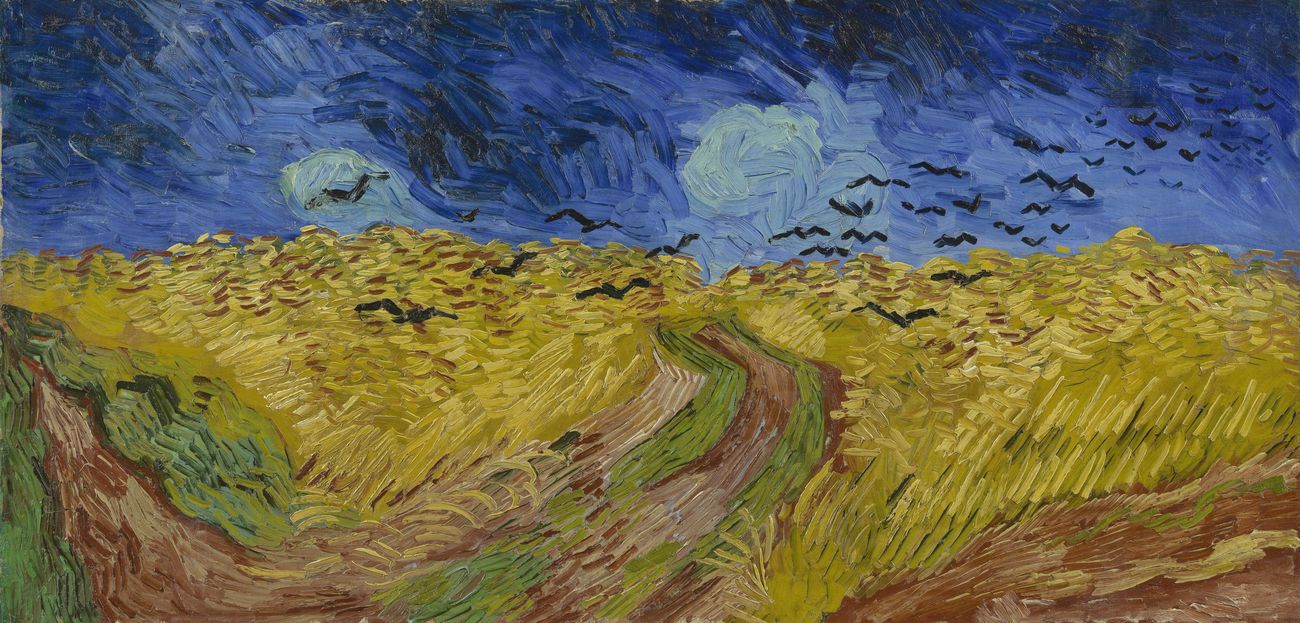
Context:
BVG 649, 7/10/1890: "They are vast fields of wheat under troubled skies, and I did not need to go out of my way to try to express sadness and extreme loneliness."
JLB 898, 7/10/1890: "They're immense stretches of wheatfields under turbulent skies, and I made a point of trying to express sadness, extreme loneliness."
Context:
BVG 649, 7/10/1890: "What was to be done -- you see, I generally try to be fairly cheerful, but my life is also threatened at the very root, and my steps are also wavering. I feared -- not altogether but yet a little -- that being a burden to you, you felt me to be rather a thing to be dreaded, but Jo's letter proves to me clearly that you understand that for my part I am as much in toil and trouble as you are."
JLB 898, 7/10/1890: "What can be done -- you see I usually try to be quite good-humoured, but my life, too, is attacked at the very root, my step also is faltering. I feared -- not completely -- but a little nonetheless -- that I was a danger to you, living at your expense -- but Jo's letter clearly proves to me that you really feel that for my part I am working and suffering like you."
BVG T35, 6/2/1890. (See Ch. 42, n. 148.)
Context:
JLB 876, 6/2/1890: "I must come one time, and I'm very receptive to your proposal that I should come with Jo and the little one, for I feel quite emptied, and the countryside would do me good. But we must also see Mother and Jo's parents. If I can have around 3 weeks' holiday, we'd first go to you and then to Holland. That would be at the beginning of August, probably. It would do us all a lot of good to spend a little time in the country."
Context:
BVG 647, 7/7/1890: "Can I do anything about it, at least can I do anything that you would like me to do?"
JLB RM 24, 7/7/1890: "Can I do anything about it -- perhaps not -- but have I done something wrong, or anyway can I do something or other that you would like?"
BVG T41, 7/14/1890. (See Ch. 42, n. 403.)
Context:
JLB 900, 7/14/1890: "Today we're in the middle of packing our trunks to leave tomorrow for Leiden. On Wednesday I'm going from there to [Hendrik Willem] Mesdag to talk to him about the [Camille] Corot, then to Antwerp with a painting by [Narcisse] Diaz [de la Peña].")
Context:
JLB 898, 7/10/1890: "Please tell Mother and Sister sometime that I think of them very often, besides this morning I have a letter from them and will reply shortly."
Context:
JLB 899, 7/10/1890-7/14/1890: "I often think of you both, and would very much like to see you again."
Context:
BVG 650, 7/10/1890-7/14/1890: "But for one's health, as you say, it is very necessary to work in the garden and to see the flowers growing."
JLB 899, 7/10/1890-7/14/1890: "But precisely for one's health, as you say -- it's very necessary to work in the garden and to see the flowers growing."
Context:
BVG 650, 7/10/1890-7/14/1890: " I myself am quite absorbed in the immense plain with wheatfields again the hills, boundless as a sea, delicate yellow, delicate soft green, the delicate violet of a dug-up and weeded piece of soil, checkered at regular intervals with the green of flowering potato plants, everything under a sky of delicate blue, white, pink, violet tones."
JLB 899, 7/10/1890-7/14/1890: " For my part, I'm wholly absorbed in the vast expanse of wheatfields against the hills, large as a sea, delicate yellow, delicate pale green, delicate purple of a ploughed and weeded piece of land, regularly speckled with the green of flowering potato plants, all under a sky with delicate blue, white, pink, violet tones."
Context:
JLB 899, 7/10/1890-7/14/1890: "Regards for today, I must get out and work."
Context:
JLB 896, 7/2/1890: "It's a real pity that at Mr. Gachet's the house is so cluttered with all sorts of things. Otherwise I think it would be a good plan to come and lodge here -- at his house -- with the little one, at least for a good month -- I think that the country air has an enormous effect. In the street here there are kids born in Paris and really sickly -- who however are well. Coming here to the inn would be possible too, it's true. So that you aren't too alone I could come myself to stay at your place for a week or fortnight."
Eight days separate Theo's letter on July 14 (JLB 900, 7/14/1890) and his next letter to Vincent on July 22 (JLB 901, 7/22/1890). During that time, Theo had been traveling (see Ch. 42, n. 405) and Vincent's most recent letter to him (JLB 899, 7/10/1890-7/14/1890) was re-routed to Holland, then re-routed back to Paris, arriving on July 19. As Vincent surely realized, Theo could have written from any of the stops on his journey; he did not need to wait to receive Vincent's letter.
Context:
JLB 901, 7/22/1890: "Where did you see these violent domestic quarrels?"
BVG T41a, 7/22/1890. (See Ch. 42, n. 421.)
Context:
BVG T41a, 7/22/1890: "Her child preoccupies her too much for her to have much time to think about paintings and no matter that she sees things better than she used to, she does not always understand what the painting means. No, if it was this trifling matter, I tell you to stop it because it is not worth worrying about."
JLB 901, 7/22/1890: "Her child preoccupies her too much for her to have much time to think about painting, and although she already sees much better than she used to, she doesn't always see immediately what's in it. No, if it was that trifle I would tell you to stop it, for it's not worth the trouble of bothering with it."
b2063 V/1982, ''Gogh, Theo van'' to ''Gogh-Bonger, Jo van'', 7/25/1890, quoted in Jansen and Robert, p. 261. (See Ch. 42, n. 429.)
Context:
JLB 902, 7/23/1890: "I've simplified my own order to a very bare minimum."
BVG T41a, 7/22/1890. (See Ch. 42, n. 62.)
Context:
BVG T41a, 7/22/1890: "I hope, my dear Vincent, that your health is good, and since you say that you write with difficulty, and don't talk about your work I am a little afraid that there is something troubling you or not going right."
JLB 901, 7/22/1890: "I hope, my dear Vincent, that your health is good, and as you said that you're writing with difficulty and don't speak to me about your work, I'm a little afraid that there's something that's bothering you or that isn't going right."
Context:
BVG T41a, 7/22/1890: "In this case drop in to see Dr. Gachet, he will give you something to make you feel better."
JLB 901, 7/22/1890: "In that case, do go and see Dr Gachet, he'll perhaps give you something that will buck you up again."
Context:
JLB 902, 7/23/1890: "I hope that you'll have found those gentlemen favourably disposed towards you."
Context:
JLB RM 25, 7/23/1890: "I'd really like to write to you about many things, but I sense the pointlessness of it."
Context:
BVG 652, 7/23/1890: "Well, my own work, I am risking my life for it and my reason has half foundered because of it -- that's all right -- but you are not among the dealers in men as far as I know, and you can still choose your side, I think, acting with humanity, but que veux-tu? [what can you do?]."
JLB RM 25, 7/23/1890: "Ah well, I risk my life for my own work and my reason has half foundered in it -- very well -- but you're not one of the dealers in men; as far as I know and can judge I think you really act with humanity, but what can you do[?]."
JLB RM 25, 7/23/1890. (See Ch. 42, n. 436.)
Context:
BVG 652, 7/23/1890: "That is all I want to say, that I noted it with a certain fright and I cannot hide it. But that is all there is to it."
JLB RM 25, 7/23/1890: "That's the only thing I can say at the moment, and that for my part I realized it with a certain horror, I haven't yet hidden it, but that really is all."
Context:
JLB 898, 7/10/1890: "Once back here [from Paris] I set to work again -- the brush however almost falling from my hands."
Adeline Ravoux insists that Vincent "never drank alcohol. I insist on this point." (Ravoux-Carrié, "Recollections on Vincent van Gogh's Stay in Auvers-sur-Oise," in Stein, ed., p. 211.) But, of course, as a thirteen-year-old girl (see Ch. 42, n. 197), Adeline's view was limited both by age and location (the Auberge Ravoux). We also suspect she did not consider wine consumed with a meal as "drinking." Vincent himself protests in a letter to the Ginoux in mid-June, "It's ... certain that since I stopped drinking I've done better work than before, there's still that which has been gained" (JLB 883, 6/11/1890). But this was undoubtedly more an apology for the excesses of Arles than a pledge of temperance in Auvers, and also did not include the consumption of wine or liqueurs. The stories of Vincent's drinking in Auvers are numerous and convincing. (See Ch. 42, n. 447 and Ch. 42, n. 448.)
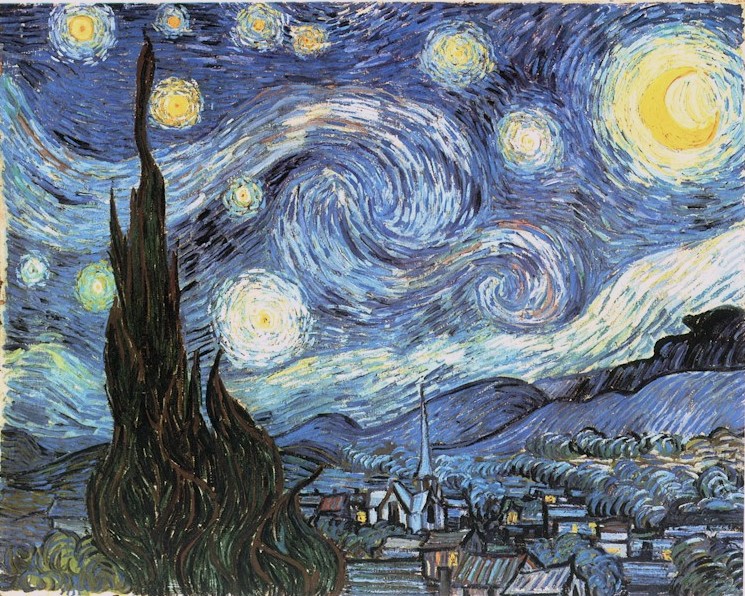
Context:
BVG 651, 7/23/1890: "As far as I'm concerned, I apply myself to my canvases with all my mind, I am trying to do as well as certain painters whom I have greatly loved and admired."
JLB 902, 7/23/1890: "As for myself, I'm applying myself to my canvases with all my attention, I'm trying to do as well as certain painters whom I've liked and admired a great deal."
Context:
JLB 878, 6/5/1890: "He tells me that in my case working is still the best way to keep on top of it."
Context:
BVG 640a, 6/12/1890: "The doctor here says that I ought to throw myself into my work with all my strength, and so distract my mind."
JLB 883, 6/11/1890: "The doctor here says that one must throw oneself fully into work and distract oneself in that way."
Context:
BVG 649, 7/10/1890: "Back here [after going to Paris], I still felt very sad and continued to feel the storm which threatens you weighing on me too."
JLB 898, 7/10/1890: "Once back here [after going to Paris] I too still felt very saddened, and had continued to feel the storm that threatens you also weighing upon me."
See Ch. 42, n. 449. Our discussion of the double-square paintings is indebted here and elsewhere to Schapiro's characteristically marvelous descriptions and insights.
Pickvance, p. 276: Pickvance relates Sheaves of Wheat (F 771 JH 2125, July 1890, oil on canvas, 19.9 x 39.8 in., 50.5 x 101 cm., Dallas Museum of Art, Dallas) to Vincent's project to re-imagine his earlier Nuenen works in the new colors of the Midi (see Ch. 42, n. 136): "Van Gogh wrote of his Nuenen series, but he said nothing of this Auvers canvas. Probably one of his last pictures, it is a simplified study of light and shadow expressed in complementary contrasts of yellows and muted violets applied with controlled, graphiclike hatchings of the brush."
Context:
BVG 652, 7/23/1890: "Your reassuring me as to the peacefulness of your household was hardly worth the trouble, I think, having seen the weal and woe of it for myself."
JLB RM 25, 7/23/1890: "You didn't need to reassure me as to the state of peace of your household. I believe I've seen the good as much as the other side."
Context:
BVG 651, 7/23/1890: "Altogether I think that personal initiative remains powerless, and having had experience of it, should we start again?"
JLB 902, 7/23/1890: "It seems to me that personal initiative remains ineffective, and having done the experiment, would one begin it again?"
Context:
BVG 651, 7/23/1890: "Now I'm back, what I think is that the painters themselves are fighting more and more with their backs to the wall."
JLB 902, 7/23/1890: "What seems to me on my return -- is that the painters themselves are increasingly at bay."
BVG 651, 7/23/1890. (See Ch. 42, n. 467.)
Context:
BVG 651, 7/23/1890: "... but isn't the moment for trying to make them understand the usefulness of a union already gone? On the other hand a union, if it should take shape, would founder if the rest should have to founder."
JLB 902, 7/23/1890: "But has the moment to make them understand the utility of a union not rather passed already? On the other hand a union, if it were formed, would go under if the rest went under."
Context:
JLB 902, 7/23/1890: "But has the moment to make them understand the utility of a union not rather passed already? On the other hand a union, if it were formed, would go under if the rest went under. Then you'd perhaps tell me that dealers would unite for the Impressionists; that would be very fleeting."
Context:
BVG 651, 7/23/1890: "Altogether I think that personal initiative remains powerless, and having had experience of it, should we start again?"
JLB 902, 7/23/1890: "Anyway it seems to me that personal initiative remains ineffective, and having done the experiment, would one begin it again?"
BVG 651, 7/23/1890. (See Ch. 42, n. 468.)
Context:
BVG 651, 7/23/1890: "Altogether I think that personal initiative remains powerless, and having had experience of it, should we start again?"
JLB 902, 7/23/1890: "Anyway it seems to me that personal initiative remains ineffective, and having done the experiment, would one begin it again?"
Context:
JLB 902, 7/23/1890: "Perhaps you'll see this croquis of Daubigny's garden -- it's one of my most deliberate canvases -- to it I'm adding a croquis of old thatched roofs and the croquis of 2 no. 30 canvases depicting immense stretches of wheat after the rain."
At that time, Vincent cited examples of previous family groups of painters.
Context:
JLB 902, 7/23/1890: "I'm trying to do as well as certain painters whom I've liked and admired a great deal."
BVG 651, 7/23/1890. It is not clear how much of the complicated history of Daubigny's presence in Auvers (see Ch. 42, n. 207) Vincent knew. But his letters make no distinction between the garden that Vincent visited and painted and the garden of Daubigny's previous atelier (higher up on the riverbank), where the artist actually lived and worked. The text is couched in the conditional to allow for various possibilities: that Vincent was ignorant of the distinction, that he was unknowingly conflating the two in his imagination, that he was consciously eliding them to bolster his case for co-habitation with Theo and his family, or some combination of these.
Context:
JLB 902, 7/23/1890: "Perhaps you'll see this croquis of Daubigny's garden -- it's one of my most deliberate canvases."
Context:
BVG 652, 7/23/1890: "I tell you again that I shall always consider you to be something more than a simple dealer in Corots, that through my mediation you have your part in the actual production of some canvases, which will retain their calm even in the catastrophe."
JLB RM 25, 7/23/1890: "I tell you again that I'll always consider that you're something other than a simple dealer in Corots, that through my intermediacy you have your part in the very production of certain canvases, which even in calamity retain their calm."
In the final version of the letter (JLB 902, 7/23/1890), Vincent leaves out entirely the earnest, nostalgic plea of the draft (JLB RM 25, 7/23/1890; see Ch. 42, n. 476), but includes the four drawings instead (see Ch. 42, n. 470), dominated by the one of Daubigny's garden, which is larger and far more elaborate than the others.
Context:
BVG 652, 7/23/1890: "Well, the truth is, we can only make our pictures speak."
JLB RM 25, 7/23/1890: "Ah well, really we can only make our paintings speak."