
Notes
Chapters
- A Fanatic Heart
- 27. Against the Grain
- 28. The Zemganno Brothers
- 29. Catch and Release
- 30. A Mercenary Frenzy
- 31. Le Paradou
- 32. The Sunflower and the Oleander
- 33. The Poet's Garden
- 34. Imaginary Savage
- 35. La Lutte
- 36. The Stranger
- 37. Two Roads
- 38. The Real South
- 39. Starry Night
- 40. The Isolated One
- 41. A Degenerate Child
- 42. The Garden and the Wheatfield
- 43. Illusions Fade, the Sublime Remains
- Ici Repose
The Early Years
The Dutch Years
The French Years
Chapters
The only firm conclusion that can be drawn from this welter of accounts is that several doctors were sought but, initially, only Dr. Mazéry could be reached and was available. It also seems unlikely that Tom Hirschig, a newcomer to Auvers who spoke laughable French (see Ravoux-Carrié, “Recollections on Vincent van Gogh’s Stay in Auvers-sur-Oise,” in Stein, ed., pp. 211-212), would have been charged with the critical task of locating medical assistance for a seriously wounded man in the middle of the night. If Gachet was sought at this early juncture, he was clearly unavailable, which comports with son Paul's statement in 1912 that his father did not hear of Vincent’s injury until the next morning when father and son were out fishing.
Context:
BVG 98, 5/30/187: "When I think of all this, and of so many other things like it, too numerous to name them all, of all the difficulties and cares that do not grow less when we advance in life, of sorrow, of disappointment, of the fear of failure, of disgrace, -- then I also have the longing -- I wish I were far away from everything!"
JLB 117, 5/30/1877: "You see, when I think of all that and of so much else, all manner of things -- too many to mention, of all the troubles and worries which do not become less as one progresses through life, of suffering, of disappointment, of the danger of failing to a scandalous extent, then that desire is no stranger to me either -- I would really like to get away from everything!"
Context:
JLB 127, 8/18/1877: "Had breakfast afterwards, a piece of dry bread and a glass of beer -- that is a remedy Dickens recommends to those on the verge of committing suicide as being very efficacious in ridding them of that intention, for a while at least."
Context:
BVG 133, 7/1/1880: "And so I am inclined to think the best and most sensible solution all round would be for me to go away and to keep my distance, to cease to be, as it were."
JLB 155, 6/22/1880-6/24/1880: "That's why, first of all, so I'm inclined to believe, it is beneficial and the best and most reasonable position to take, for me to go away and to remain at a proper distance, as if I didn't exist."
Context:
BVG 132, 8/1/1879-8/15/1879: "If ever I came to believe seriously that I was being a nuisance or a burden to you or those at home, of no use to anyone, and were obliged to look upon myself as an intruder or to feel superfluous so far as you are concerned, so that it would be better if I were not there at all, and if I should have to try all the time to keep out of other people's way -- were I really to think that, then I should be overwhelmed by a feeling of sadness and should have to wrestle with despair."
JLB 154, 8/11/1879-8/14/1879: "If I must seriously feel that I'm annoying or burdensome to you or those at home, useful for neither one thing nor another, and were to go on being forced to feel like an intruder or a fifth wheel in your presence, so that it would be better I weren't there, and if I should have to continue trying to keep further and further out of other people's way -- if I think that indeed it would be so and cannot be otherwise, then I'm overcome by a feeling of sorrow and I must struggle against despair."
Context:
BVG 193, 5/14/1882: "But ought I to have despaired then, jumped into the water or something? God forbid -- I should have if I had been a wicked man."
JLB 228, 5/16/1882: "But should I have despaired at that point? Jumped into the water or something like that? God forbid. I would have done that if I had been a bad person."
Context:
BVG 268, 2/20/1883-2/24/1883: "One of the most stupid things about the painters here is that even now they laugh at Thijs Maris. I think that as terrible as suicide. Why, as suicide? Because Thijs Maris is so much the personification of everything high and noble that in my opinion a painter cannot mock him without lowering himself."
JLB 318, 2/20/1883 or 2/21/1883: "One of the enormities committed by the painters here is, I believe, that even now they still laugh at Thijs Maris. I think there's something as dismal as suicide in that. Why suicide? Because Thijs Maris is such an embodiment of something high and noble that in my view a painter can't mock that without lowering himself." (Emphasis in original.)
Context:
BVG 605, 9/7/1889-9/8/1889: "During the attacks I feel cowardly in the face of the pain and suffering -- more cowardly than is justified -- and perhaps it is this moral cowardice itself, which previously I had no desire to cure, that now makes me eat for two, work hard, and limit my relations with the other patients for fear of falling ill again -- in short, I am trying to recover, like someone who has meant to commit suicide, but then makes for the bank because he finds the water too cold."
JLB 801, 9/10/1889: "In the crises I feel cowardly in the face of anguish and suffering -- more cowardly than is justified, and it's perhaps this very moral cowardice which, while before I had no desire whatsoever to get better, now makes me eat enough for two, work hard, take care of myself in my relations with the other patients for fear of relapsing -- anyway I'm trying to get better now like someone who, having wanted to commit suicide, finding the water too cold, tries to catch hold of the bank again."
Context:
JLB 180, 11/7/1881: "Love is indeed something positive, something strong, something so real that it's just as impossible for someone who loves to take back that feeling as it is to take one's own life. If you reply to this by saying 'but there are in fact people who take their own life,' then I simply answer: I don't really think that I'm a man with such inclinations."
Context:
JLB 318, 2/20/1883 or 2/21/1883: "One of the enormities committed by the painters here is, I believe, that even now they still laugh at Thijs Maris. I think there's something as dismal as suicide in that. Why suicide? Because Thijs Maris is such an embodiment of something high and noble that in my view a painter can't mock that without lowering himself." (Emphasis in original.)
Context:
JLB 615, 5/28/1888: "You see so clearly that 'preparing oneself for death', a Christian idea -- (fortunately for him Christ himself didn't share it at all, it seems to me -- he who loved the people and things of this earth, more than is wise according to those who see him as nothing more than a crackpot), if -- you see so clearly that preparing oneself for death is a thing -- to leave there for what it is -- don't you also see that -- devotion -- living for others -- is a mistake if it's complicated by suicide -- since in that case one truly makes murderers of one's friends."
Context:
BVG 212, 7/6/1882: "I know that then I often, often thought of a manly saying of father Millet's: Il m'a toujours semblé que le suicide était une action de malhonnête homme [it has always seemed to me that suicide was the deed of a dishonest man]."
JLB 244, 7/6/1882: "I know that I then thought very, very often of a manly remark by père Millet: 'It has always seemed to me that suicide is the act of a dishonest man.'"
Context:
BVG 154, 11/7/1881: "For love is something so positive, so strong, so real that it is as impossible for one who loves to take back that feeling as it is to take his own life. If you reply to this by saying, 'But there are people who put an end to their own life,' I simply answer, 'I really do not think I am a man with such inclinations.'"
JLB 180, 11/7/1881: "Love is indeed something positive, something strong, something so real that it's just as impossible for someone who loves to take back that feeling as it is to take one's own life. If you reply to this by saying 'but there are in fact people who take their own life', then I simply answer: I don't really think that I'm a man with such inclinations."
Context:
BVG 337, 10/31/1883: "Look here -- as regards now or never -- making oneself scarce or disappearing, neither you nor I should ever do that, no more than commit suicide. I too have my moments of deep melancholy, but I say again, both you and I ought to regard the idea of disappearing or making oneself scarce as becoming neither you nor me."
JLB 401, 10/31/1883: "Look here -- about now or ever - making yourself scarce or disappearing -- neither you nor I must ever do that, any more than a suicide. I myself also have my moments of great melancholy, but the thought: disappear, make yourself scarce, must, I repeat, be regarded by me and by you as not befitting us." (Emphasis in original.)
Context:
BVG 212, 7/6/1882: "The emptiness, the unutterable misery within me made me think, Yes, I can understand people drowning themselves. But I was far from approving this, I found strength in the above-mentioned saying, and thought it much better to take heart and find a remedy in work."
JLB 244, 7/6/1882: "The emptiness, the inexpressible wretchedness inside, made me think -- yes, I can understand why there are people who jump into the water -- it's just that I was far from approving of what those people did, and I found solidity in the words I've quoted, and thought it much the better approach to get hold of oneself and seek a medicine in work."
Context:
BVG 212, 7/6/1882: "The emptiness, the unutterable misery within me made me think, Yes, I can understand people drowning themselves. But I was far from approving this, I found strength in the above-mentioned saying, and thought it much better to take heart and find a remedy in work."
JLB 244, 7/6/1882: "The emptiness, the inexpressible wretchedness inside, made me think -- yes, I can understand why there are people who jump into the water -- it's just that I was far from approving of what those people did, and I found solidity in the words I've quoted, and thought it much the better approach to get hold of oneself and seek a medicine in work."
Context:
JLB 401, 10/31/1883: "Look here -- about now or ever - making yourself scarce or disappearing -- neither you nor I must ever do that, any more than a suicide" (emphasis in original).
Context:
JLB 765, 4/30/1889: "If I was without your friendship I would be sent back without remorse to suicide, and however cowardly I am, I would end up going there."
Context:
BVG 592, 5/22/1889: "Now, the shock was such that even moving made me feel sick, and nothing would have pleased me better than never to have woken up again. At present this horror of life is already less pronounced, and the melancholy less acute."
JLB 776, 5/23/1889: "Now the shock had been such that it disgusted me even to move, and nothing would have been so agreeable to me as never to wake up again. At present this horror of life is already less pronounced, and the melancholy less acute." (Emphasis in original.)
Context:
BVG 592, 5/22/1889: "And anyway, it is only recently that my loathing of life has been drastically changed. There is still a long way to go from that to willing and doing."
JLB 776, 5/23/1889: "And it's even only in these very last days that the repulsion for life has changed quite radically. There's still a way to go from there to will and action."
Context:
BVG 579, 3/19/1889: "I will not deny that I would rather have died than have caused and suffered such trouble. Well, well, to suffer without complaining is the one lesson that has to be learned in this life."
JLB 750, 3/19/1889: "I won't hide from you that I would have preferred to die than to cause and bear so much trouble. What can you say, to suffer without complaining is the only lesson that has to be learned in this life."
Context:
BVG 604, 9/5/1889-9/6/1889: "I'm struggling with a canvas I started a few days before my illness -- a reaper. The study is all yellow, extremely thickly painted, but the subject was beautiful and simple."
JLB 800, 9/5/1889-9/6/1889: "Work is going quite well -- I'm struggling with a canvas begun a few days before my indisposition. A reaper, the study is all yellow, terribly thickly impasted, but the subject was beautiful and simple."
Context:
BVG 604, 9/5/1889-9/6/1889: "But there's no sadness in this death, this one takes place in broad daylight with a sun flooding everything with light of pure gold."
JLB 800, 9/5/1889-9/6/1889: "But in this death nothing sad, it takes place in broad daylight with a sun that floods everything with a light of fine gold."
Context:
JLB 785, 7/2/1889: "What else can one do, thinking of all the things whose reason one doesn't understand, but gaze upon the wheatfields. Their story is ours, for we who live on bread, are we not ourselves wheat to a considerable extent, at least ought we not to submit to growing, powerless to move, like a plant, relative to what our imagination sometimes desires, and to be reaped when we are ripe, as it is?"
Context:
BVG 622a, 12/30/1889-12/31/1889: "I assure you that last year I almost hated the idea of regaining my health -- of only feeling somewhat better for a shorter or longer time -- always living in fear of relapses -- I almost hated the idea, I tell you -- so little did I feel inclined to begin again."
JLB 842, 1/20/1890: "I can assure you that the other year it almost vexed me to recover my health -- to be better for a longer or shorter time -- continuing always to fear relapses -- almost vexed -- I tell you -- so little desire did I have to begin again."
Context:
JLB 842, 1/20/1890: "I've very often told myself that I'd prefer that there be nothing more and that it was over."
Context:
BVG 605, 9/7/1889-9/8/1889: "During the attacks I feel cowardly in the face of the pain and suffering -- more cowardly than is justified -- and perhaps it is this moral cowardice itself, which previously I had no desire to cure, that now makes me eat for two, work hard, and limit my relations with the other patients for fear of falling ill again -- in short, I am trying to recover, like someone who has meant to commit suicide, but then makes for the bank because he finds the water too cold."
JLB 801, 9/10/1889: "In the crises I feel cowardly in the face of anguish and suffering -- more cowardly than is justified, and it's perhaps this very moral cowardice which, while before I had no desire whatsoever to get better, now makes me eat enough for two, work hard, take care of myself in my relations with the other patients for fear of relapsing -- anyway I'm trying to get better now like someone who, having wanted to commit suicide, finding the water too cold, tries to catch hold of the bank again."
Context:
BVG 193, 5/14/1882: "The refusal in Amsterdam was so decisive, I was dismissed so cavalierly, that it would have been foolish to go on any longer. But ought I to have despaired then, jumped into the water or something? God forbid -- I should have if I had been a wicked man."
JLB 228, 5/16/1882: "In Amsterdam I was so flatly refused, so fobbed off that it would have been lunacy to persist. But should I have despaired at that point? Jumped into the water or something like that? God forbid. I would have done that if I had been a bad person."
Context:
BVG 212, 7/6/1882: "The emptiness, the unutterable misery within me made me think, Yes, I can understand people drowning themselves. But I was far from approving this, I found strength in the above-mentioned saying, and thought it much better to take heart and find a remedy in work."
JLB 244, 7/6/1882: "The emptiness, the inexpressible wretchedness inside, made me think -- yes, I can understand why there are people who jump into the water -- it's just that I was far from approving of what those people did, and I found solidity in the words I've quoted, and thought it much the better approach to get hold of oneself and seek a medicine in work."
Context:
JLB 379, 8/23/1883-8/29/1883: "Now those are the good moods and what the bad moods are is still more desperate. Then she says frankly, well, yes, I am indifferent and lazy, and I always have been and there's nothing to be done about it -- or, well, yes, I'm a whore, or 'it's bound to end up with me jumping into the water.'" (Emphasis in original.)
Context:
BVG 453, 2/14/1886: "I see the lark soaring in the spring air as well as the greatest optimist; but I also see the young girl of about twenty, who might have been in good health, a victim of consumption, and who will perhaps drown herself before she dies of any illness."
JLB 562, 2/14/1886: "I see just as clearly as the greatest optimist the lark ascending in the spring sky. But I also see the young girl of barely 20, who could have been healthy and has contracted consumption -- and perhaps will drown herself before she dies of a disease."
Context:
BVG 579, 3/19/1889: "The fact remains that a petition has been sent to the Mayor. I answered roundly that I was quite prepared, for instance, to chuck myself into the water if that would please these good folk once and for all, but that in any case if I had in fact inflicted a wound on myself, I had done nothing of the sort to them, etc."
JLB 750, 3/19/1889: "The fact remains that a petition was sent to the mayor. I bluntly replied that I was entirely disposed to chuck myself into the water, for example, if that could make these virtuous fellows happy once and for all, but that in any case if in fact I had wounded myself I had done nothing of the sort to these people &c."
Context:
BVG 451, 2/1/1886-2/15/1886: "What cuts me to the heart is the beautiful serenity of the great thinkers of the present, as, for instance, that last walk of the two de Goncourts, of which you will read the description. The last days of the old Turgenev were the same way, too; he was with Daudet a great deal then. Sensitive, delicate, intelligent like women, also sensitive to their own suffering, and yet always full of life and consciousness of themselves, no indifferent stoicism, no contempt for life. I repeat -- those fellows, they die the way women die."
JLB 560, 2/9/1886: "What touches me is the magnificent serenity of the great thinkers of the present day, like, say, the last walk of the two De Goncourts, which you'll find described. The last days of the ageing Turgenev were like that, too -- he was with Daudet a great deal then. Sensitive, subtle, intelligent as women, sensitive to their own suffering, too, and always still full of life and self-assurance, no indifferent stoicism, no contempt for life -- I say again, those fellows, they die like women die."
Context:
BVG 451, 2/1/1886-2/15/1886: "What cuts me to the heart is the beautiful serenity of the great thinkers of the present, as, for instance, that last walk of the two de Goncourts, of which you will read the description. The last days of the old Turgenev were the same way, too; he was with Daudet a great deal then. Sensitive, delicate, intelligent like women, also sensitive to their own suffering, and yet always full of life and consciousness of themselves, no indifferent stoicism, no contempt for life. I repeat -- those fellows, they die the way women die."
JLB 560, 2/9/1886: "What touches me is the magnificent serenity of the great thinkers of the present day, like, say, the last walk of the two De Goncourts, which you'll find described. The last days of the ageing Turgenev were like that, too -- he was with Daudet a great deal then. Sensitive, subtle, intelligent as women, sensitive to their own suffering, too, and always still full of life and self-assurance, no indifferent stoicism, no contempt for life -- I say again, those fellows, they die like women die."
Context:
BVG 451, 2/1/1886-2/15/1886: "What cuts me to the heart is the beautiful serenity of the great thinkers of the present, as, for instance, that last walk of the two de Goncourts, of which you will read the description. The last days of the old Turgenev were the same way, too; he was with Daudet a great deal then. Sensitive, delicate, intelligent like women, also sensitive to their own suffering, and yet always full of life and consciousness of themselves, no indifferent stoicism, no contempt for life. I repeat -- those fellows, they die the way women die. No fixed idea about God, no abstractions, always on the firm ground of life itself, and only attached to that. I repeat--like women who have loved much, hurt by life, and as Silvestre says of Delacroix, 'Ainsi il mourut presqu'en souriant.'"
JLB 560, 2/9/1886: "What touches me is the magnificent serenity of the great thinkers of the present day, like, say, the last walk of the two De Goncourts, which you'll find described. The last days of the ageing Turgenev were like that, too -- he was with Daudet a great deal then. Sensitive, subtle, intelligent as women, sensitive to their own suffering, too, and always still full of life and self-assurance, no indifferent stoicism, no contempt for life -- I say again, those fellows, they die like women die. No idée fixe about God or abstractions -- always on the ground floor of life itself and attached only to that, again, like women who have loved much -- touched and -- as Silvestre says of Delacroix -- thus died, almost smiling."
Context:
JLB 456, 9/16/1884: "It was strychnine that she took, but the dose must have been too small, or she may have taken chloroform or laudanum with it to numb herself, which would actually be an antidote to strychnine" (emphasis in original).
Context:
JLB 456, 9/16/1884: "It was strychnine that she took, but the dose must have been too small, or she may have taken chloroform or laudanum with it to numb herself, which would actually be an antidote to strychnine" (emphasis in original).
Context:
BVG 451, 2/1/1886-2/15/1886: "What cuts me to the heart is the beautiful serenity of the great thinkers of the present, as, for instance, that last walk of the two de Goncourts, of which you will read the description. The last days of the old Turgenev were the same way, too; he was with Daudet a great deal then. Sensitive, delicate, intelligent like women, also sensitive to their own suffering, and yet always full of life and consciousness of themselves, no indifferent stoicism, no contempt for life. I repeat -- those fellows, they die the way women die."
JLB 560, 2/9/1886: "What touches me is the magnificent serenity of the great thinkers of the present day, like, say, the last walk of the two De Goncourts, which you'll find described. The last days of the ageing Turgenev were like that, too -- he was with Daudet a great deal then. Sensitive, subtle, intelligent as women, sensitive to their own suffering, too, and always still full of life and self-assurance, no indifferent stoicism, no contempt for life -- I say again, those fellows, they die like women die."
Context:
JLB 560, 2/9/1886: "What touches me is the magnificent serenity of the great thinkers of the present day, like, say, the last walk of the two De Goncourts, which you'll find described. The last days of the ageing Turgenev were like that, too -- he was with Daudet a great deal then. Sensitive, subtle, intelligent as women, sensitive to their own suffering, too, and always still full of life and self-assurance, no indifferent stoicism, no contempt for life -- I say again, those fellows, they die like women die."
Context:
JLB 801, 9/10/1889: "I reproach myself for my cowardice, I ought to have defended my studio better, even if I had to fight with those gendarmes and neighbours. Others in my position would have used a revolver, and indeed, had one killed onlookers like that as an artist one would have been acquitted. I would have done better in that case then, and now I was cowardly and drunk."
Context:
BVG T19, 10/21/1889: "Mother sent us a letter from Cor; he has arrived at Johannesburg. It is a rather wild country, and one has to go about with a revolver all day long. There is no vegetation there, nothing but sand, except in the places which are oases."
JLB 813, 10/22/1889: "Mother sent us a letter from Cor. He has arrived in Johannesburg. It's a very wild country where you have to walk around with a revolver all day. There are no plants, nothing but sand. Except in places that are like oases."
Context:
BVG T19, 10/21/1889: "Mother sent us a letter from Cor; he has arrived at Johannesburg. It is a rather wild country, and one has to go about with a revolver all day long. There is no vegetation there, nothing but sand, except in the places which are oases."
JLB 813, 10/22/1889: "Mother sent us a letter from Cor. He has arrived in Johannesburg. It's a very wild country where you have to walk around with a revolver all day. There are no plants, nothing but sand. Except in places that are like oases."
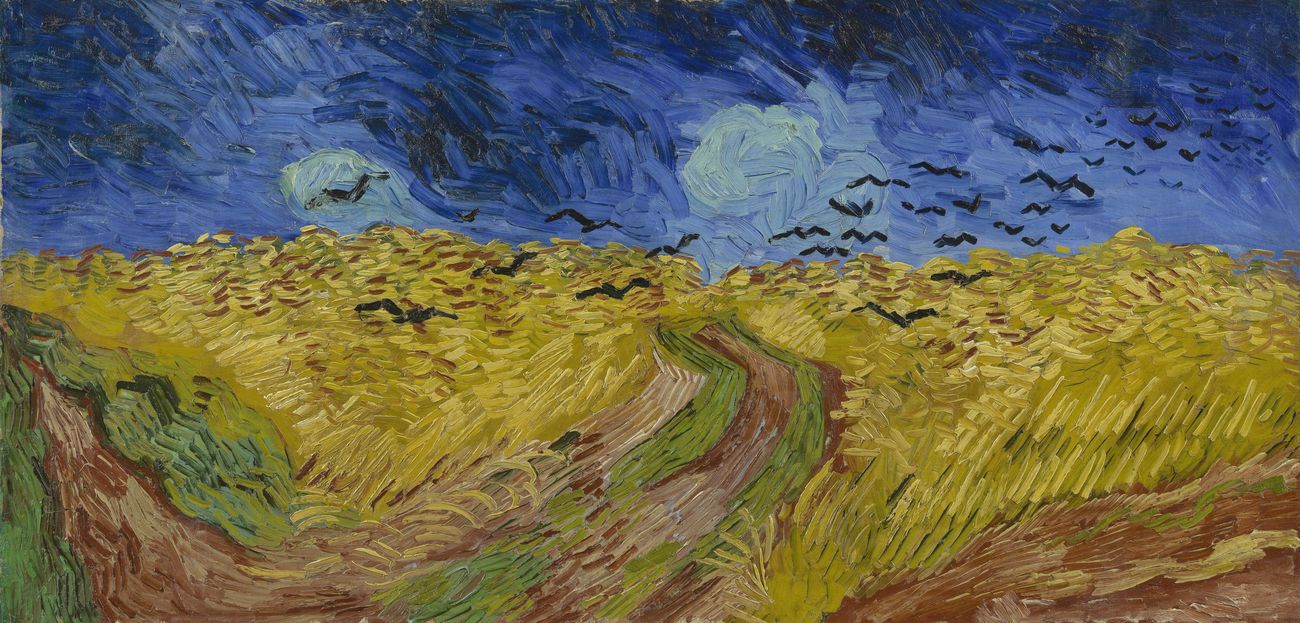
In fact, the story has been discredited in several specific ways in addition to the more general incredibility of its self-serving neatness. First, although long considered one of Vincent's last, if not the last, painting, Wheat Field with Crows is now dated to around July 10, fully two weeks before his death. Second, it has been established that there were no crows in the wheatfields of Auvers in high summer. (See Webster, p. 20.) Finally, Vincent had no fear of birds of any kind, having befriended them in his childhood outings on the heath (see Chapter 3). Indeed, he seems to have considered crows as bringers of good fortune, not bad omens to be chased away. He wrote in November 1877, during his pastoral studies: "While translating ancient Roman history I read how a raven or eagle would sometimes settle on the heads of certain people as a sign and proof of approval and blessing from Above. ... It's good to know that story." (JLB 135, 11/24/1877 - 11/25/1877.)
Dr. Gachet's letter to Theo is dated July 27, 1890, and begins: "It is with the utmost regret that I intrude on your privacy, however I regard it as my duty to write to you immediately, today, Sunday, at nine o'clock in the evening I was sent for by your brother Vincent, who wanted to see me at once. I went there and found him very ill. He has wounded himself." (b3265 V/1966, ''Gachet, Paul-Ferdinand'' to ''Gogh, Theo van'', 7/27/1890.) But Vincent only returned to the Auberge Ravoux around 9:00 P.M. on July 27, and this would put Gachet arriving soon afterward. All the eyewitness accounts suggest a long wait until the first doctor arrived at Vincent's bedside and that was Dr. Mazéry (see Ch. 43, n. 74), not Gachet. Also, by the younger Gachet's own, earlier (1912) testimony (see Ch. 43, n. 80), his father received word of Vincent's shooting when father and son were out fishing -- something that, as any fisherman knows, they were more likely to be doing early on the morning of the 28th than after sundown on the 27th. The later timing is confirmed in Doiteau's account ("the next morning"). But that means either that Gachet père back-dated the letter at the time he wrote it -- and made adjustments in the text -- possibly to cover his failure of oversight as Vincent's custodian; or that the letter is a later forgery.
The text of this letter first appeared in Jo Bonger's Memoir in 1914 (Van Gogh-Bonger, in Van Gogh, p. lii). Distel notes the way in which the younger Paul Gachet changed his account of Vincent's death over the years to arrogate a greater and greater role to his father and himself (Distel, in Distel and Stein, eds., p. 21). Numerous questions have also been raised about the authenticity of some of the works that Gachet fils claimed that Vincent gave to his father (see "Cézanne joins Van Gogh for close scrutiny"). For a recent summary of the Gachets' tenuous relations with the truth, both in their accounts and in the works that they attributed to Vincent, see Geraldine Norman, "Fakes?" New York Review of Books, Volume XLV, Number 2, February 5, 1998, pp. 4-7.
The only published record of John Rewald (1912-1994) telling the story about the two boys is in the book by Wilfred Arnold. A tenured professor of biochemistry at Kansas State University, Wilford has long had an interest in Van Gogh, primarily limited to the artist's medical condition (and to the so-called "replacement-child syndrome," based on Vincent's birth a year after the birth of Dorus and Anna's first child, also named Vincent). Arnold published Rewald's account in 1992; but, since it did not relate to the primary focus of his investigation, he did not follow up on it. Wen we interviewed him about his telephone conversations with Rewald, Professor Arnold was much more interested in Rewald's extreme formality – he demanded to be called Dr. rather than Mr. Rewald -- combined with helpfulness to a younger academician than he was in this intriguing rumor that Rewald had shared with him: "[Rewald] wasn't very interested in the medical aspects of the case, he sort of maintained that it would be beyond his understanding to look at metabolic pathways, but he was a nice man to talk with and would give you a straight answer; it's wonderful in retrospect that I had a chance to talk with him."
Rewald does not appear to have published his account himself but still remembered it well enough to relay some of the details just before he died in his early eighties, more than five decades after hearing the rumors in Auvers. It does not appear strange to us that Rewald, who wrote some of the greatest art history during the twentieth century, ranging from the most intricate subjects (a catalogue raisonnée of Paul Cézanne) to the most wide-ranging (the most universally accepted and influential panoramic histories of Impressionism – first edition, 1946 – and Post-Impressionism – first edition, 1956), would have hesitated to revise his account of Vincent's death in light of Doiteau's interview with René Secrétan even thought he accepted René's statement that the gun was his.
Context:
BVG 651, 7/23/1890: "Good-by now and good luck in business, etc., remember me to Jo and handshakes in thought."
JLB 902, 7/23/1890: "More soon. Look after yourself, and good luck in business &c. Warm regards to Jo, and handshakes in thought."
Context:
BVG 355a, 1/1/1885-1/15/1885: " If I should drop dead -- which I should not try to evade if it happened, but which I should not seek expressly -- you would be standing on a skeleton, and this would be a damned insecure standpoint."
JLB 474, 12/10/1884: " If I were to drop dead -- which I shan't refuse if it comes but won't expressly seek -- you'd be standing on a skeleton -- and -- that would be a mightily insecure standpoint" (emphasis in original.)
This diagnosis is consistent with all of the known facts about the wound, the path of the bullet, and the symptoms reported (or not reported) during the 27-28 hours between Vincent's injury and his death. Doiteau reports that Drs. Mazéry and Gachet found "no hemoptysis [blood in the lungs], suffocation or any significant shock symptoms" -- all of which are consistent with delayed tension pneumothorax -- a condition that is often missed on initial diagnosis precisely because it operates slowly (Doiteau, "La curieuse figure de Docteur Gachet," p. 280). Doiteau even reports a crucial observation supporting the diagnosis of tension pneumothorax: "The bullet had very probably crossed the pleural recess and perhaps even grazed the base of the lung" (ibid.). Nevertheless, Doiteau concludes that the cause of death was "probably a secondary infectious haemorrhage or perhaps the initial haemorrhage which had been stopped initially by the formation of a clot, but which later started again as this clot broke down, given that one of the major blood vessels of the mediastinum had been damaged" (ibid., p. 282). As far as we know from the record, no autopsy was performed, so Doiteau was basing his account entirely on Dr. Gachet's account.
Context:
BVG 082a, 9/1/1876-9/15/1876: "How often the memory of one already gone to my Father's house where there are many mansions has warmed me and made my heart glow with Love on my evening walks through the streets of London."
JLB 89, 8/26/1876: "How often has the memory of one who is already departed to our Father's house where there are many mansions warmed me and made my heart glow with Love in the streets of London and on my evening walks in the cabbage fields outside the city."
Context:
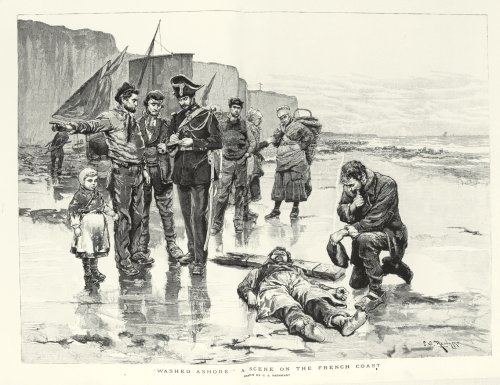
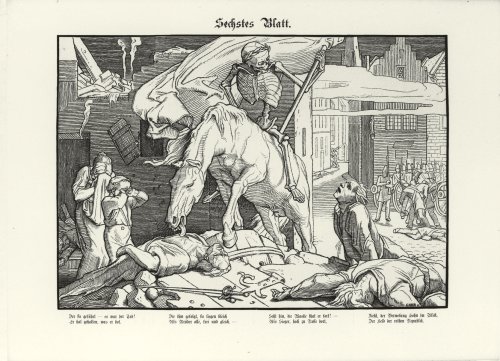
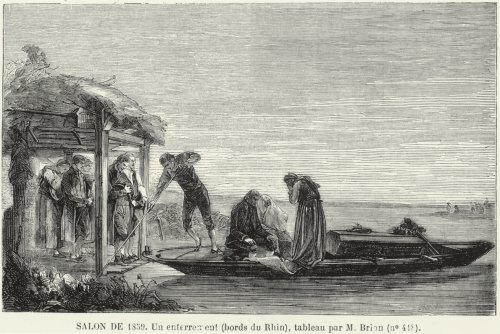
JLB 335, 4/3/1883: "The drawing I'm working on in this way at present is an orphan man standing beside a coffin -- in what they call 'the dead house.'"
Context:
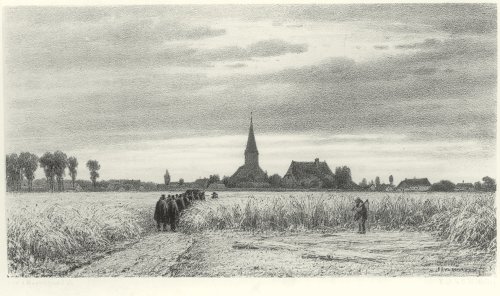
JLB 114, 5/19/1877: "I'll give you a list, then you'll know what it looks like and what's hanging there. 1 after [Diederik Franciscus] Jamin [Diederik Franciscus Jamin, 1838-1865; Dutch artist] (which is also hanging in your room), one after M. Maris, that little boy going to school, 5 after [Johannes] Bosboom -- Van der Maaten, Funeral in the cornfield -- Israëls, a poor man walking on a snowy road in winter, and [Isaac] Van Ostade [Isaac van Ostade, 1621-1649; Dutch artist], studio."
Context:
JLB 656, 8/6/1888: "Which is why in the present case of our uncle's death, the dead man's face was tranquil, serene and grave. When it's a fact that, while living, he was scarcely like that, neither when young nor when old. So often I've noticed an effect like that when looking at a dead man as if to question him."
Context:
BVG 098, 5/30/1877: "When I found myself in front of the corpse of Aerssen the calmness and dignity and solemn silence of death contrasted with us, who still live, to such an extent, that we all felt the truth of what his daughter said with such simplicity: 'He is freed from the burden of life, which we have to go on bearing.'"
JLB 117, 5/30/1877: "When I was standing next to Aertsen's body, the calm and seriousness and solemn stillness of death contrasted so greatly with us who were living, that everyone felt what his daughter said in her simplicity: he is delivered from the burden of life which we must still bear."
Context:
BVG 338, 11/11/1883: "And my aim in my life is to make pictures and drawings, as many and as well as I can; then, at the end of my life, I hope to pass away, looking back with love and tender regret, and thinking, 'Oh, the pictures I might have made!'"
JLB 405, 11/11/1883: "And -- my plan for my life is to make paintings and drawings, as many and as well as I can -- then, when my life is over, I hope to depart in no other way than looking back with love and wistfulness and thinking, oh paintings that I would have made!"
Context:
BVG 518, 8/6/1888: " Of the future life of artists through their works I do not think much. Yes, artists perpetuate themselves by handing on the torch, Delacroix to the impressionists, etc. But is that all?"
JLB 656, 8/6/1888: " I don't see much of the future life of artists through their works. Yes, artists perpetuate themselves, passing on the torch, Delacroix to the Impressionists, &c. But is that all?" (Emphasis in original.)
Context:
BVG 378, 10/1/1884: "Mouret did not seem to understand immediately, but when he remembered their earlier conversation about the empty stupidity and the pointless torture of life, he replied, 'Of course -- I have never lived so intensely … Ah! old fellow, don't scoff! The hours when one dies of suffering are shortest.'"
JLB 464, 10/2/1884: "Mouret seemed not to understand immediately. But, when he recalled their old conversations about empty foolishness and the pointless torment of life, he replied: 'No doubt - never have I lived so much … Ah! old chap -- don't mock! Those are the shortest hours in which one dies of suffering!" (Emphasis in original.)
Context:
JLB 642, 7/15/1888: "I've just read Victor Hugo's L'année terrible. There's hope there, but -- ... that hope's in the stars. I find that true, and well said, and beautiful; and what's more, I readily believe it myself, too. But let's not forget that the earth's a planet too, therefore a star or celestial globe. And what if all these other stars were the same!!!!!! It wouldn't be very jolly, in fact you'd have to start all over again. For art, now -- for which you need time, it wouldn't be bad to live more than one life. And it's not without appeal to believe in the Greeks, the old Dutch and Japanese masters, continuing their glorious school on other globes." (Emphasis in original.)
Context:
BVG 516, 7/31/1888: "It would be so simple and would account so much for the terrible things in life, which now amaze and wound us so, if life had yet another hemisphere, invisible it is true, but where one lands when one dies. To those who make this interesting and solemn journey, our best wishes and sympathy."
JLB 652, 7/31/1888: "It would be so simple and would explain so well the horrors of life that now amaze us and distress us so if life had another, second hemisphere, invisible, it's true, but where we arrive when we breathe our last. To those who are making this interesting and solemn journey, our best wishes and our best sympathies."
Context:
BVG 511, 7/15/1888: "I have just read Victor Hugo's L'Année Terrible. There is hope there, but … that hope is in the stars. I think it is true, and well told, and beautiful, and indeed I should be glad to believe it myself."
JLB 642, 7/15/1888: "I've just read Victor Hugo's L'année terrible. There's hope there, but -- ... that hope's in the stars. I find that true, and well said, and beautiful; and what's more, I readily believe it myself, too."
Context:
JLB 656, 8/6/1888: "If we're as lightweight as that, so much the better for us, as nothing would then stand in the way of the limitless possibility of future existence" (emphasis in original).
Context:
BVG B08, 6/23/1888: "But the consolation of that deeply saddening Bible, which arouses our despair and indignation, which seriously offends us and thoroughly confuses us with its pettiness and infectious foolishness -- the consolation it contains like a stone inside a hard rind and bitter pulp, is Christ."
JLB 632, 6/26/1888: "But the consolation of this so saddening Bible, which stirs up our despair and our indignation -- thoroughly upsets us, completely outraged by its pettiness and its contagious folly -- the consolation it contains, like a kernel inside a hard husk, a bitter pulp -- is Christ."
Context:
BVG 453, 2/14/1886: " Illusions may fade, but the sublime remains. One may doubt everything, but one does not doubt people like Corot and Millet and Delacroix."
JLB 562, 2/14/1886: " Illusions may fade -- but what endures is the sublime -- if one were to doubt everything, one wouldn't doubt fellows like Corot and Millet and Delacroix" (emphasis in original).
Context:
JLB 613, 5/26/1888: "I'm thinking more and more that we shouldn't judge the Good Lord by this world, because it's one of his studies that turned out badly. But what of it, in failed studies -- when you're really fond of the artist -- you don't find much to criticize -- you keep quiet. But we're within our rights to ask for something better. We'd have to see other works by the same hand though. This world was clearly cobbled together in haste, in one of those bad moments when its author no longer knew what he was doing, and didn't have his wits about him. What legend tells us about the Good Lord is that he went to enormous trouble over this study of his for a world. I'm inclined to believe that the legend tells the truth, but then the study is worked to death in several ways. It's only the great masters who make such mistakes; that's perhaps the best consolation, as we're then within our rights to hope to see revenge taken by the same creative hand. And -- then -- this life -- criticized so much and for such good, even excellent reasons -- we -- shouldn't take it for anything other than it is, and we'll be left with the hope of seeing better than that in another life."
Adeline's interview with Tralbaut introduces the billiard table: "the undertaker and his mules set it up on trestles and then put it on the billiard-table in the big room on the right where Monsieur Vincent painted my portrait" (see Ch. 43, n. 165) -- which seems to contradict her other testimony (Ravoux-Carrié, quoted by Tralbaut, p. 335). Clearly this "big room" or "main room" was not Vincent's back room. Adeline's recollection of Vincent's return, wounded, on the night of July 27 also refers to this billiard table and places it in Vincent's path as he went toward the stairs to his room. Doiteau refers to the "billiard room on the ground floor" (Doiteau, "La curieuse figure de Docteur Gachet," p. 280). In addition, it seems highly unlikely that Theo or Ravoux would have imagined that the coffin and a dozen or more guests (see Ch. 43, n. 193) could fit in the little service room that Vincent used as a studio.
We resolve this discrepancy by dividing the preparation of the body into two phases. After it was brought down from the attic bedroom, it was placed in the coffin and "dressed" in the back room, which already smelled of Vincent's pipe and paints. Andries Bonger may have seen it there. But subsequently, it was moved to the room that Theo, with the assistance of Hirschig and Ravoux, had decorated as a mortuary chapel. To imagine otherwise is to assume either (1) that the undertaker did his work in the public billiard room (Andries Bonger says that they had lunch in the adjacent dining room [b0899 V/1973, "Bonger, Andries" to "Coquiot, Gustave", 7/23/1922]) or (2) that Theo and the others did their decorating in the same small back room while the undertaker was doing his work. Both seem to us unthinkable and unnecessary hypotheses.
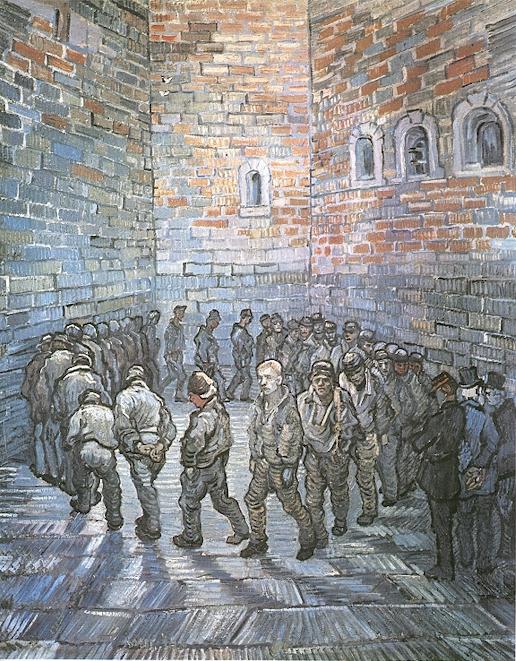
The text credits the possibility, even the likelihood, that Bernard made some attempt to re-select or re-arrange the paintings that Theo had chosen to put up. These revisions, if Theo allowed them, probably added the paintings that Bernard described with particular care in his letter immediately afterward to Aurier: "a very beautiful episode of the Passion interpreted after Delacroix's The Virgin and Jesus" (the Pietà [F 630 JH 1775] that Vincent had painted in Saint-Rémy and brought with him to Auvers) and "[c]onvicts walking in a circle in a high-ceilinged prison, a canvas after Doré, a symbol of terrible ferocity for his end" (ibid.). (Vincent's Prisoners Round [F 669 JH 1885], another Saint-Rémy painting). The latter conveniently prompted Bernard to a ranting eulogy that he no doubt hoped Aurier would adopt in a review: "For him, was life not this vault, were these not the poor artists, the poor accursed, treading under the whip of Destiny?" (ibid.). Curiously, none of the other accounts of the hangings mention either of the two paintings described in Bernard's letter to the critic.
Context:
JLB 897, 7/5/1890: "Pissarro wrote to me that he wasn't able to pay his rent, I'm going to send him a little advance on the business we'll do. You see, his exhibition really brought him in something, but still just to plug the holes. He's had an abscess on the eye. Poor old chap!"
Gauguin wrote Theo in early August, a few days after the funeral: "We just received sad news which greatly distresses us. ... You know that for me he was a sincere friend, and that he was an artist -- a rare thing these days. You will continue to see him in his works. As Vincent often said, 'Stone will perish, the word will remain.' As for me, I will see him with my eyes and with my heart in his works." (Gauguin, "Letter from Gauguin to Theo On Vincent's Death ca. 2 August 1890," quoted in Stein, ed., 231.) To Bernard he wrote less sympathetically around the same time: "I have had the news of Vincent's death, and I am glad that you were present at his funeral. Distressing as this death is, I cannot grieve overmuch, as I foresaw it, and knew how the poor fellow suffered in struggling with his madness. To die at this moment is a piece of good fortune for him, it marks the end of his sufferings." (Gauguin to Bernard, August 1890; quoted in Malingue, p. 149.)